Referral Programs That Actually Work for Cleaning Businesses: Strategies for Growth
 R Rashdi
·
January 30, 2026
·
23 MIN READ
R Rashdi
·
January 30, 2026
·
23 MIN READ
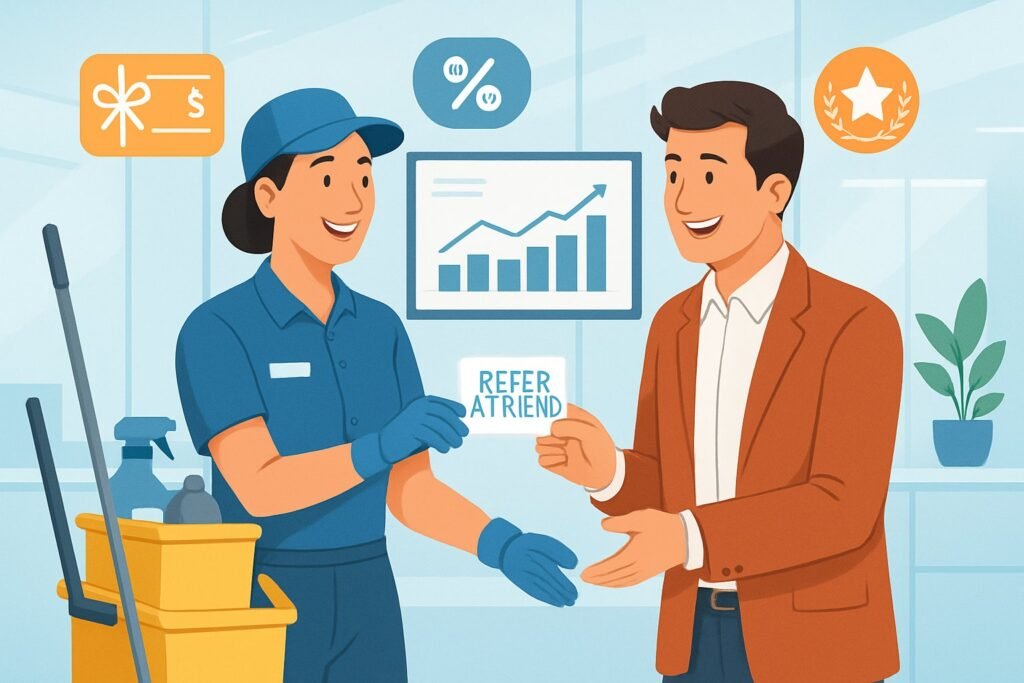
Most cleaning businesses struggle to find new customers without spending huge amounts on advertising, but there’s a better way. Referral programs turn happy customers into a steady stream of new business by giving them good reasons to recommend your services to friends and family.
The secret to successful cleaning business referral programs lies in creating the right mix of attractive incentives, perfect timing, and simple tracking systems. When customers get real value from referring others, they become your best salespeople. This happens because people trust recommendations from friends more than any advertisement.
Smart cleaning business owners know that not all referral programs work the same way. The best programs offer rewards that customers actually want, ask for referrals when customers are most happy, and track everything so you know what works. With the right setup, referral programs can become your biggest source of new customers.
Key Takeaways
- Effective referral programs combine valuable incentives like discounts and free services with perfect timing to motivate customer recommendations
- Asking for referrals immediately after providing excellent service or receiving positive feedback creates the highest success rates
- CRM tracking systems help cleaning businesses identify their best referral sources and measure program performance for continuous improvement
Why Referral Programs Work for Cleaning Businesses
Referral programs tap into the natural trust people place in recommendations from friends and family. For service businesses that work inside someone’s home, that trust is the entire sale.
The Power of Word-of-Mouth Marketing
Word-of-mouth marketing drives the most trusted form of advertising for cleaning services. When customers recommend a cleaning business to friends, they stake their reputation on that recommendation.
Every trust survey ever run puts personal recommendations above paid advertising, and it isn’t close. This trust translates directly into higher conversion rates for cleaning businesses.
Key advantages of word-of-mouth for cleaning services:
- Builds instant credibility with new prospects
- Reduces the sales cycle significantly
- Creates pre-qualified leads who are ready to buy
- Costs nothing to generate once the system is in place
The intimate nature of cleaning services makes referrals especially powerful. Customers invite cleaners into their homes and trust them with personal spaces. This creates strong emotional connections that customers want to share with people they care about.
Referred customers also tend to have realistic expectations. They know what to expect from the service quality and pricing before they even call.
Benefits Over Traditional Advertising
Referral programs deliver better results than paid advertising at a fraction of the cost. Traditional advertising requires constant spending to maintain visibility, while referrals create ongoing momentum.
Cost comparison for cleaning businesses:
- Google Ads: $3-15 per click with 2-5% conversion rates
- Facebook Ads: $1-5 per click with 1-3% conversion rates
- Referral programs: One-time incentive cost with 25-30% conversion rates
Referrals also bring in higher-value customers. These clients typically book more services and stay longer than customers acquired through advertising.
The quality of referral leads surpasses other marketing channels. Referred prospects already understand the value proposition and are less likely to shop around on price alone.
Referral programs provide better return on investment because the cost occurs only after acquiring a new customer. This eliminates the risk of spending money on advertising that generates no results.
Impact on Business Growth
Referral programs create compound growth for cleaning businesses. Each satisfied customer becomes a potential source of multiple new customers over time.
A structured program beats hoping for word-of-mouth, because hope doesn’t track, remind, or reward anyone. The growth accelerates because referred customers are more likely to refer others.
Growth metrics from referral programs:
- 25% higher customer lifetime value
- 18% lower customer acquisition costs
- 37% higher retention rates
- 16% increase in purchase frequency
The referral cycle builds business stability. Instead of feeding an ad budget, you end up with a customer-acquisition machine that runs on its own goodwill.
Referral programs also improve customer loyalty among existing clients. When customers participate in the program, they become more invested in the business success and are less likely to switch to competitors.
Key Elements of an Effective Referral Program
A successful referral program for cleaning businesses must focus on removing barriers to participation while providing meaningful rewards for both referrers and new customers. The referral process should be straightforward, with clear communication about how the program works and what participants can expect.
Simplicity and Ease of Participation
The referral process should require minimal effort from customers. A simple referral link or easy-to-remember code makes sharing effortless.
Customers should be able to refer others through multiple channels. This includes email, text messages, social media, or verbal recommendations with tracking capabilities.
Essential participation elements:
- Quick signup process (under 2 minutes)
- Mobile-friendly referral links
- Pre-written sharing messages
- One-click sharing options
The registration should collect only necessary information. Name, contact details, and referral preferences are typically sufficient for most cleaning businesses.
Technology integration helps streamline the experience. Automated tracking eliminates manual processes while ensuring accurate reward distribution.
Customers value convenience above complex reward structures. A straightforward system increases participation rates compared to complicated multi-step programs.
Double-Sided Incentive Models
Both the referrer and new customer should receive rewards. This approach increases motivation for existing customers to share while encouraging new customers to try the service.
Common double-sided reward structures:
- Referrer gets $25 credit, new customer gets 50% off first cleaning
- Both parties receive $20 service credits
- Referrer gets free add-on service, new customer gets discounted rate
The timing of rewards affects program success. New customers typically receive immediate discounts, while referrers earn credits after the referred customer completes their first service.
Reward values should reflect the service cost and customer lifetime value. Higher-value rewards generate more referrals but must remain financially sustainable for the business.
Different reward types appeal to different customers. Some prefer cash discounts, while others value free services or upgrades to premium cleaning packages.
Clear Communication of Program Details
Customers need to understand exactly how the program works. Confused people don’t refer.
Spell out reward amounts, eligibility, and how redemption works, because ambiguous terms breed frustration and kill participation.
Communication essentials:
- Reward amounts and conditions
- How to make referrals
- When rewards are distributed
- Program terms and limitations
Multiple communication touchpoints reinforce program awareness. Email campaigns, website banners, service completion follow-ups, and printed materials all play important roles.
A simple flowchart explains the process faster than three paragraphs ever will.
Keep referrers posted on their status; an automated “your referral booked, your reward’s on the way” email builds more trust than any promise.
Ensuring Program Fairness and Transparency
Program rules must be consistently applied to all participants. Inconsistent reward payouts wreck credibility fast.
Clear terms protect both sides. Cover the awkward scenarios up front: cancelled services, refunds, reward expiration.
Transparency requirements:
- Public program terms
- Clear eligibility criteria
- Visible reward tracking
- Consistent rule enforcement
Add just enough fraud prevention to stop abuse without hassling honest participants. A quick confirm-the-new-customer step is usually all the verification you need.
Regular program audits ensure fair operation. Reviewing referral patterns and reward distribution helps identify potential issues before they affect customer satisfaction.
Customer support should handle referral questions promptly. Quick resolution of program-related issues maintains participant confidence and prevents negative experiences from spreading to potential referrers.
Designing Referral Incentive Structures That Motivate Clients
The right incentive structure can turn satisfied cleaning clients into active promoters of your business. Successful cleaning companies use a mix of service discounts, monetary rewards, and free add-ons to create compelling referral programs that drive consistent new client acquisition.
Discounts on Cleaning Services
Service discounts remain the most popular referral incentive for cleaning businesses because they directly reduce costs for existing clients. Most successful programs offer 10-25% off the next cleaning service for each successful referral.
Two-sided discount structures work particularly well in the cleaning industry. When both the referrer and new client receive 15-20% off their service, it creates mutual benefit that increases conversion rates.
| Discount Type | Referrer Reward | New Client Reward |
|---|---|---|
| Standard | 15% off next service | 15% off first service |
| Premium | 25% off next service | 20% off first service |
| Bulk | $50 off after 3 referrals | 10% off first month |
Many cleaning companies set minimum thresholds to qualify for discounts. New clients typically need to book at least two services before the referrer receives their reward. This prevents one-time bookings that don’t generate lasting value.
Percentage-based discounts tend to perform better than flat dollar amounts because they scale with service value. A 20% discount feels substantial whether the client books basic or premium cleaning packages.
Gift Cards and Cash Rewards
Gift cards and cash rewards provide flexible incentives that appeal to clients who may not need immediate cleaning discounts. Amazon cards, local restaurant cards, and straight cash all work.
For residential, $25-50 per successful referral is the sweet spot. Commercial referrals justify $100-200, since one office contract can be worth a year of house cleans.
Local-business gift cards add a community angle on top. Many cleaning companies partner with grocery stores, gas stations, or coffee shops to offer $25-40 gift cards.
Digital delivery makes gift card distribution simple and immediate. Automated systems can send rewards within hours of conversion, and that speed keeps the momentum alive.
Payment timing affects program success significantly. Most effective programs hold the reward until the new client completes a second or third service, which proves the conversion was real rather than one-time bookings.
Free Services and Add-Ons
Free services and add-ons provide high-perceived value while maintaining reasonable program costs for cleaning businesses. Popular options include free deep cleaning upgrades, carpet cleaning, or window washing services.
Add-on services like refrigerator cleaning, oven deep-cleaning, or garage organization create attractive incentives without heavily impacting profit margins. These services typically cost $30-75 when purchased separately.
Free monthly services work well for established referral programs. After three successful referrals, give a completely free cleaning, a $100-150 gesture that costs you one crew-morning.
Upgrades work too. A deep-clean treatment or an eco-product upgrade beats cash for plenty of clients.
Perceived value runs higher than the sticker cost. A $75 carpet cleaning add-on feels more valuable to clients than a $75 discount or gift card.
Tiered Incentives and Referral Contests
Tiered incentives encourage ongoing referral activity by increasing rewards as clients refer more people. This structure keeps top referrers engaged and motivated to continue promoting the business.
Basic tier structures might offer 15% off for one referral, 25% off for two referrals, and a free cleaning after three successful referrals. Clear progression motivates continued participation.
| Referrals Made | Reward Level | Benefit |
|---|---|---|
| 1 referral | Bronze | 15% off next service |
| 3 referrals | Silver | Free add-on service |
| 5 referrals | Gold | One free cleaning |
Referral contests create time-limited excitement around the program. Monthly contests rewarding the top referrer with significant prizes like three months of free cleaning generate competitive participation.
Seasonal contests align well with cleaning business cycles. Spring cleaning contests or holiday preparation contests can boost referral activity during peak demand periods.
VIP status programs recognize consistent referrers with ongoing benefits like priority scheduling, exclusive discounts, or special service packages. These programs build long-term loyalty while encouraging continued referrals.
How to Ask for Referrals at the Right Time
The success of a referral program depends heavily on when and how cleaning business owners make their requests. Proper timing, clear communication, and thoughtful follow-up transform satisfied customers into active advocates for the business.
Recognizing Opportunities During Customer Interactions
Cleaning business owners should listen for specific signals that indicate a customer is ready to provide referrals. Happy customers often mention friends or neighbors who might need similar services.
Comments like “My sister would love this” or “Our neighbors always compliment how clean our house looks” present perfect opportunities. These natural conversation moments feel less forced than cold requests.
Key indicators for referral readiness:
- Customer expresses satisfaction with recent cleaning
- They mention friends or family with similar needs
- They ask about services for other properties
- They compliment the cleaning team’s work
Business owners should also watch for non-verbal cues. Customers who eagerly show off clean spaces to visitors or take photos of the results often feel proud of their choice.
Repeat customers who consistently book services demonstrate trust in the business. These loyal clients typically respond well to referral requests because they already believe in the service quality.
Timing Your Referral Request for Maximum Results
The best time to ask for referrals is within 24-48 hours after completing a cleaning service. Satisfaction peaks the moment they see fresh results. Don’t ask mid-visit, though; nobody wants to feel cornered while a crew is still in their house.
Optimal timing windows:
| Time Period | Success Rate | Best Method |
|---|---|---|
| Same day after cleaning | High | Phone call or text |
| 1-2 days after service | Very high | Email or phone |
| 1 week after service | Medium | Email follow-up |
| During next booking | Low | In-person request |
Holidays and spring-cleaning season create natural windows, since that’s when people actually talk about household services with friends.
Track when past referrals landed. The same weeks tend to repeat every year.
Busy seasons help too. When demand is visibly high, satisfied clients feel like sharing a contact actually matters.
Crafting Effective Referral Requests
Ask directly instead of hinting that you “could use more business.” Say exactly who you’re looking for.
And make the referral itself a thirty-second task. Complicated steps reduce participation rates significantly.
Effective request structure:
- Thank the customer for their business
- Mention specific positive feedback or results
- Make a clear, direct ask for referrals
- Explain the referral process simply
- Highlight benefits for both parties
“Hi Sarah, I’m so glad you’re happy with how your kitchen turned out yesterday. Do you know anyone who might need weekly house cleaning? I’d love to help them get the same great results.”
Business owners should provide referral cards or simple contact information that customers can easily share. Physical cards work well because customers can hand them out immediately.
Email requests should include clear next steps. Customers need to know exactly how to make the referral and what happens next.
Personalizing requests shows attention to detail. Mentioning specific cleaning results or customer preferences demonstrates genuine care for their experience.
Following Up and Expressing Appreciation
Every referral requires proper acknowledgment, regardless of whether it converts to a new customer. This appreciation encourages future referrals from the same source.
Business owners should thank the referring customer within 24 hours of receiving the referral. Quick responses show professionalism and gratitude.
Follow-up timeline:
- Day 1: Thank referring customer
- Day 3: Update on initial contact attempt
- Day 7: Report on consultation results
- Day 30: Share outcome and final thanks
When referrals become paying customers, both parties should receive recognition. The referring customer deserves their promised reward, while the new customer should know who recommended the service.
Failed referrals still deserve appreciation. The customer took time to think of someone and make the connection. This goodwill maintains the relationship for future opportunities.
Business owners should track referral sources in their CRM system. This data helps identify the most effective referring customers and timing patterns.
Sending handwritten thank-you notes creates lasting impressions. Personal touches stand out in an increasingly digital world and encourage continued referrals.
Promoting and Communicating Your Referral Program
Most cleaning business referral programs fail because clients don’t know they exist. A well-designed program needs active promotion across multiple channels to reach clients when they’re most likely to refer.
Digital Promotion Tactics
Email signatures work as constant promotion tools. Every service confirmation and follow-up email should include a brief referral program mention with a direct referral link.
Homepage visibility drives awareness. Add a prominent banner or button on the website’s main page that says “Refer a friend and save $25 on your next cleaning.”
Social media posts reach existing clients regularly. Share success stories like “Thanks to Maria for referring her neighbor! Both received $20 off their next service.”
SMS campaigns get immediate attention. Send monthly texts like “Know someone who needs cleaning help? Share your referral link and you’ll both save: [link].”
Give the newsletter a standing referral section. Month’s count, current bonus, two lines.
Leveraging In-Person and Print Materials
Even the business card can moonlight as a referral card if you design it that way. Print cards with “Give this to a friend” messaging and the client’s name for tracking.
Service completion conversations create natural referral moments. Train cleaners to say “If you know anyone who could use our services, we’d love to help them too.”
Door hangers left after service work well in residential areas. Include referral program details and make them shareable with neighbors.
Branded materials like cleaning supply caddies or microfiber cloths remind clients about referrals long after service ends.
Crews should carry printed referral cards to leave behind, bright ones, with the reward amount readable from across the kitchen.
Encouraging Social Sharing
Great before-and-afters practically share themselves; just get permission before posting anyone’s home.
Shareable digital assets make it effortless: Instagram story templates or Facebook graphics clients can customize in seconds.
Review platform integration closes the loop. When a five-star Google review lands, follow it with a referral invitation, because that reviewer is already selling for you.
Social proof amplifies word-of-mouth marketing naturally. When clients see friends sharing positive experiences, they’re more likely to refer others.
Hashtag campaigns help track social mentions. Create a branded hashtag like #CleanWithConfidence for clients to use when sharing experiences.
Ongoing Program Reminders
Quarterly reminders keep the program from fading out of memory.
Slow months are for double rewards; January and February referrals are worth paying extra for.
Anniversary reminders target long-term clients who know multiple potential referrers. Send messages like “It’s been two years since we started cleaning your home!”
Bill insert reminders reach every paying customer. Add small referral program cards to monthly invoices or payment confirmations.
Service reminder calls should include brief referral mentions. When confirming next week’s cleaning, add “Remember, you’ll both save money when you refer friends.”
Consistent messaging across all channels reinforces the referral opportunity without overwhelming clients.
Tracking Referral Sources and Managing Your Program in a CRM
Your CRM system becomes the central hub for managing all referral activity, from initial tracking to reward distribution. Modern CRM tools can automatically attribute new clients to specific referral sources and streamline the entire reward process.
Using CRM Tools for Referral Tracking
Most CRM platforms offer built-in referral tracking that kills the spreadsheet. CleanerHQ’s referral module goes a step further: rewards for both the referrer and the new client, and you only pay out when the referral actually converts to a booked job. These tools automatically create unique referral codes or links for each existing client.
When a new client books through a referral link, the system instantly connects them to the referring customer. The CRM records the referral date, source, and conversion status without any manual input.
Key CRM tracking features include:
- Automatic referral code generation
- Real-time conversion tracking
- Client relationship mapping
- Referral performance dashboards
Plenty of CRMs bolt on referral modules. The good ones track the whole journey, from referral to booked job.
The system monitors when referred clients schedule appointments, complete services, and make payments. This data helps cleaning businesses understand their referral program’s true ROI.
Attributing Referrals to Specific Channels
Different sources need different tracking, since a direct client referral isn’t the same animal as a review-site click or a social mention.
Common referral channels for cleaning businesses:
- Word-of-mouth recommendations
- Social media shares
- Online review mentions
- Email forwards
- Direct introductions
The CRM assigns each channel a unique identifier. When clients mention how they heard about the service, staff can quickly tag the appropriate source.
Some CRMs use UTM parameters to track digital referrals automatically. These parameters identify exactly which social media post or email campaign generated the referral.
Offline referrals need staff to enter the source at booking, which is why every phone script includes “How did you hear about us?”
Reward Fulfillment and Client Notification
Automate the reward fulfillment so nothing depends on someone remembering. Once a referred client completes their first service, the CRM fires the notification on its own.
A personalized thank-you with the reward details goes out with it. Account credits apply instantly.
Automated reward workflows include:
- Instant credit applications
- Gift card code generation
- Email reward notifications
- Referral milestone tracking
Physical rewards become staff tasks, These tasks include the client’s preferred delivery method and reward details.
Everything lands in a per-client reward history. This data helps businesses identify their most active referral sources and adjust incentive structures accordingly.
Regular automated reports show program performance metrics and outstanding reward obligations. These reports help cleaning businesses maintain accurate financial records and program accountability.
Measuring, Optimizing, and Sustaining Your Cleaning Business Referral Program
Success requires regular tracking of program performance through client feedback, data analysis, and ongoing engagement strategies. Smart cleaning business owners adjust referral incentives based on results and maintain client interest through consistent communication and rewards.
Collecting Client Feedback and Adapting Incentives
Regular feedback collection helps cleaning businesses understand what motivates their clients to refer others. Surveys after each referral or quarterly check-ins reveal which referral incentives work best.
Simple questions work well. Ask clients if they prefer cash rewards, service discounts, or gift cards. Find out what stopped them from referring in the past.
Common feedback themes include:
- Reward timing preferences
- Incentive value expectations
- Communication method preferences
- Referral process difficulty
Many cleaning businesses discover their initial referral program needs changes. A client might prefer a $25 gift card over 10% off their next cleaning. Another might want rewards after the new client’s third service instead of the first.
Track which incentives generate the most referrals. If free deep cleans bring in more clients than cash rewards, shift your program focus. Some businesses find success offering different rewards for different client types.
Analyzing Program Results
Data tracking shows the true impact of referral programs on business growth. Key metrics include referral conversion rates, customer lifetime value of referred clients, and program costs versus revenue generated.
Essential tracking metrics:
- Number of referrals received monthly
- Referral-to-customer conversion rate
- Average revenue per referred client
- Cost per referral acquisition
- Referrer retention rates
A healthy program converts somewhere between 15 and 25 percent of referrals; drift below 10 and something in the program is broken.
Track sources in your CRM by tagging every new client with where they came from. This shows which existing clients refer the most and deserve special recognition.
Calculate the return on investment for your referral program. Compare the cost of referral incentives to the revenue from new referred clients. Strong programs generate $3-5 in revenue for every $1 spent on incentives.
Maintaining Long-Term Engagement
Successful referral programs require ongoing attention to keep clients engaged. Participation lives on reminders and recognition.
Work the program into email signatures and service follow-ups monthly. Clients forget programs within months when nothing prompts them.
Engagement strategies that work:
- Thank you notes for successful referrals
- Special recognition for frequent referrers
- Seasonal bonus referral incentives
- Program updates and improvements
So give your best referrers a leaderboard spot or VIP status worth keeping. Some cleaning businesses offer quarterly bonuses to clients who refer three or more new customers.
Update your referral program annually. What worked last year might not motivate clients today. Test new referral incentives every six months to keep the program fresh and effective.
Frequently Asked Questions
Cleaning business owners often have specific questions about creating referral programs that generate real results. These answers address common concerns about incentive design, timing, tracking methods, and measuring program success.
Which incentives actually get clients referring?
Service discounts work well for most cleaning businesses. A discount on the next cleaning creates immediate value for referrers; 10-25% is the workable band for recurring clients.
Free deep cleaning sessions offer high perceived value. Many businesses provide one free deep clean for each successful referral.
Cash rewards and gift cards appeal to a wide range of customers. Target gift cards worth $25 to $50 are popular choices among cleaning services.
Two-way incentives benefit both parties. The referring client and new customer each get a reward, and that double-sided pull is what makes people actually participate.
Free cleaning supplies or eco-friendly products make practical gifts. These items connect directly to the service and remind clients of the business.
How do I ask for a referral without being awkward?
Timing matters most when asking for referrals. Only approach clients who have expressed satisfaction with recent cleanings or given positive feedback.
Direct conversation works best for confident business owners. A simple request like “Do you know anyone who needs help with house cleaning?” feels natural and non-pushy.
Email requests allow for thoughtful messaging. Personalized emails with clear incentive details reach clients without phone pressure.
Email signatures promote referral programs passively. Adding a brief referral offer to all staff email signatures creates ongoing visibility.
Follow-up surveys provide natural referral opportunities. Asking about referrals after positive service feedback feels appropriate and well-timed.
How do I track referral sources in my CRM?
Build referral-source fields into the CRM. Tag new clients with the referring customer’s name and contact information.
Hand each existing client a unique code. The top referrers surface on their own.
Set up automated notifications for referral tracking. The CRM should alert staff when new clients mention existing customer names.
Record referral dates and incentive details. Track when referrals occur and what rewards were given to measure program costs.
Generate regular referral reports from CRM data. Monthly reports show referral trends, top referrers, and conversion rates.
Link referral tracking to billing systems. Automatically apply discounts or credits when referral conditions are met.
Which rewards work best for cleaning clients?
Percentage-based service discounts show strong results. Most sustainable programs stay in the 10-25% range; discount deeper than that and the referral costs more than a new-client ad.
Free one-time cleaning sessions generate high participation rates. This reward has significant perceived value without major cost impacts.
Cash-equivalent rewards like gift cards appeal broadly. Target, Amazon, and local restaurant gift cards worth $25 to $50 work well.
Service credits build long-term customer relationships. Credits applied to future cleanings encourage continued service usage.
Tiered reward systems increase engagement over time. Multiple referrals unlock bigger rewards like free deep cleans or monthly service discounts.
When should I introduce the referral program?
Wait until after the third successful cleaning visit. Customers need time to experience consistent service quality before making referrals.
Introduce programs following positive feedback or reviews. Client satisfaction signals the right moment to discuss referral opportunities.
Time requests after problem resolution. Clients who watched you fix a problem well often become your loudest advocates.
The first month, though, is too early to ask. New clients are still deciding whether they like you.
Long-term clients at a routine check-in are the right audience. The relationship does half the selling.
How do I measure referral ROI?
Track referral conversion rates by calculating successful referrals divided by total referral requests. Healthy programs see 15% to 25% conversion rates.
Calculate customer acquisition cost for referred clients. Include referral rewards in the total cost and compare to other marketing channels.
Monitor referral customer lifetime value. Referred customers often stay longer and spend more than those from other sources.
Measure program participation rates among existing customers. Track what percentage of clients actively participate in referral activities.
Calculate revenue growth from referral programs. Compare monthly revenue before and after program implementation to measure direct impact.
Track referral frequency patterns. Identify which customers refer multiple times and what motivates repeat referral behavior.
Referral programs are one of the highest-ROI levers, but they only kick in once you have a steady book of recurring clients. For the full lead-gen stack, Google Business Profile, Nextdoor, Local Service Ads, email automation, see our companion guide on marketing for cleaning business.

Written by
Rashdi has spent 15+ years building and managing enterprise software, and has worked with US cleaning businesses since 2006. He founded CleanerHQ.