A lot of cleaning business owners, often without realizing it, sabotage their own profits by underquoting jobs.
They set prices too low just to win contracts, usually skipping the math on their true costs.
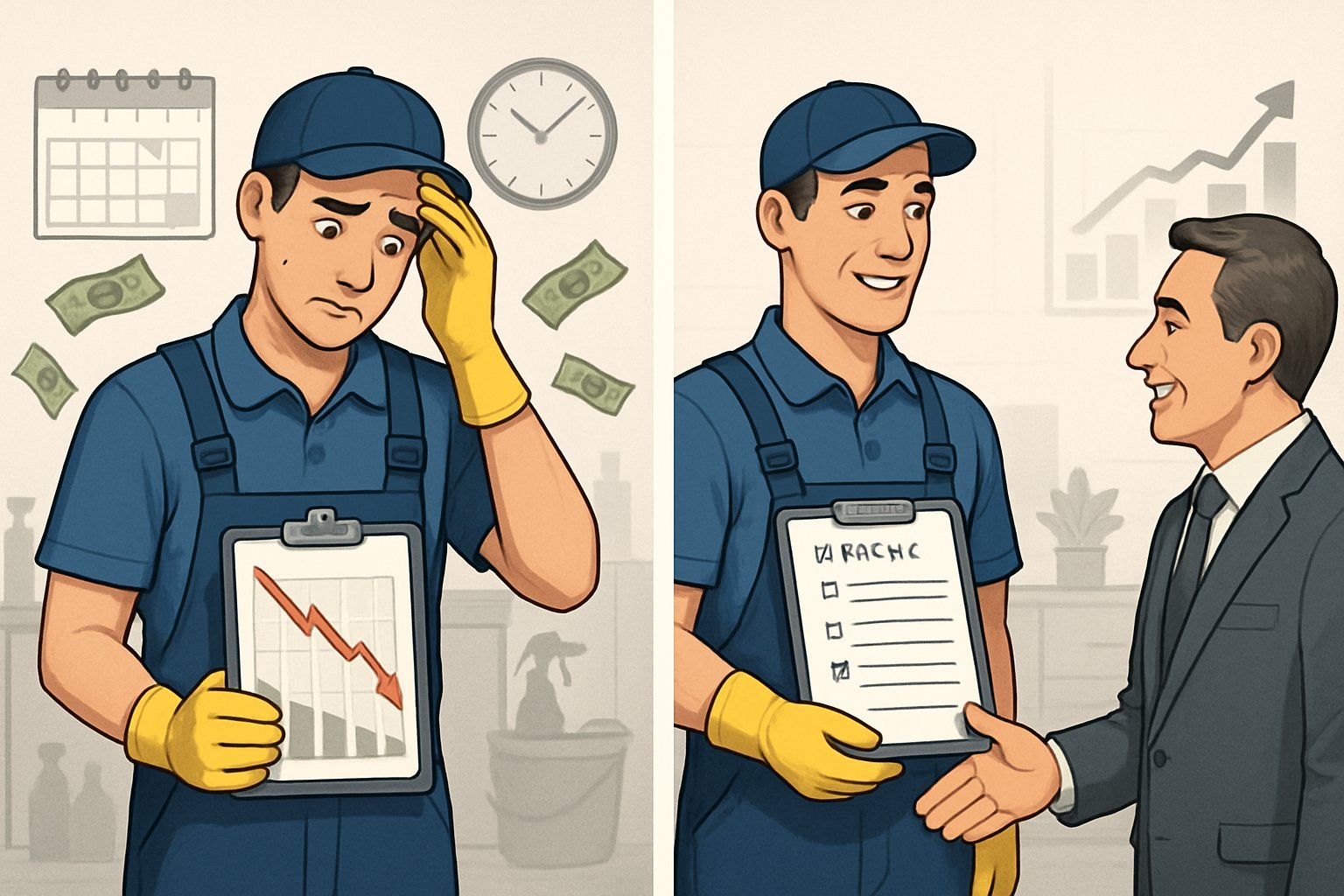
Underquoting forces cleaning businesses to work harder for less money.
After labor, supplies, and overhead, some cleaners end up earning just $10 an hour—if they’re lucky.
They might quote $100 for a job that costs $90 to finish, leaving only $10 profit for hours of effort.
This cycle traps businesses in financial stress and blocks any real growth.
The urge to outbid competitors and the fear of losing clients leads many cleaners to slash prices dangerously low.
But here’s the thing: successful cleaning companies charge $35-50 per hour because they know their actual costs and can explain their value.
Learning to quote accurately and price for profit isn’t just helpful—it’s essential if you want your cleaning business to thrive.
Key Takeaways
- Underquoting cleaning jobs can leave you earning poverty wages, even after long hours.
- Successful cleaning companies charge $35-50 per hour by including labor, overhead, and profit margins in their calculations.
- Accurate quoting and confident value communication are must-have skills for building a profitable cleaning business.
The Real Costs of Underquoting Cleaning Jobs
When cleaners quote too low, they don’t just lose money on materials and labor.
They start a cycle that damages their entire business: lower hourly wages, hidden expenses, and workloads that just don’t make sense.
How Underpricing Eats Into Profits
Low quotes push cleaners to work faster and longer just to break even.
If a cleaner quotes $100 for a job that really needs to be $150, that’s $50 lost right away.
This pressure leads to rushing through tasks.
Quality drops, clients get annoyed, and then the cleaner spends unpaid time fixing mistakes or handling complaints.
The profit squeeze hits in three ways:
- Reduced hourly earnings – Same hours, less money.
- Increased supply costs – More products burned through to work faster.
- Higher equipment wear – Tools wear out quicker from overuse.
Many cleaners end up making less than minimum wage.
They’ll work 10-hour days but only get paid for 6 hours of actual cleaning.
Examples of Financial Losses from Low Quotes
Sarah quoted $80 for a deep clean that took her 6 hours.
After supplies, gas, and taxes, she made just $8 per hour.
That same job, at proper pricing, would’ve paid $25 per hour.
Mike underbid a commercial contract by 30%.
He lost $200 a week for three months, and breaking the contract cost him another $500 in penalties.
But staying would’ve cost him $2,600 more.
Common underquoting scenarios:
| Job Type | Low Quote | Proper Quote | Loss Per Job |
|---|---|---|---|
| Deep clean (3BR house) | $120 | $180 | $60 |
| Office cleaning (weekly) | $85 | $120 | $35 |
| Move-out clean | $200 | $280 | $80 |
These losses pile up fast.
If a cleaner loses $50 per job on 20 jobs a month, that’s $1,000 gone every month.
Unseen Expenses That Reduce Earnings
A lot of cleaners forget about hidden costs when quoting.
These expenses quietly eat away at profits.
Transportation costs—gas, car maintenance, insurance—add up.
Driving 50 miles a day can cost $15-20 just on the vehicle.
Supply waste spikes with rushed jobs.
Cleaners might use 20-30% more products when under time pressure from low quotes.
Equipment replacement becomes a problem.
A vacuum meant to last two years might break in eight months from overuse.
Administrative time eats into the day.
Scheduling, invoicing, and customer communication can take 1-2 hours daily, unpaid.
Insurance and licensing fees don’t change, whether jobs are profitable or not.
These fixed costs need to come out of every job’s profit margin.
Tax obligations stick around, too.
Even if profits are low, cleaners still owe self-employment taxes.
Common Reasons Cleaners Underquote
Most cleaning business owners underquote for reasons that are honestly pretty predictable.
Business pressure and poor planning play a big part.
Understanding these mistakes helps cleaners spot when they’re pricing jobs too low.
Pressure to Beat Competitors
Competition pushes many cleaners to cut prices below what’s sustainable.
When faced with a bunch of other bidders, cleaners often think the lowest price always wins.
That logic creates a dangerous cycle.
They cut their margins, get the work, then struggle to pay bills and work harder for less.
Price wars help no one:
- Quality drops when profit margins vanish.
- Good cleaners leave the industry.
- Clients get stuck with poor service.
Some cleaners feel like they have to match any competitor’s price.
But not all cleaning services are created equal.
Experience, insurance, and reliability matter.
Smart cleaners lean into their strengths.
They explain why their service costs more and what clients actually get for that investment.
Misjudging Job Scope
Newer cleaners often underestimate how long jobs will really take.
A house can look easy during a walkthrough but hide lots of time-consuming problems.
Common misjudgments:
- Underestimating travel time between jobs.
- Missing areas that need deep cleaning.
- Forgetting setup and breakdown time.
- Overlooking supply restocking.
Heavy soil, pet hair, and clutter add hours.
New cleaners might quote based on best-case scenarios instead of reality.
Property size can be misleading.
A small office crammed with desks and computers takes longer than an empty room of the same size.
Weather and access can slow things down.
Muddy days or bad parking situations can throw off the whole schedule.
Lack of Cost-Tracking Tools
A lot of cleaners just guess their costs.
Without tracking, they have no idea what each job actually costs them.
Hidden costs that often get missed:
- Fuel and vehicle maintenance.
- Insurance and licensing fees.
- Equipment repairs and replacements.
- Time spent scheduling and billing.
Labor costs go beyond cleaning.
Travel, client communication, and prep all need to be paid for.
Supply prices change during the year.
If cleaners don’t track these, they might quote using old numbers.
Some even forget to pay themselves.
They cover expenses but work for nothing without realizing it.
Desire to Secure More Clients
New cleaning businesses often chase growth over profit.
They think landing more clients will fix their money problems.
But low prices attract the toughest customers.
Clients who shop on price alone tend to be the most demanding and the least loyal.
Low-price clients often:
- Ask for extra work without extra pay.
- Pay late or haggle over payment terms.
- Switch to a competitor for even tiny savings.
The fear of losing business makes cleaners offer unrealistic prices.
They worry higher quotes will scare off clients.
But building a sustainable business takes profitable clients, not just more clients.
Quality customers know good cleaning costs money and pay fair prices.
Higher prices can actually act as a filter, attracting clients who value real professionalism.
The Long-Term Impact of Persistent Underquoting
If a cleaning business keeps quoting below profitable rates, the damage goes way beyond lost money.
These habits create lasting problems that can wreck business sustainability and reputation.
Damaged Business Reputation
Underquoting creates a cycle that hurts how clients and competitors see a cleaning business.
When cleaners quote too low, they can’t deliver quality service within those tight budgets.
Quality drops when profit margins disappear.
Cleaners rush, skip tasks, or use cheaper supplies just to get by.
Clients notice.
Word gets around—fast.
Clients talk to neighbors and leave online reviews.
One unhappy customer can ruin future opportunities.
Professional credibility takes a hit with unrealistic prices.
Other cleaning companies and industry partners see chronic underquoters as unprofessional or even desperate.
The cleaning industry respects reliability and consistency.
Businesses known for underquoting struggle to join professional associations or get referrals.
Strained Client Relationships
Underquoting puts cleaners in tough spots with clients.
Low quotes mean cleaners either cut corners or ask for more money after starting.
Trust breaks down when cleaners can’t deliver what they promised.
Clients expect consistent quality from start to finish.
Many cleaners try to renegotiate after work begins.
That creates conflict and makes clients feel misled.
Emergency price hikes damage relationships.
Clients who agreed to low prices rarely accept sudden increases, even when they’re justified.
Some cleaners walk away from unprofitable contracts.
That leaves clients scrambling and creates bad feelings.
Communication gets tough when money’s tight.
Cleaners might avoid calls or put off dealing with concerns if they can’t afford to fix things.
Reduced Business Growth Opportunities
Underquoting blocks business growth.
Low margins mean no money for better equipment, staff training, or marketing.
Cash flow problems stop equipment upgrades.
Reliable tools and supplies are a must, but there’s no budget.
Staff retention tanks when wages stay low.
Good cleaners leave, and turnover costs keep rising.
Marketing budgets vanish.
Underquoting businesses just can’t invest in advertising or websites to get better clients.
Growth takes capital—new contracts, insurance, expansion.
If profits are razor-thin, businesses miss out on these chances.
Bank loans get tough to secure without solid financials.
Lenders want to see strong profit margins before approving loans.
Solutions to Accurately Quote Cleaning Jobs
The key to profitable quoting? Know your exact costs and use proven calculation methods.
Smart cleaners protect their profits by counting every expense and relying on systematic pricing.
Carefully Calculating All Costs
Most cleaning businesses fail when they only count the obvious stuff.
Labor and supplies are just the tip of the iceberg.
Direct costs:
- Worker wages and payroll taxes.
- Cleaning supplies and chemicals.
- Equipment use and maintenance.
Hidden costs:
- Vehicle expenses (gas, insurance, repairs).
- Business insurance and bonding.
- Time for estimates and billing.
- Equipment replacement and depreciation.
Smart cleaners tack on 40-50% to their base costs for overhead.
If labor and supplies cost $100, the real cost is closer to $140-150 after everything else.
Travel time between jobs eats into profits, too.
A 30-minute drive is an hour unpaid, and that needs to be priced in.
Profit margins of 25-35% help businesses stay healthy and cover surprises like broken equipment.
Using a Reliable Quoting Tool
Manual calculations are risky.
Professional quoting tools take the guesswork out and keep pricing consistent.
Good quoting software figures out square footage and applies standard cleaning times for different places.
Medical offices take longer per square foot than basic offices.
Look for features like:
- Automatic overhead calculation.
- Different rates for facility types.
- Travel time and job difficulty adjustments.
- Professional quote formatting.
Digital tools save time, too.
Instead of spending an hour crunching numbers, cleaners can whip up accurate quotes in minutes.
That investment in quoting software pays for itself every month by stopping underpriced jobs.
Strategies for Setting Profitable Pricing
Smart pricing strategies protect cleaning businesses from underquoting losses.
Setting clear price floors and adjusting rates for complex work lays the groundwork for real, sustainable growth.
Establishing Minimum Price Thresholds
Every cleaning business needs a baseline price that covers all costs and still brings in a profit. This minimum threshold acts as a safety net against taking jobs that just don’t pay off.
Calculate your true hourly cost by adding up:
- Labor wages
- Transportation costs
- Cleaning supplies
- Equipment wear
- Business insurance
- Taxes and overhead
Most cleaners need to charge $35-50 per hour minimum to stay in the black. That covers a $15-20 hourly wage and all those extra business expenses that sneak up on you.
Set job minimums based on what your market will bear. Plenty of successful cleaners stick to standards like:
- 2-hour minimum for regular cleanings
- 3-hour minimum for deep cleans
- $80-120 minimum per visit
Even small apartments come with travel time and setup costs. If you spend 45 minutes cleaning and 30 minutes driving, it’s basically the same as a 90-minute job nearby.
Don’t cave when clients push back about minimums. The right clients understand fair pricing and respect your boundaries.
Adjusting Rates for Specialized Services
Not all cleaning jobs are created equal. Some tasks take more skill, time, or just plain grit.
Charge premium rates for:
- Move-out cleanings (25-50% higher)
- Post-construction cleanup (50-100% higher)
- Hoarding situations (100-200% higher)
- High-end homes with delicate surfaces
Deep cleaning services should cost 50-75% more than your regular maintenance cleanings. First-time cleans? They almost always take twice as long as regular visits.
Pet-related cleaning adds another layer of work. Charge extra for:
- Heavy pet hair removal
- Odor treatment
- Litter box areas
- Pet accident cleanup
Seasonal services deserve higher rates when demand spikes. Holiday and spring cleanings are prime examples—prices go up when everyone wants a spotless home.
Price specialized work based on the value you deliver, not just the clock. Clients pay more for expertise and tough situations.
Communicating Value to Clients with Confidence
A lot of cleaning pros struggle to explain their rates because they focus too much on the tasks and not enough on the benefits. The best cleaners teach clients about the real quality they offer and handle price objections by showing what sets them apart.
Educating Clients on Quality
Professional cleaning delivers results most clients can’t spot—or even imagine—without some explanation. Smart cleaners talk up the health benefits they bring, like removing allergens and bacteria that everyday cleaning just misses.
Time savings matter too. A busy family can save three or four hours a week by hiring a pro. That time is valuable, especially when you compare it to their own hourly earnings.
Equipment and expertise make a big difference. Commercial vacuums pull up more dirt and allergens than what you get at the store. Trained cleaners know which products work best on every surface.
Show off with before-and-after photos. These visuals help clients see why professional cleaning costs more than just a quick DIY job.
Regular professional cleaning extends the life of carpets, upholstery, and hard surfaces. That means clients can avoid shelling out for replacements or repairs later.
Overcoming Price Objections
When clients push back on price, they probably don’t see the full value. The best move? Ask what matters most to them. Do they care about their time? Their family’s health? Keeping their home in top shape?
Break down the cost into bite-sized numbers. A $200 monthly cleaning works out to less than $7 a day. Most folks spend more than that on coffee.
Compare your service to things they’re already paying for. Maybe they drop $50 on a single dinner out, but your cleaning lasts weeks.
If they say they can just clean themselves, acknowledge it—then point out the difference. Pros have specialized training, better equipment, and guarantee the results.
Confidence matters when you talk pricing. If you apologize for your rates or jump to offer discounts, clients might start doubting your value.
How Quote2Clean’s Price Calculator Prevents Underquoting
Quote2Clean’s price calculator uses built-in cost tracking and automated math to help cleaners avoid pricing jobs too low. The tool adds safety features that protect your profit margins and make quoting faster and more accurate.
Key Features for Accurate Quotes
The calculator does automated square footage calculations so you don’t have to guess. Just punch in basic room sizes and it figures out the exact cleaning area.
Built-in cost tracking helps you account for every expense. It factors in:
- Labor costs per hour
- Supplies and equipment
- Travel time and fuel
- Insurance and overhead
Minimum price alerts pop up if your quote drops below a profitable level. The system flags low quotes before you ever send them out.
Job type templates save you time by providing pre-set pricing for common cleaning tasks. These include time estimates and supply costs for offices, retail, or industrial jobs.
The calculator keeps historical job data so you can review past quotes and fine-tune your pricing as you go.
Benefits for Cleaning Businesses
Cleaning businesses have seen 30% fewer underquoted jobs after switching to automated calculators. Consistent pricing means fewer costly mistakes.
Time savings free you up to focus on your clients, not just your calculator. Most quotes take less than 5 minutes instead of the old 20-30.
Professional presentation boosts client confidence when you negotiate. Detailed breakdowns show exactly what they’re paying for and back up your pricing.
The tool helps you maintain consistent profit margins across every job type. With clear numbers in front of you, it’s easier to avoid slashing prices just to win new contracts.
Accurate job costing means you won’t accidentally work for less than minimum wage. The calculator makes sure every quote covers your true costs plus a fair profit.
Frequently Asked Questions
Pricing decisions can make or break a cleaning business. Knowing the real risks of underquoting and using smart pricing strategies helps you avoid losses and keep your business healthy.
What are the financial risks of underpricing cleaning services?
Underpricing cleaning services leads to cash flow headaches right away. If you quote $80 for a job that costs $70 in labor and supplies, you’re left with just $10—before taxes and other expenses.
Once you factor in insurance, equipment upkeep, and travel, you might earn less than $5 an hour. That’s way below minimum wage.
Keep underpricing, and the business won’t last two years. You just can’t cover overhead if every job loses money.
Owners end up working long hours to make up for low profits. That leads to burnout and stops you from investing in better gear or hiring help.
How can misjudging the scope of a cleaning job lead to profit loss?
It’s easy to underestimate how long or how much a job will take. Maybe you quote two hours for a standard clean, but a really dirty home actually takes four.
Those extra hours double your labor costs, but the price stays the same. Suddenly, your $100 job is a $20 loss after expenses.
Pet hair, clutter, or neglected spaces drive up supply costs by 30-50% over your usual estimate.
First-time cleans almost always take longer than maintenance visits. If you quote them at regular rates, you’ll lose money on every new client.
What strategies can cleaners use to accurately price their services?
Successful cleaners figure out their real hourly costs—wages, supplies, overhead, the whole deal. Then they add a 20-30% profit margin to keep the business sustainable.
A site visit before quoting helps you see what you’re really dealing with. Photos from clients can also reveal surprises that affect pricing.
Track your time on each job and use that info for future quotes. Record how long different home sizes and conditions actually take.
Standardized pricing charts based on square footage and room count help you stay consistent. That way, you avoid emotional decisions that eat into profits.
Why is setting a minimum price point important for cleaning businesses?
Minimum price points cover your fixed costs—stuff you pay for no matter how small the job. Travel time, setup, and equipment wear happen every time.
Jobs under $75-100 usually lose money after travel and admin time. You might spend half an hour driving for a 45-minute job that only pays $50.
Minimum pricing brings in clients who value professional service. Bargain hunters often turn into problem clients who dispute charges or cancel at the last minute.
A $100 minimum means every job helps cover your overhead. It keeps you from taking on work that just doesn’t pay.
In what ways can quoting tools help prevent underquoting in the cleaning industry?
Digital quoting tools crunch the numbers for you based on home size and cleaning type. They catch math mistakes that lead to underpriced jobs.
These tools include every business expense—insurance, supplies, equipment, you name it. Manual calculations usually miss some hidden costs that kill profits.
Standardized pricing takes emotion out of the sales process. You stick to profitable rates instead of dropping your price just to land a job.
Professional quotes from software help justify higher prices to clients. A detailed breakdown shows the value and builds trust in your service.
How should cleaners approach client communications to ensure fair pricing and value perception?
Cleaners should lay out their pricing structure right from the start. It helps to break down costs for labor, supplies, and expertise so clients can see where their money goes.
If you mention insurance coverage, bonding, and professional training, that can really help justify higher prices. Clients often pay more when they know they’re getting peace of mind and solid quality.
Showing off before-and-after photos from past projects makes a big difference. People love to see proof, and those visuals can back up your rates—especially when competitors don’t have anything similar.
When you present your prices, do it with confidence. Don’t apologize or hedge; that just makes folks question the value of what you’re offering.
