Cleaning businesses deal with safety challenges that can cause serious injuries, lawsuits, or regulatory headaches if ignored. Workers in this industry regularly handle hazardous chemicals, work at heights, operate equipment, and face slip and fall hazards. These risks make cleaning jobs more dangerous than you might expect.
OSHA requires cleaning businesses to implement comprehensive safety programs with proper training, hazard communication, personal protective equipment protocols, and incident reporting procedures. A lot of business owners think basic safety measures are enough, but federal rules demand much more.
If you run a cleaning business, you need to get these safety obligations right. Otherwise, a single workplace injury could cost you thousands in fines or lawsuits, and maybe even sink your company.
Key Takeaways
- Cleaning businesses must follow OSHA regulations for training, chemical handling, and PPE standards.
- Good safety programs need management buy-in, worker participation, hazard analysis, and solid incident reporting.
- Following safety rules protects your business from injuries, fines, and liability that can wreck your bottom line.
Understanding Safety Obligations in the Cleaning Industry
Cleaning business owners have to meet OSHA’s legal requirements and make sure workers know their rights and duties. These rules protect employees from hazards and help employers steer clear of violations.
Legal Requirements for Employers and Supervisors
OSHA expects cleaning business owners to keep workplaces safe. You need to spot hazards and fix them before they cause trouble.
Key OSHA compliance requirements include:
- Training staff on chemical handling
- Providing personal protective equipment
- Keeping safety data sheets for every cleaning product
- Doing regular hazard assessments
- Reporting serious injuries on time
Supervisors have to make sure workers get trained before they use hazardous chemicals or equipment. They also need to enforce safety rules and keep records of all training.
OSHA standards cover janitorial services under NAICS code 561720. If you violate these rules, you could face fines from a few hundred to thousands of dollars per citation.
You also need written safety programs that address cleaning industry hazards. Cover things like slip and fall prevention, chemical exposure, and equipment safety.
Worker Rights and Responsibilities
Workers have rights under occupational safety and health laws. They can ask for safety info about the chemicals and equipment they use.
Workers have the right to:
- Get safety training in a language they understand
- Report unsafe conditions without worrying about retaliation
- Access safety data sheets for cleaning products
- Refuse work if it’s immediately dangerous
Employees have to follow safety procedures and use the provided protective gear correctly. They should report injuries, near-misses, and safety concerns to their supervisors right away.
Workers need to attend training sessions and ask questions if they’re not sure about something. They help keep the workplace safe by handling chemicals and equipment properly.
Even experienced workers need regular safety updates, especially as cleaning products and methods change.
Building an Effective Safety and Health Program
A good safety program starts with management commitment and real employee involvement. You need proper training, regular site analysis, and clear safety protocols to protect workers from cleaning hazards.
Core Elements of a Safety Program
A solid safety and health program has seven main parts. Management leadership sets the example by committing to safety. Worker participation means employees help spot hazards and suggest changes.
Hazard identification and assessment includes regular inspections for chemical risks, slip hazards, and equipment dangers. Job hazard analysis breaks down each cleaning task to find potential problems.
Hazard prevention and control is about fixing issues before accidents happen. That could mean better ventilation or improved work procedures. Education and training make sure everyone knows the safety rules and OSHA requirements.
Program evaluation and improvement means tracking safety performance. Check injury rates, near-miss reports, and training records. Coordination and communication keeps everyone on the same page about safety.
Employee Involvement in Safety Planning
Workers doing cleaning tasks every day often notice hazards managers miss. Safety committees should include employees from different shifts and areas. They can review incidents, suggest changes, and help create training materials.
Employees should join in on hazard walks and safety meetings. Their feedback gives companies a clearer picture of real risks. They can also help design protocols that actually work.
Regular feedback sessions let workers share concerns without fear. Set up systems for anonymous hazard reporting. This builds trust and encourages honest conversations about safety.
Conducting Worksite Hazard Assessments
Job hazard analysis breaks each cleaning task into steps. Companies look for dangers at every step and put controls in place to prevent injuries. This covers chemical exposure, ergonomic risks, and equipment hazards.
Regular inspections should happen every month or quarter. Inspectors look for new hazards, check controls, and make sure safety gear is maintained. Cover all work areas where cleaning happens.
Document hazards and corrective actions to stay OSHA-compliant. Track when you find problems, what you did to fix them, and who handled it. Keeping good records shows you take safety seriously and helps spot patterns.
OSHA Training and Compliance for Cleaning Professionals
OSHA training covers chemical safety, hazard communication, and bloodborne pathogens. Cleaning businesses need to document training and offer refreshers to stay compliant.
Types of OSHA Training for Cleaning Businesses
Cleaning professionals need different OSHA courses depending on their jobs.
Hazard Communication (HazCom) training covers chemical safety data sheets and labeling. Every employee who works with chemicals needs this.
Bloodborne Pathogen training is for anyone who might encounter blood or bodily fluids—think healthcare facilities, schools, or offices.
Personal Protective Equipment (PPE) training teaches workers how to pick, use, and maintain safety gear. They learn when to wear gloves, goggles, or masks.
Respiratory Protection training is required for anyone using masks or respirators, like workers handling strong chemicals or working in tight spaces.
Confined Space Entry training is a must for those cleaning tanks, vaults, or other tight spots. Not everyone will need this.
Many providers offer OSHA courses in Spanish, making safety training accessible for Spanish-speaking staff.
Training Frequency and Documentation
OSHA says you need to train new workers before they start handling hazardous materials.
Initial Training comes first—no cleaning work until it’s done.
Annual Refresher Training is mandatory for bloodborne pathogens and respiratory protection. Update hazard communication training when you introduce new chemicals.
Documentation Requirements include training records, completion certificates, and signed forms. Hold onto these records for the worker’s employment plus 30 years if it’s medical surveillance.
Records need to show the worker’s name, training date, what was covered, and who taught it. Digital records are fine as long as you can pull them up for inspections.
Training Verification means you’ll need to show proof during OSHA inspections. Missing or sloppy records can get you fined.
Selecting Industry-Specific Courses
Pick OSHA training based on the cleaning services you offer and the environments you work in.
Healthcare Facility Cleaning means you need bloodborne pathogen training, infectious waste handling, and chemical safety. Workers also need to know about isolation procedures and cleaning medical equipment.
Office Building Cleaning focuses on chemical safety, slip and fall prevention, and basic first aid. Elevator and stairwell safety may come up too.
Industrial Cleaning requires confined space training, lockout/tagout procedures, and special PPE training. Some jobs need training for specific industrial hazards.
Residential Cleaning just needs basic chemical safety and customer interaction protocols. Workers should know about ventilation and chemical mixing limits.
Online and in-person training both count if they’re done right. Online courses give flexibility, while hands-on training helps with gear and procedures.
Check that your training provider offers OSHA-compliant courses that fit your cleaning business.
Hazard Communication: Safe Handling of Cleaning Chemicals
OSHA’s Hazard Communication Standard says cleaning businesses must give clear info about chemical hazards with proper labels, safety data sheets, and training. This keeps workers aware of cleaning product risks and teaches them how to handle chemicals safely.
Labeling and Storage of Cleaning Products
Every cleaning product needs a label that meets OSHA rules. The label must show the product name, hazard warnings, and manufacturer’s contact info.
Labels should have signal words like “Danger” or “Warning” and pictograms showing the hazard type. These help workers spot risks like corrosion, toxicity, or fire.
Storage Requirements:
- Keep products in their original containers with labels intact
- Store incompatible chemicals apart from each other
- Make sure storage areas are well ventilated
- Keep containers tightly closed when not in use
If you use secondary containers for daily cleaning, label those too. Workers should always know what chemical they’re handling.
Temperature-sensitive products need climate-controlled storage. Some disinfectants stop working if they get too hot or cold.
Understanding Safety Data Sheets (SDS)
Every hazardous cleaning product comes with a safety data sheet. These sheets explain the chemical makeup, health hazards, and emergency steps.
SDS documents use a standard 16-section format. The most important parts for cleaning staff are:
Key SDS Sections:
- Section 2: Hazard identification and warning labels
- Section 4: First aid for exposure
- Section 8: Personal protective equipment needed
- Section 11: Health effects from exposure
Employers must keep up-to-date SDS sheets where staff can get them easily. Digital copies work if employees can access them during their shifts.
Sheets must be in English and updated when new info comes out. Manufacturers usually update them every three to five years.
Employee Training on Chemical Hazards
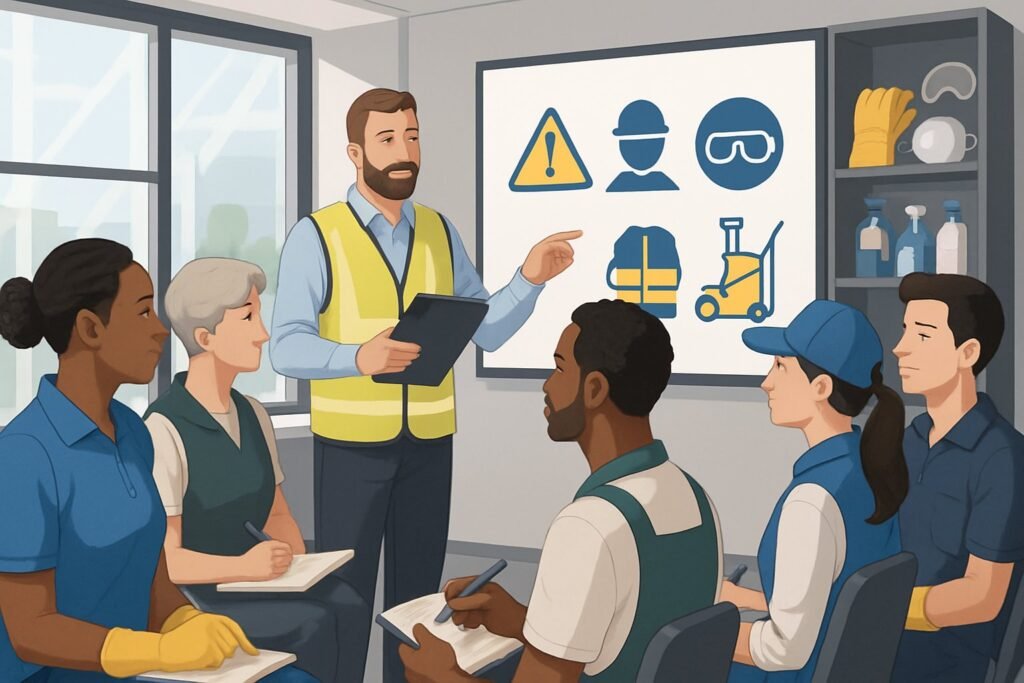
OSHA says you have to train workers on hazardous materials before they start using cleaning products. Training should cover how to read labels and safety data sheets.
Workers need to know the hazards of each product they use. Training should explain the difference between short-term effects like skin burns and long-term problems like breathing issues.
Required Training Topics:
- How to read chemical labels and pictograms
- Where to find and how to use safety data sheets
- Proper mixing and dilution
- Picking and using the right protective gear
- What to do in an emergency
Give refresher training when you add new products or after an incident. Keep records of all training sessions for OSHA inspections.
Hands-on demos work better than just sitting in a classroom. Let employees practice reading actual labels and SDS sheets for the products they’ll use.
Personal Protective Equipment (PPE) Requirements and Best Practices
Cleaning businesses need to provide the right protective equipment for each job and make sure workers know how to use it. Good training programs help staff understand when PPE is needed and how to stay safe with chemicals and cleaning gear.
Types of PPE for Cleaning Operations
Cleaning workers use different PPE depending on the chemicals and tasks. The basics are nitrile or chemical-resistant gloves, safety glasses, and closed-toe shoes with slip-resistant soles.
Chemical Protection Requirements:
- Chemical-resistant gloves for disinfectants and cleaning solutions
- Eye protection for mixing chemicals or using sprays
- Respirators for jobs with strong fumes or aerosols
Physical Hazard Protection:
- Cut-resistant gloves for glass or sharp objects
- Hard hats in construction or industrial settings
- Knee pads for floor cleaning
Workers using floor strippers or strong degreasers need extra protection. That might mean face shields, chemical-resistant aprons, or rubber boots. High-strength bleach requires respiratory protection and good ventilation.
The PPE you need depends on the hazards. Cleaning a bathroom might just need gloves and glasses, while industrial cleaning could call for full suits and respirators.
Proper PPE Use, Fit, and Maintenance
PPE works only if workers actually wear it right and keep it in shape. Gloves need to cover wrists fully and fit snug—nobody likes gloves that pinch or fall off.
Safety glasses should hug the face, no gaps sneaking around the sides. If they slip down your nose, they’re not doing their job.
Fitting Guidelines:
- Gloves should let you move your fingers easily but not slip off
- Safety glasses can’t slide down your nose while you work
- Respirators need a real fit test to make sure you get a good seal
Workers should check PPE before every single use. Cracked safety glasses or torn gloves? Useless. Toss damaged gear right away and grab a replacement.
Maintenance Requirements:
- Clean reusable PPE after each shift
- Store equipment somewhere clean and dry
- Swap out disposable stuff daily or when it gets dirty
Chemical-resistant gloves break down over time. A quick trick: fill them with water and check for leaks before putting them on. Clean safety glasses often so you can actually see what you’re doing.
PPE comes with expiration dates—don’t ignore them. Old respirator filters just don’t protect you anymore and can mess with safety protocols.
PPE Training for Staff
Every cleaning staff member needs training on when and how to use PPE. It’s not just about wearing gear—it’s about knowing what protects you from what.
Required Training Topics:
- When PPE is necessary for each cleaning task
- How to put on, adjust, and take off equipment safely
Training also covers what PPE can’t do, and how to care for and store it. Workers learn to spot when they need extra protection.
Mixing chemicals? Always use eye protection and make sure there’s good airflow. Pressure washing? That calls for face shields and waterproof clothes.
Training shouldn’t just happen in a classroom. Workers need to practice putting on respirators and adjusting safety gear. They should know how to tell if PPE fails or needs to be swapped out.
Supervisors should keep an eye on things and make sure everyone’s following safety rules. When new chemicals or tools show up, refresher training helps. Good documentation protects the business and proves you’re following safety regulations.
Incident Reporting and Workplace Injury Procedures
When something goes wrong at work, cleaning businesses need to act fast. That means documenting what happened and reporting to OSHA on time. Employers need a clear system for tracking injuries and staying on top of safety rules.
Steps for Documenting Workplace Incidents
Immediate Response Actions
If an incident happens, the employer needs to secure the area right away. Make sure nobody else gets hurt. Medical care comes first, always.
Supervisors should collect the basic facts as soon as possible. What happened, when, and who was involved? Snapping a few photos helps save the details.
Required Documentation Elements
Incident reports need to be specific. Record the injured worker’s name, job title, and where they were working. Note the exact time and date.
Describe how the injury happened. List any chemicals, equipment, or cleaning products that played a part. Witness statements can fill in the blanks.
OSHA Form Requirements
If you have more than 10 employees, you need to use OSHA forms 300, 300A, and 301. These track injuries and illnesses all year.
Form 301 is for the details—fill it out within seven days of learning about a recordable injury.
Post-Incident Response and Recordkeeping
Immediate Reporting Deadlines
OSHA wants to know about serious incidents fast. Report work-related deaths within 8 hours. Hospitalizations, amputations, or eye losses? You’ve got 24 hours.
You can call or report online. For emergencies, dial OSHA’s 24-hour hotline at 1-800-321-OSHA.
Ongoing Recordkeeping Duties
Employers need to keep injury records for five years. Keep forms 300, 300A, and 301 handy in case someone asks.
Post the annual summary (Form 300A) from February 1 through April 30. Workers have the right to check out these records.
Electronic Submission Requirements
Some cleaning companies have to submit injury data online. If you have 250+ employees in certain industries, use OSHA’s Injury Tracking Application.
The deadline is January 2 through March 2 each year. This helps OSHA spot workplace hazards across industries.
Protecting Your Business from Liability Risks
Cleaning businesses face real risks when employees get hurt or safety rules get ignored. Having strong policies and handling claims well can save you from big legal headaches and losses.
Establishing Policies to Minimize Liability
Clear safety policies are your first line of defense. Put all safety procedures in writing—cover chemical handling, equipment use, and what to do in an emergency.
Keep employee training records as proof you’re doing your part. Log every training session with dates, topics, and signatures.
Key Policy Areas:
- Chemical safety and storage
- PPE usage
- Equipment maintenance and inspection
- Incident reporting
- Emergency response
Update your policies at least once a year or when regulations change. It shows you care about safety and keeps you compliant.
Consistency matters. Everyone should follow the same safety rules—no exceptions. If you let things slide, it could hurt you in court.
Understanding Workers’ Compensation and Claims Management
Workers’ compensation insurance is a must. It covers medical bills and lost wages if someone gets hurt. Most states require it, no way around that.
Report claims quickly—within 24 hours is best. Fast action means better care for employees and cleaner records.
Claims Management Steps:
- Get medical help for the worker right away
- Document everything about the incident
- Notify your insurance carrier ASAP
- Stay in touch with the injured employee
- Work on a return-to-work plan
Return-to-work programs help control costs. Modified duties let people come back sooner, which keeps morale up and cuts wage payouts.
A good safety record can lower your insurance rates. Fewer claims mean smaller premiums over time.
Frequently Asked Questions
Cleaning business owners have plenty of questions about safety, training, and protecting their teams. Most concerns focus on building solid safety programs, handling chemicals, and avoiding regulatory trouble.
What are the essential elements needed to establish an effective safety program for a cleaning business?
A good safety program starts with written policies on hazard identification and risk assessment. Every cleaning task and piece of equipment should have documented protocols.
Keep detailed employee training records—dates and topics for each person. Regular safety inspections and audits help you catch hazards before someone gets hurt.
Set up schedules to check equipment, worksites, and safety procedures. Everyone needs to know what to do in an emergency, whether it’s a chemical spill, injury, or gear failure.
How should a cleaning business properly handle and store chemicals to ensure compliance with OSHA regulations?
Every chemical must have a current Safety Data Sheet (SDS) available to workers. These sheets explain hazards, safe handling, and emergency steps.
Store chemicals in well-ventilated, temperature-controlled areas. Keep incompatible chemicals apart—no one wants a surprise reaction.
Workers need training on mixing and dilution. Only trained people should handle concentrated chemicals, and they need the right PPE.
Never remove original labels from containers. If you transfer chemicals, use clear secondary labels so everyone knows what’s inside.
What are the PPE requirements for employees in the cleaning industry to prevent workplace injuries?
Eye protection is a must for chemical cleaning or splash risks. Safety glasses or goggles should meet ANSI impact standards.
Use chemical-resistant gloves to protect hands. The right glove material depends on the chemicals you’re using.
Some jobs need respiratory protection—N95 masks or respirators help when you’re around fumes or dust. In poorly ventilated spots, don’t skip it.
Non-slip shoes help prevent falls on wet floors. Steel-toed boots are smart when you’re moving heavy gear or working in rougher settings.
What is the correct procedure for reporting workplace incidents within a cleaning company to maintain OSHA compliance?
Record all injuries and illnesses within 24 hours. Use OSHA Form 300 to keep track.
Serious incidents? Report fatalities within 8 hours, hospitalizations within 24. Give injured employees medical care right away.
Document what happened, how, and what treatment was given. Investigate to find out why it happened and fix the issue.
How can cleaning businesses develop and conduct safety training to meet and exceed OSHA standards?
Training should focus on job-specific hazards and safe practices. New hires need thorough orientation before starting.
Refresher training keeps everyone sharp and covers new hazards. Yearly sessions help reinforce safety and update workers on rule changes.
Use plain language, and make sure everyone understands. Visual aids and hands-on demos work better than just reading slides.
Keep records of every training—dates, topics, trainer names, and who attended. That way, you’re covered if anyone asks.
What measures should a cleaning business take to minimize liability in the event of an employee injury?
Workers’ compensation insurance really matters when it comes to covering employee injuries and illnesses. It shields both the business and injured workers from unexpected financial trouble.
If someone gets hurt, responding quickly shows you care about safety and following the rules. Taking action right away can keep small problems from spiraling into bigger liability headaches.
Regular safety audits help you spot hazards before anyone gets hurt. Sometimes, it’s worth bringing in a professional safety consultant for a fresh, objective perspective.
Keep records of your safety programs and training. Documenting these efforts can help if you ever end up dealing with legal or regulatory questions.