Starting a cleaning business takes more than just excitement and elbow grease. You’ve got to have the right equipment, supplies, and tools from the start if you want to deliver results that keep clients coming back.
Without good prep, new owners often scramble to buy missing items or get stuck with cheap gear that breaks fast.
Investing in quality cleaning supplies and equipment can feel intimidating. A lot of folks wonder which items are truly essential and what can wait until later.
From basic mops and vacuums to specialty products and business software, every purchase affects your service and profits. It’s a lot to juggle.
If you plan smart, you’ll avoid costly mistakes and launch more smoothly. Knowing what’s essential lets you budget better and build a strong foundation.
A good checklist keeps you from overspending and helps you avoid missing something critical.
Key Takeaways
- The right tools and supplies are the backbone of professional cleaning
- Spend wisely at first; upgrade as your business grows
- Tech and management tools become important as you take on more jobs
Essential Cleaning Tools and Equipment
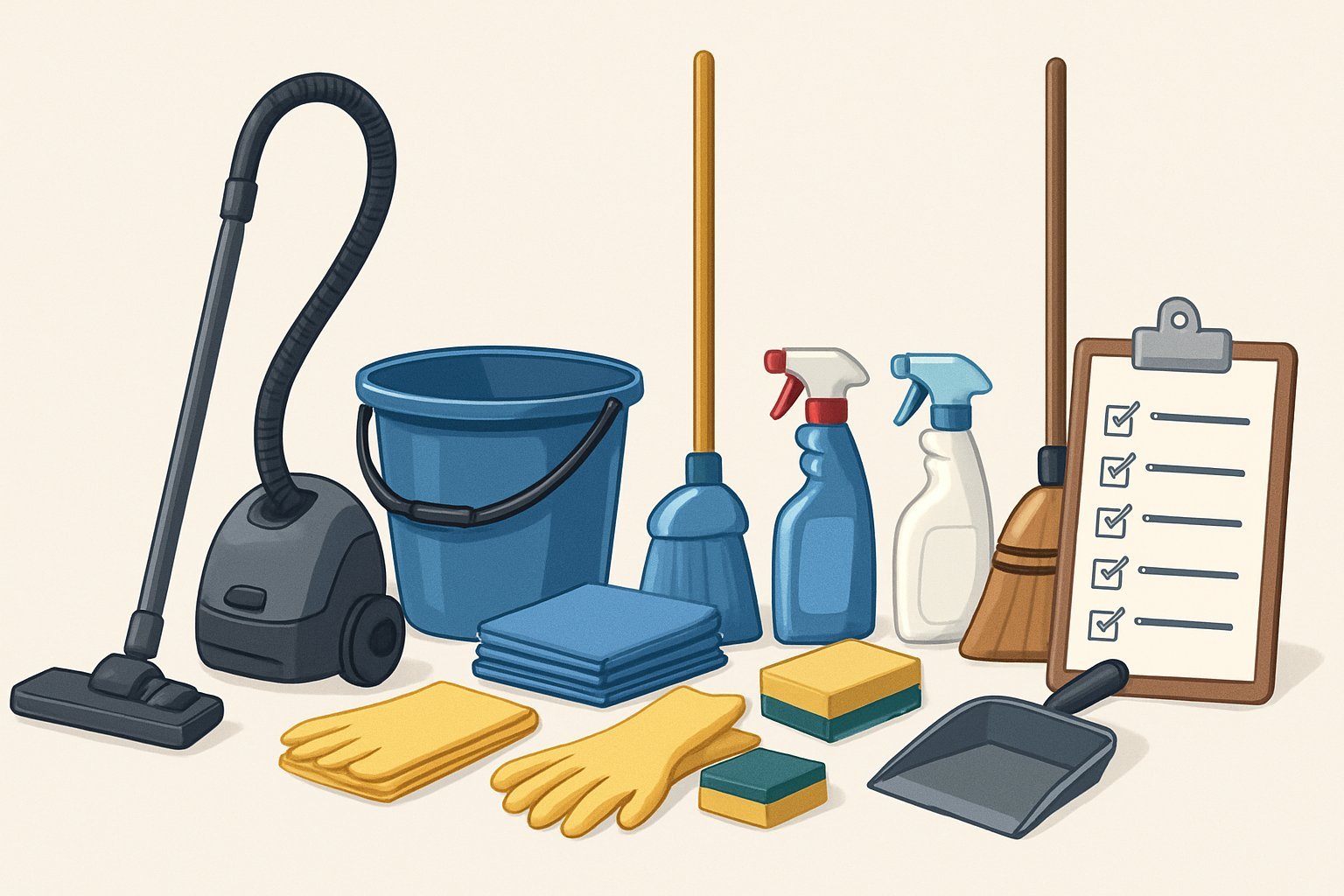
The right cleaning tools really do make or break a cleaning business. Solid vacuums, sturdy mops, microfiber cloths, and a well-organized caddy help you work faster and look more professional.
Vacuum Cleaners for Different Surfaces
A dependable vacuum cleaner is probably the single most important purchase. If you get a pro-grade model (think Shark or Dyson), you’ll get better suction and durability for everyday use.
Canister vacuums work great on hard floors and stairs, giving you more control and letting you reach tricky spots. Uprights are better for carpets and cover big rooms quickly.
Look for these features:
- HEPA filtration to trap allergens
- Multiple attachments for furniture and corners
- Lightweight build for easy carrying
- Long cord so you don’t have to keep finding outlets
A lot of cleaners carry both types to handle whatever comes up. Expect to spend $200-400 on a vacuum that’ll last with some basic maintenance.
Backpack vacuums are popular for commercial jobs. They’re easier on your back and let you clean big spaces faster.
Brooms, Mops, and Buckets for Floor Care
Floor care tools are your bread and butter. A whisk broom and dustpan help with debris and corners.
Lobby brooms with stiff bristles sweep large areas quickly. They’re tougher and last longer than the cheap stuff.
Wet mops need a solid bucket system. Go for buckets with:
- Separate wash and wring compartments
- Wheels for rolling around
- Splash guards to keep things tidy
Dry mops (especially microfiber) pick up dust without chemicals and are easy to wash.
String mops are cheaper, but microfiber mops clean better and dry faster. Swap out mop heads often to keep things sanitary.
Microfiber Cloths, Dusters, and Dustpans
Microfiber cloths are a must for pro results. They soak up more liquid and trap dust better than old-school rags.
Buy different colors for different rooms to avoid cross-contamination. Stock up on:
- All-purpose cloths
- Glass cloths for streak-free windows and mirrors
- Dusting cloths for delicate items
Dusters come in all shapes—short, long, and extendable. Short ones are great for furniture, long ones for fans and shelves.
Dustpans should have a flat edge. Metal ones last longer, but some plastic versions have a rubber edge that hugs the floor.
Wash microfiber cloths separately and skip the fabric softener—it messes up their cleaning power.
Caddy and Organization Systems
A sturdy caddy keeps your supplies handy and saves you steps. Portable caddies help you move fast from room to room.
Look for:
- Lots of compartments
- Comfortable handles
- Durable, chemical-resistant materials
- A size that’s big enough but not a pain to carry
Canvas bags are good for hauling dirty rags. Go for thick fabric that holds up to washing.
Use clear supply containers so you can see what you’re running low on. Label everything, especially if you’re working with chemicals. Keep safety sheets in a binder—no one likes a mystery spill.
Must-Have Cleaning Products and Solutions
Stocking the right products is key. You’ll want multipurpose cleaners for daily jobs, specialty stuff for glass and floors, powerful degreasers, and a few targeted products for those weird, one-off messes.
All-Purpose Cleaners and Disinfectants
Every cleaning business needs a reliable all-purpose cleaner. It should handle dirt, grime, and most surfaces without damaging anything.
Disinfectant sprays are non-negotiable for high-touch spots like doorknobs and counters. Make sure you get EPA-registered ones that actually kill germs.
Some pros like products that clean and disinfect in one go. Fewer bottles, less fuss.
Stock these basics:
- Multi-surface spray
- Hospital-grade disinfectant
- Antibacterial wipes
- Bleach-based bathroom cleaner
Try a few brands and see what works. Don’t cheap out—your reputation depends on results.
Glass, Floor, and Oven Cleaners
Glass cleaners should leave windows and mirrors streak-free. The pro stuff usually has ammonia or alcohol, so it dries fast and doesn’t leave marks.
Floor cleaners depend on the surface. For wood, stick to gentle, pH-neutral stuff. Tile and laminate can handle something stronger.
Oven cleaners are for the tough, greasy jobs. They’re strong, so open a window and wear gloves.
You’ll want:
- Wood floor cleaner (pH-neutral)
- Tile/grout cleaner
- All-surface floor cleaner
- Floor polish or finish
Get some decent glass cloths too. Microfiber beats paper towels any day.
Degreasers and Dishwashing Liquids
Degreasers cut through kitchen grease and grime. Commercial-grade ones make a big difference.
Dish soap isn’t just for dishes. It’s gentle, mixes well, and works for a lot of surfaces.
Mix a few drops of dish soap with water and you’ve got a great all-purpose cleaner.
For heavy-duty needs:
- Alkaline degreasers for commercial kitchens
- Citrus-based for homes
- Concentrated dish soap
- Foam degreasers for vertical messes
These tackle the nastiest kitchen jobs.
Specialty Cleaning Products for Specific Tasks
Some jobs need extra help. Stainless steel cleaners keep appliances shiny and fingerprint-free.
Carpet cleaners and spot removers tackle stains and odors. Enzyme-based ones are best for organic messes.
Mold and mildew removers (usually bleach-based) are crucial for bathrooms. Ventilate well and handle with care.
A few specialty supplies:
| Product Type | Best Use | Key Benefit |
|---|---|---|
| Granite cleaner | Natural stone | Prevents damage |
| Upholstery cleaner | Fabric furniture | Cleans stains gently |
| Rust remover | Metal fixtures | Gets rid of mineral deposits |
| Wood polish | Furniture | Restores shine |
Add these as needed. Don’t buy everything at once—see what your clients actually need.
Personal Protection and Disposable Supplies
Cleaning exposes you to chemicals and germs. You need the right protective gear, plus disposable supplies like paper towels and trash bags to keep things running smoothly.
Gloves, Masks, and Shoe Covers
Gloves are your first line of defense. Nitrile ones are best—they resist tears and chemicals, plus avoid latex allergies.
Change gloves between rooms or tasks to prevent spreading germs.
Dust masks protect your lungs from fumes and dust. Regular disposable masks work for most jobs. Use N95s for strong chemicals or mold.
Shoe covers keep floors clean and protect your shoes. Clients notice when you use them, and some even require it.
It’s a small thing, but it shows you care about their home.
Paper Towels and Trash Bags
Paper towels are great for quick cleanups. Buy commercial-grade—they soak up more and last longer.
Multi-fold towels fit in caddies and tear cleanly.
Trash bags come in various sizes. Small ones for bathrooms, big ones for kitchens or deep cleans.
Get heavy-duty bags for tough jobs. Clear bags help you spot what’s inside so you don’t toss something important.
Stock both regular and heavy-duty. Use the cheap ones for light waste, and save the tough bags for big messes.
Laundry Detergent for Linens and Uniforms
Laundry detergent keeps cloths, uniforms, and linens clean and fresh. Commercial stuff removes stains and odors better.
Wash microfiber cloths with detergent but skip the fabric softener—it ruins their effectiveness.
Clean uniforms make a good impression. No one wants a cleaner in stained clothes.
If you wash client linens, use quality detergent. Fresh-smelling towels and bedding can even boost your rates and keep clients loyal.
Commercial and Specialty Equipment Upgrades
As your business grows and you land commercial contracts, you’ll need to invest in pro-grade gear. Industrial vacuums, carpet machines, and window tools help you handle bigger jobs and keep up your standards.
Industrial Vacuum Cleaner and Carpet Cleaners
Industrial vacuums pack more power than residential models. They’re built to handle debris and constant use without burning out.
Most come with HEPA filters, which trap almost all particles—perfect for offices and medical buildings.
Backpack vacuums give you more mobility. They can cut cleaning time in half compared to uprights since you’re not dragging anything behind you.
Carpet cleaning machines become a must for offices with lots of carpet. Hot water extractors pull out deep stains and allergens.
Expect to pay $2,000 to $8,000 for a pro carpet cleaner. But you can charge premium rates—sometimes $0.25 to $0.50 per square foot—for those specialty services.
Glass Cleaning Cloths and Window Tools
Glass cleaning cloths made from microfiber deliver streak-free results on windows and mirrors. Professional-grade cloths have more fibers per square inch than the usual versions.
Window cleaning tools cover squeegees with replaceable rubber blades and extension poles. Good squeegees come in sizes from 6 to 24 inches wide, so you can match them to different windows.
Professional window cleaners usually pick alcohol-based solutions. These dry fast and don’t leave residue, which is especially helpful in cold weather.
Water-fed pole systems let cleaners reach windows up to four stories high. These systems filter water to remove minerals that cause annoying spots and streaks.
Extension tools cut down on ladder use. That makes things safer and saves time between jobs.
Janitorial Carts and Extension Dusters
Janitorial carts organize supplies and look professional. The best carts have several compartments, a mop bucket holder, and smooth wheels.
Most carts are 32 to 48 inches long and carry enough for cleaning 10,000 to 15,000 square feet. Larger carts suit big offices and schools better.
Extension dusters help workers reach high surfaces without dragging out a ladder. Telescoping handles stretch from 4 to 12 feet, so ceiling fans and light fixtures are within reach.
Microfiber dusting heads grab particles electrostatically. Washable heads can last 200 to 300 uses if you take care of them.
Professional carts cost $300 to $800. They keep everything close by and reduce trips to the supply closet.
Business Management, Software, and Technology Essentials
Modern cleaning businesses need the right tech to stay competitive. Digital tools help owners manage schedules, track payments, and find new customers on social media.
Cleaning Business Software for Scheduling and Invoicing
Cleaning business software makes daily operations easier and cuts down on paperwork. With these programs, you can handle customer scheduling, job tracking, and payments all in one place.
Popular picks are Jobber, Housecall Pro, and ZenMaid. They offer features like automated reminders, route optimization, and invoice generation.
Key software features to consider:
- Online booking for customers
- GPS tracking for job sites
- Payment processing
- Customer database management
- Automated billing and invoicing
Software costs run from $30 to $100 per month, depending on what you need. Most providers let you try before you buy.
Mobile apps allow cleaners to update job status in real time. Customers get notified instantly when work starts and finishes.
Smartphones and Office Equipment
Smartphones are basically mobile command centers for cleaning businesses. They make it easy to talk to customers, snap photos of finished jobs, and use business software on the go.
Essential office equipment:
- Laptop or desktop for admin work
- Printer for contracts and invoices
- Filing system for paperwork
- Basic accounting software or spreadsheets
Business phone systems keep communication professional. It’s worth considering a separate business line to avoid mixing work and personal calls.
Cloud storage services like Google Drive or Dropbox keep important files safe. You can access documents from any device with an internet connection.
Effective Use of Social Media for Marketing
Facebook and Instagram help cleaning businesses find local customers without spending a fortune. They’re great for sharing before-and-after photos and customer testimonials.
Facebook business pages let customers leave reviews and send messages directly. The platform’s local ad tools target nearby homeowners looking for cleaning services.
Instagram is perfect for visual content. Stories and posts with sparkling clean homes catch the eye of potential customers.
Social media best practices:
- Post two or three times each week
- Share clear before-and-after photos
- Respond to comments and messages quickly
- Use local hashtags to reach folks nearby
Both platforms offer free business accounts with basic analytics. Paid ads start as low as $5 per day for local targeting.
Budgeting for Supplies and Planning for Growth
Smart financial planning really separates successful cleaning businesses from the rest. New owners need to balance startup costs with cash flow and plan equipment upgrades for future growth.
Initial Investment Versus Ongoing Costs
Starting a cleaning business means spending differently on equipment and supplies. The first round of equipment includes durable items like vacuums, floor buffers, and business software.
One-Time Equipment Purchases:
- Commercial vacuum: $200-$800
- Mop and bucket: $50-$150
- Microfiber cloths and reusable tools: $100-$200
- Business software: $50-$200 monthly
Monthly Supply Expenses:
- Cleaning chemicals and disinfectants: $100-$300
- Paper towels and disposables: $75-$150
- Replacement parts and maintenance: $50-$100
New owners should put about 60% of startup funds into equipment and 40% into three months’ supplies. This split helps keep cash flow steady.
Track monthly supply costs against your revenue. Most successful cleaning companies spend 15-20% of monthly revenue on supplies and equipment upkeep.
Upgrading Equipment as Business Expands
As your cleaning business grows, you’ll need to upgrade equipment to handle more work and keep quality high. Buy new tools as you hit client growth milestones instead of buying everything at once.
Growth-Based Upgrade Timeline:
- 5-10 clients: Add carpet cleaners and floor polishers
- 15-20 clients: Invest in commercial vacuums and pressure washers
- 25+ clients: Get multiple equipment sets for different crews
Budget 10-15% of monthly revenue for upgrades and replacements. It’s smarter to set aside money each month than to make big purchases that strain your bank account.
Compare equipment purchases to your expected revenue growth. For example, a $2,000 floor buffer only makes sense when you’re bringing in $8,000 to $10,000 monthly.
Swap out basic gear for commercial-grade versions as your client list grows. The pro stuff lasts longer and delivers better results, which can justify higher prices.
Frequently Asked Questions
New cleaning business owners ask a lot about startup costs, equipment priorities, and tech needs. It’s not always easy to figure out what matters most right away.
What are the essential cleaning tools and products needed for a startup cleaning business?
Every new cleaning business needs basic supplies for residential and commercial jobs. The core cleaning products are all-purpose cleaners, disinfectants, glass cleaners, and floor cleaners.
You’ll also need microfiber cloths, mops, buckets, vacuums, and scrub brushes. Don’t forget sponges, rubber gloves, and trash bags.
Safety gear like non-slip shoes and protective eyewear keeps workers safe. A cleaning caddy makes it easier to carry supplies between jobs.
For kitchens, grab degreasers, stainless steel cleaners, and appliance cleaners. Bathrooms need toilet bowl cleaners, tile cleaners, and mildew removers.
How can a new cleaning company best allocate its initial investment in equipment and supplies?
Spend 60-70% of your supply budget on basic products and tools. These cover most cleaning tasks and start generating revenue right away.
Commercial-grade vacuums deserve 20-25% of the equipment budget. They last longer and work better than cheaper models.
Put the last 10-15% toward specialty tools like carpet cleaners or squeegees. These help land higher-paying contracts.
Buying in bulk saves money, but start with smaller quantities until you know what you’ll use. Focus on daily-use items before splurging on specialty gear.
What are the must-have pieces of technology, such as software and communication devices, for managing a new cleaning business efficiently?
Smartphones are must-haves for communication, scheduling, and snapping before-and-after photos. Choose ones with good cameras and solid battery life.
Scheduling software helps manage appointments, track employees, and send reminders. Jobber, Housecall Pro, and ServiceTitan are popular choices.
Payment processing apps like Square or QuickBooks let you take cards on-site. That’s a game-changer for cash flow and customer happiness.
GPS apps help employees get to job sites fast. Time tracking apps make sure you bill hourly work accurately.
Cloud storage keeps customer info and important docs handy. Basic accounting software tracks expenses and generates invoices.
Can you suggest a prioritized checklist of items for purchasing when setting up a new cleaning service?
First, get all-purpose cleaners, microfiber cloths, mops, buckets, and a basic vacuum. These will cover most jobs.
Next, buy disinfectants, glass cleaners, rubber gloves, trash bags, and toilet brushes. These round out your basic toolkit.
For the third round, invest in commercial vacuums, carpet spot cleaners, and extension tools. These speed up work and improve results.
Fourth, look at pressure washers, floor buffers, and surface-specific cleaners. These help you win bigger commercial contracts.
Don’t skip safety gear like non-slip shoes, back support belts, and first aid kits. Some insurance policies might require them.
What strategies should a cleaning business adopt for budgeting when replenishing supplies?
Track how much you use of each product to predict monthly needs. All-purpose cleaners and microfiber cloths usually need restocking most often.
Set aside 15-20% of gross revenue for supplies. That should cover normal wear and tear.
Buy high-use items in bulk to save money. Cleaning products, trash bags, and paper towels are good candidates.
Check inventory weekly so you don’t run out. Running out can mean expensive last-minute purchases.
Negotiate payment terms with suppliers if you can. Many wholesalers offer net-30 terms once you’re established.
How and when should a growing cleaning business consider upgrading their equipment?
Upgrade your equipment when repair costs start creeping past 50% of what it’d take to just replace the thing. Old vacuums and floor machines, especially after 2-3 years of heavy use, usually hit this wall.
If you’re expanding into new service areas, that’s another moment to think about upgrades. Some commercial contracts demand industrial-grade gear—residential tools just won’t cut it.
Once your monthly revenue hits $5,000, it’s probably time to swap out consumer-grade tools for commercial equipment. Professional tools don’t just last longer; they make your team faster and save you from constantly shopping for replacements.
Try to time your upgrades with tax perks or your business’s cash flow cycles. Equipment purchases can sometimes qualify for tax deductions in the year you buy them, which is a nice bonus.
If your technology systems start holding you back, don’t ignore it. Outdated scheduling or payment software can really frustrate customers and make everything feel sluggish.
Keep an eye on how your equipment’s performing—like how long it takes to clean a certain area. Newer machines that cut down on labor time often end up paying for themselves in the long run.
