How to Franchise or License Your Cleaning Business Model: Key Steps & Considerations
 R Rashdi
·
November 21, 2025
·
24 MIN READ
R Rashdi
·
November 21, 2025
·
24 MIN READ
The cleaning services industry is a $60 billion opportunity in the United States alone. That’s a lot of floors and windows, and it’s a huge market for business owners looking to grow beyond their neighborhood.
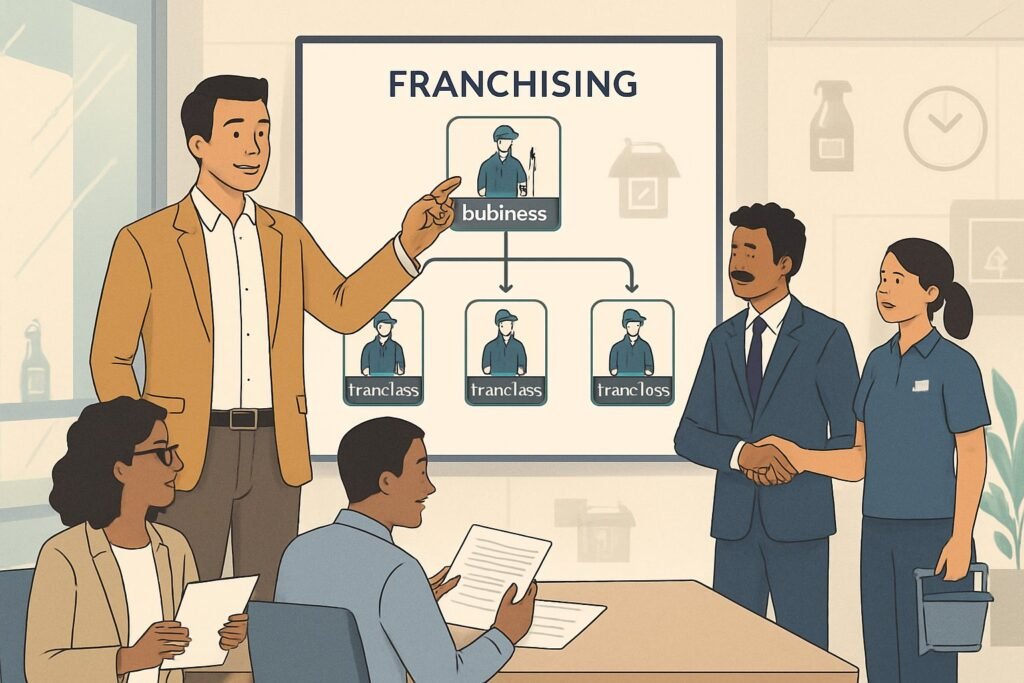
Many successful cleaning business owners eventually hit an expansion wall. There’s only so much time, money, and mental bandwidth for traditional growth. Franchising or licensing your cleaning business model can open the door to rapid growth, letting you tap into other entrepreneurs’ investment and local smarts to build your brand across the country.
Before you jump into franchise development, you’ve got to be honest, are you really franchise-ready? You need consistent processes, solid profits for a few years, and systems that others can actually follow.
Franchising isn’t just about paperwork, but there’s plenty of that too. You’ll need to create franchise disclosure documents, set up royalty structures, and make sure your support systems are rock solid.
A profitable business model is just the start. Owners have to turn their know-how into detailed operations manuals, training programs, and support structures that give franchisees a real shot at success.
Switching from hands-on owner to franchise leader isn’t easy. Suddenly, you’re managing a brand, keeping quality high, and juggling relationships with people you might never meet in person.
Key Takeaways
- Your cleaning business needs a track record of profits, standardized processes, and a brand people recognize before you can franchise.
- Legal compliance means drafting detailed disclosure docs, franchise agreements, and following every federal and state rule.
- Franchising that works always has strong training, manuals, and support to keep quality up everywhere.
Assessing Franchise Readiness for Your Cleaning Business
You can’t franchise if your business still depends on you showing up every day. Prove the business makes money without you touching every job. That takes documented processes, real competitive advantages, and enough cash to expand on.
It takes proven processes, clear advantages over the competition, and enough resources to actually help franchise partners.
Evaluating Business Profitability and Scalability
Two years of steady profits is the floor, because the model now has to feed you and a franchisee.
Here are some numbers that matter:
- Net profit margins: 15% or more
- Revenue growth: 20% a year, two years running
- Customer retention: Over 80%
- Average contract values: Enough to actually keep the lights on
A second location proves the model isn’t a fluke. Scalability just means growth without grinding yourself down.
Your systems have to work when someone else is running the show.
Honestly, commercial cleaning often scales better than residential. Commercial contracts tend to be bigger and stick around longer.
Systematizing Operations for Replication
If you’re going to franchise, operational efficiency is everything. Every process needs to be written down and simple enough for someone else to follow.
You’ll want to document:
- How you get customers and close sales
- The way you deliver services and check quality
- How you hire, train, and manage employees
- Ordering supplies and managing inventory
- Pricing and negotiating contracts
Your team should be able to follow these systems without you hovering over them.
Tech tools, like scheduling software or customer management apps, make it way easier to keep things consistent across multiple locations.
Your standard operating procedures should cover the basics and the weird stuff. That way, every franchise location can deliver the same level of service.
Identifying Unique Value Propositions
You need something special that competitors don’t offer. Franchisees win crowded markets only with advantages customers can actually notice, not ones that live in your pitch deck.
Some ideas:
- Specialized cleaning (think medical offices or factories)
- Eco-friendly products and green practices
- Tech integration (automated scheduling, real-time updates)
- Flexible service options for picky clients
Brand recognition takes sustained marketing spend. There’s no shortcut.
Training programs should show franchisees how to talk about and deliver these unique perks. That keeps your brand voice consistent everywhere.
Determining Resource and Team Preparedness
Franchising isn’t cheap or easy. You’ll need money up front and a team that can support franchisees.
Here’s what you’ll need:
- Legal fees for franchise docs ($50,000-$150,000)
- Operations manual creation and updates
- Training programs and enough support staff
- Marketing materials and brand work
- Tech systems that work for multiple locations
Your management team should understand franchising. Running franchises is very different from running one cleaning company.
Support staff should be ready to help franchisees with everything from operations to marketing. This support doesn’t end after launch.
You’ll want to plan for slow franchise sales and ongoing support costs. Most owners underestimate the cost badly. A franchise model is not a logo on a mop.
Franchise Model Development and Legal Foundations
Fee structures, territory rights, investment details, and a legal workload that dwarfs all three.
You have to protect yourself and your franchisees, and you need to follow every rule in the book.
Choosing Between Franchising and Licensing
Franchising gives you more control over your brand and how things run. You’ll offer support, training, and brand management, but you’ll also charge higher fees and royalties.
Licensing is looser. Franchisees get more freedom, but less help. You make less money and can’t really control how they operate.
Most cleaning businesses go the franchise route. It keeps quality high and protects the brand.
In a nutshell:
- Franchising: More money, more support, strict standards
- Licensing: Less money, less support, more freedom
For cleaning services, franchising usually works better. Customers expect the same quality everywhere, and the brand helps new locations get clients faster.
Structuring Franchise Fees and Royalties
The franchise fee covers your initial training, manuals, and the right to use your brand. Most cleaning franchises ask for $25,000 to $60,000 up front. Initial franchise fee
Ongoing royalties usually run 4% to 8% of gross revenue. These pay for marketing, tech, and ongoing support.
Typical fees:
- Franchise fee: $25,000-$60,000
- Royalties: 4-8% of gross revenue
- Marketing fund: 1-3% of gross revenue
- Tech fees: $50-$200 a month
Some franchisors use flat fees instead of percentages, especially for small territories or residential cleaning.
Don’t set fees so high that franchisees can’t make a profit. You need both sides to win.
Defining Investment and Territory Requirements
Franchisees need to invest in equipment, vehicles, insurance, and working capital. Most cleaning franchises require a total investment of $50,000 to $150,000.
Territory rights stop franchisees from cannibalizing each other, and population-based territories beat lines on a map.
How the money breaks down:
- Equipment and supplies: $15,000-$30,000
- Vehicle and branding: $10,000-$25,000
- Insurance and bonds: $5,000-$15,000
- Working capital: $20,000-$50,000
Size the territory to market density and service type. Commercial needs fewer clients than residential to hit the same revenue.
Give franchisees exclusive rights to their area. Non-compete clauses help protect their investment during and after the franchise term.
Drafting the Franchise Agreement
The franchise agreement spells out everything between you and your franchisees. It has to follow federal and state laws and protect both sides.
You’ll need to cover territory rights, fees, how things should run, and what happens if things go south.
Must-haves:
- Term length and renewal options
- Territory details and exclusivity
- Performance and quality standards
- Training and support commitments
Most franchise agreements last 10-15 years with options to renew.
You’ll want a lawyer to make sure everything is legal and up to date. Every state has its own rules for registration and disclosure.
The agreement should give you enough control to protect your brand, but not so much that franchisees feel trapped. Clear performance metrics help everyone know where they stand.
Navigating Franchise Disclosure and Regulatory Compliance
Franchise compliance is a maze, disclosure documents, federal and state laws, intellectual property, and insurance requirements. If you skip this stuff, you’re asking for trouble.
Understanding the Franchise Disclosure Document (FDD)
The Franchise Disclosure Document is the big one. It’s all about transparency and keeping things legal.
This document has 23 items that lay out everything a potential franchisee needs to know.
You’ll cover:
- Your background and business experience
- What it costs to get started and keep going
- Territory rights and any limits
- Financial performance info
- Audited financials
You have to give the FDD to prospects at least 14 days before they sign anything or pay you. That gives them time to think and get advice.
Keep it accurate and current. Update it every year and whenever you make big changes.
Get a lawyer to review it regularly. Franchise law changes, and you don’t want to get caught out.
Meeting State and Federal Franchise Laws
Federal rules center on the FTC Franchise Rule. It sets the minimum for disclosure and bans shady sales tactics.
States can be a whole different ballgame. Fourteen states require franchise registration before you can sell there.
Here’s a quick look:
| Registration Required | Filing Only |
|---|---|
| California, New York, Illinois | Texas, Florida, Michigan |
| Minnesota, Washington, Wisconsin | Georgia, Virginia |
| Indiana, Maryland, North Dakota | |
| Rhode Island, South Dakota, Hawaii |
In registration states, you’ll need to file your FDD, pay fees, and wait for approval. You’ll also have to renew every year.
Non-registration states still make you follow the FTC rule, and many have extra rules on top.
Some states have “relationship laws” that tell you how to handle renewals, terminations, and notice periods.
Intellectual Property Protection
If you’re going to franchise, you need to protect your brand. Trademark registration gives you exclusive rights to your name, logo, and any unique marketing.
Federal trademarks protect you nationwide. Register these:
- Business name and slogans
- Service marks
- Logos and designs
- Proprietary cleaning methods (if you have them)
Copyright covers the manuals, training, marketing, and custom systems, and the agreement must spell out exactly how franchisees may use all of it.
You’ll have to watch for infringement and be ready to enforce your rights if someone tries to rip you off.
Meeting Insurance and Liability Standards
Insurance isn’t optional. It protects everyone from the stuff you hope never happens.
You’ll need:
- General liability: $1-2 million per incident
- Professional liability: $500,000-$1 million
- Workers comp: As required by your state
- Commercial auto: For those on-the-road cleaning crews
- Bonding: Especially for residential jobs
Your franchise agreement should list out what insurance is required for both sides.
Franchisees have to keep coverage the whole time. Ask for proof and make sure you’re listed as an additional insured.
Review your insurance regularly. As your franchise grows, your risks change. Find an insurance pro who gets franchising to help you stay protected.
Creating Operations Manuals and Standardized Processes
Operations manuals really form the backbone of successful cleaning franchises. They lay out uniform procedures that protect your brand and keep service delivery consistent.
Technology infrastructure and quality control systems work hand-in-hand to create standards that franchisees can actually follow. This keeps things running smoothly across every location.
Documenting Cleaning Procedures and Protocols
Effective operations manuals for commercial cleaning services need to break down every task step-by-step. Each protocol should spell out the exact products, tools, and time needed.
Essential Documentation Areas:
- Surface-specific procedures – Carpets, hardwood, tile, specialty surfaces… each needs its own method.
- Chemical handling protocols – Safety steps, mixing ratios, storage rules.
- Equipment operation guides – How to use vacuums, floor scrubbers, and other machines.
- Time allocation standards – How long should each room or task take?
The manual should use diagrams and photos. Visuals just make it easier for franchisees to pick up proper techniques, think restroom sanitizing or the right mopping pattern.
Safety protocols deserve special attention. Cover personal protective equipment, emergency steps, and OSHA compliance, don’t leave it vague.
Write each procedure so a brand-new employee can follow along without needing a supervisor. That way, training takes less time and results stay consistent from one location to another.
Quality Control and Performance Benchmarks
Quality control systems give franchisees clear benchmarks for service excellence. These standards help protect your brand and show owners where they can do better.
- Customer satisfaction scores (aim for 95%+)
- Cleaning completion times by room
- Product usage and waste reduction goals
- Employee safety incident rates
- Client retention percentages
Supervisors should use quality checklists for every cleaning procedure. It’s a simple way to make sure nothing gets skipped before leaving a client’s site.
Mystery shopper programs give you a way to check up on franchise operations without tipping anyone off. Corporate staff can see what’s happening in the field without getting in the way.
Monthly or quarterly quality audits help spot training needs and make sure every location keeps up with brand standards.
Digital quality tracking systems let you monitor performance across all franchise locations in real time. With this data, the corporate team can jump in and offer support where it’s needed most.
Consistency in Customer Experience
Standardized customer interaction protocols make sure clients get the same quality, no matter which franchise location serves them. That kind of consistency builds trust and loyalty.
Customer Experience Standards:
- Uniform arrival and departure procedures
- Standard communication with clients
- Consistent pricing and service offerings
- Identical complaint resolution processes
Spell out employee appearance and behavior standards. Uniforms, communication style, client interaction, and identical scheduling systems across every location.
A client calling location three should get the exact experience of a client calling you.
Follow-up procedures, maybe a confirmation call or a quick digital feedback request, help keep customer satisfaction steady.
Brand messaging and marketing materials need to stay uniform, too. That way, there’s no confusion and your professional image stays intact everywhere.
Adopting Technology Infrastructure for Scale
Technology infrastructure lets franchise operations scale up while keeping quality in check. Today’s cleaning businesses lean on digital systems for scheduling, quality control, and customer communication.
Essential Technology Components:
- Scheduling software – Automates booking and routes for efficiency
- Quality tracking apps – Digital checklists and photo documentation keep everyone accountable
- Communication platforms – Unified messaging between corporate and franchisees
- Training portals – Online access to updated procedures and certification
Mobile apps put operations manuals right in the hands of cleaning teams. That way, staff can check procedures while they’re onsite.
Digital reporting systems give corporate a bird’s-eye view of franchise operations. They track key metrics and highlight locations that need more help.
Cloud-based systems make sure every franchisee sees the most current version of the manuals and procedures. Updates go out automatically, so nobody’s left behind.
Integrated payment processing keeps billing and collections consistent. It helps cash flow and takes a load off franchise owners’ admin work.
Establishing Franchisee Training and Support Systems
Strong training programs and support systems are absolutely vital for cleaning franchises. They keep service delivery consistent while new owners find their footing, and the initial training has to span the whole operation.
Developing Onboarding and Initial Training Programs
Hands-on technique, equipment, safety, business operations, customer service, and your quality-control system, packed into the 1-2 intensive weeks most successful cleaning franchises run.
Training components:
- Equipment use and maintenance
- Chemical handling and safety
- Customer interaction basics
- Scheduling and route planning
- Simple bookkeeping and reporting
New franchisees need real-world experience before they open. Shadowing experienced operators helps them see what daily operations look like and what challenges might pop up.
Training materials have to be clear and easy to follow. Video tutorials, step-by-step guides, and checklists help franchisees remember what they learned.
Ongoing Education and Field Support
Ongoing support keeps franchisees sharp and profitable. Regular training updates make sure they stay up to date with new cleaning methods and regulations.
Monthly training sessions can dive into advanced techniques, new equipment, or seasonal services. These sessions help franchisees grow their business and skills.
Field support visits give hands-on help when franchisees hit snags. Support staff can check out operations, spot problems, and offer fixes right away.
Support systems should offer:
- Regular performance reviews
- Tech support hotlines
- Equipment repair and replacement guidance
- Financial analysis and recommendations
Digital learning platforms make ongoing education easy and flexible. Franchisees can complete modules at their own pace and track their progress.
Implementing Communication and Feedback Channels
Communication keeps franchisees connected, and connected franchisees surface small problems while they’re still small.
A monthly newsletter carrying success stories, procedure changes, and industry news does double duty: information plus belonging.
Feedback systems let franchisees report issues and suggest improvements. Online portals or a dedicated phone line make it easy to reach out for help.
Effective communication includes:
- Weekly check-in calls for the first 90 days
- Quarterly business reviews and planning
- Annual conferences and networking events
- Peer mentoring between experienced and new franchisees
Marketing and Business Development Resources
Marketing support helps franchisees pull in and keep customers locally. Professional materials keep the brand consistent but still let franchisees tailor things for their own markets.
Franchise systems should supply digital marketing tools, website templates, social media content, online ad campaigns. These help franchisees compete with the big cleaning companies.
Lead generation systems can deliver qualified prospects. Online booking, referral programs, and local ad co-ops all drive new business to franchise locations.
Business development support covers pricing, service expansion, and growth planning. This gives franchisees a real shot at maximizing their earnings within the system.
Scaling Your Cleaning Franchise Network
Growing a franchise network takes careful selection, smart territory planning, and strong performance tracking systems. These elements decide if a cleaning company can expand without losing quality.
Selecting and Qualifying Potential Franchisees
The right partners make or break a commercial cleaning franchise. Strong franchisees have business skills, financial stability, and a commitment to the brand.
Financial Requirements
- Liquid capital of $50,000–$150,000, depending on territory
- Net worth 2–3 times the initial investment
- Enough cushion to cover six months’ expenses
Business Experience Criteria Look for people with management or customer service experience, or those who’ve owned businesses before. Sales skills help, too.
Personal Qualities Assessment Great janitorial franchise owners work hard and pay attention to details. They need to follow systems but also build local relationships.
Screening Process Steps
- Initial application and financial disclosure
- Phone interviews to check communication
- Discovery Day at headquarters
- Background and reference checks
- Final committee approval
Territory Management and Expansion Strategy
Territory planning protects existing franchisees and opens doors for growth. Clear boundaries prevent turf wars and make sure every market gets covered.
Territory Rights Structure Most cleaning companies grant exclusive territories based on population or business count. Urban areas get smaller territories than rural ones.
Market Analysis Requirements
- Map out business density for commercial cleaning
- Study residential populations for house cleaning
- Assess competition in target areas
- Look at economic indicators like jobs and income
Expansion Timeline Planning Grow in phases. Start with metro areas, then branch into secondary markets. This slow build helps brand recognition and support systems develop.
Protected Territory Guidelines
- Residential: minimum 25,000–50,000 people
- Commercial: 500–1,500 businesses
- Boundaries using zip codes or main roads
- Non-compete clauses within a set radius
Monitoring Operational and Financial Performance
Consistent tracking spots problems early and highlights what’s working. Strong franchise operations need steady monitoring.
Key Performance Indicators Track monthly revenue, customer retention, and profit margins. Watch employee turnover and how fast complaints get resolved.
Financial Reporting Requirements Franchisees need to submit monthly P&Ls, quarterly balance sheets, and annual tax returns. This data shows trends and flags issues.
Operational Audits Schedule
- Monthly phone check-ins with every location
- Quarterly on-site performance reviews
- Annual comprehensive business assessments
- Surprise quality inspections at customer sites
Support Intervention Triggers If revenue drops for two months or complaints spike, support steps in right away. Early action keeps things from spiraling.
Performance Benchmarking Compare each location to the network average. Share top performers’ best practices with franchisees who are struggling, using training and peer mentoring.
Transitioning from Owner-Operator to Franchise Leader
Shifting from running a single cleaning company to leading a franchise network is a big leap. Your job flips from running operations to building the systems that run them, which means stepping back from the daily cleaning work entirely.
Shifting Business Roles and Mindset
Making the move from owner-operator to franchise leader means stepping back from day-to-day cleaning. Instead of managing staff and clients directly, your job becomes building systems that help franchisees win.
Key role changes:
- Create detailed processes instead of doing the work yourself
- Train others rather than perform services
- Monitor brand standards across locations
- Solve problems for franchise owners, not just customers
You stop managing staff and clients and start building systems for other people’s success. Hard shift. Many cleaning business owners built success by getting their hands dirty and building personal client relationships. Franchising means learning to trust others to keep quality high.
Essential mental adjustments:
- Control to guidance: Let franchisees make daily calls
- Local to regional: Think beyond your original market
- Profit to partnership: Prioritize franchisee success over quick revenue
The owner’s new job is to mentor and build systems. That means documenting every process that made your original business work.
Building an Effective Franchise Support Team
Support systems make or break a franchise. Cleaning franchises need team members who know the industry and understand franchise operations.
Core support team positions:
| Role | Primary Responsibilities |
|---|---|
| Operations Manager | Training, quality control, field visits |
| Marketing Coordinator | Brand materials, local campaign support |
| Training Director | Initial and ongoing education programs |
| Financial Analyst | Performance tracking, profit optimization |
The operations manager becomes the main point of contact for franchisees. They handle site visits, review standards, and help solve day-to-day issues. Ideally, they’ve got deep cleaning industry know-how.
Marketing support brings in customers. The team handles ad templates, the brand website, and local marketing advice. Keeping branding consistent everywhere is key.
Training responsibilities:
- Initial franchisee education (typically 1–2 weeks)
- Staff training for cleaning techniques
- Ongoing skills development
- Technology and equipment training
Regular communication ties the whole network together. Monthly calls, quarterly meetings, and annual conferences create a sense of community among franchise owners.
Long-Term Growth and Brand Reputation Management
Operational efficiency gets more important as the franchise network expands. What works for five locations might break down if you try to run fifty.
The franchise leader needs to think about scale from the very start. You can’t just hope the same systems will stretch forever.
Growth management priorities:
- Territory planning to avoid market overlap
- Quality control systems that actually work from a distance
- Technology platforms for communication and reporting
- Vendor relationships that benefit all locations
Brand reputation impacts every franchisee. If one location gives lousy service, the whole network can take a hit, bad reviews spread fast.
Reputation protection strategies:
- Regular quality audits at all locations
- Procedures for resolving customer complaints
- Social media monitoring and response protocols
- Clear standards for uniforms, equipment, and how services are delivered
The franchise leader has to juggle growth speed and quality control. If you add too many locations too fast, support systems might buckle and franchisees could get left behind.
Performance tracking lets you spot issues early. Monthly reports from each location show revenue trends, customer satisfaction, and operational data.
This info helps the support team jump in where they’re needed most.
Key performance indicators to watch:
- Customer retention rates per location
- Average job value and profit margins
- Staff turnover and training completion
- Brand compliance scores from audits
Good franchise leaders stay involved but don’t micromanage. They offer resources, set expectations, and trust franchisees to run with the system.
Frequently Asked Questions
Business owners who want to franchise their cleaning company usually hit a few snags, legal requirements, documentation, and support systems come up again and again.
Let’s get into some practical questions about turning a cleaning business into a franchise that actually works.
Where do I start with franchising?
Start by checking if your current operations are consistent and profitable across more than one location. You should have two or three successful branches using the same procedures.
A solid financial analysis will show if your business makes enough profit to support franchise fees and royalties. Document every operational process, from hiring to service delivery.
Do some market research to see if there’s demand in your target areas. Think about whether you can actually support new franchisees once they sign on.
Bring in a franchise attorney early. They’ll help you handle federal and state regulations before you even start offering franchises.
Which legal requirements apply?
Federal law says you have to register with the Federal Trade Commission and give potential franchisees a Franchise Disclosure Document (FDD). The FDD covers 23 items, like financial performance and your background as a franchisor.
Some states want you to register and pay fees before you can sell franchises there. Rules vary by state, but the federal floor is fixed: prospects get the FDD at least 14 days before signing or paying a cent.
The FDD updates annually or whenever something material changes, and the agreements themselves need drafting against state relationship laws.
Some states layer on their own franchisee protections. Hire franchise attorneys fluent in both levels, not a generalist.
Compliance differences alone can reshape your growth map. And then there’s the manual, where every step of the business gets written down.
How do I write the operations manual?
Service procedures. Equipment specs, quality control, hiring, training, employee development, job descriptions, performance expectations, and what happens when someone misses the bar.
Marketing guidelines help franchisees keep the brand consistent, but let them adapt to their own markets. Cover approved ads, pricing, and customer service.
Explain how to handle finances, bookkeeping, reporting, and which metrics matter. Give them forms, templates, and required software.
Update the manual regularly to keep up with changes in the industry and your business. Set up a system to distribute updates and check that franchisees follow them.
Photos, diagrams, and checklists make tricky procedures easier to follow. Organize the manual by function and add a detailed index so people can find what they need.
What belongs in the franchise agreement?
Spell out territory rights and any exclusivity for each franchisee. Clear geographic boundaries help avoid turf wars.
Explain all the fees, initial franchise fees, ongoing royalties, and marketing contributions. Lay out payment schedules and what happens if someone pays late.
Define the term, the renewal path, and the exit, including exactly what happens when someone wants out early.
List operational requirements like brand standards, approved suppliers, and mandatory equipment or software. List the operational requirements, brand standards, approved suppliers, mandatory equipment, because those rules are what keep location #7 identical to location #1.
Detail the training obligations, initial and ongoing, plus the unglamorous question of who pays for training and travel.
Non-compete and confidentiality clauses guard your methods and trade secrets, and they typically outlive the agreement itself.
What support do franchisees need from me?
Training starts comprehensive: service delivery, business management, marketing, typically 1-2 weeks at HQ.
Then it never stops. Monthly webinars or quarterly workshops keep the network current on techniques, equipment, and standards. Monthly webinars or quarterly workshops keep everyone up to speed on new techniques, equipment, and rules.
Offer marketing help, give them advertising materials, digital templates, and ideas for local promotions. Many franchisors handle national campaigns using marketing fees.
Check in regularly and review performance. Field reps can visit locations to see how things are going and give hands-on help.
Make sure franchisees know how to use your required software for scheduling, billing, and customer management. Provide a help desk for tech issues.
Offer business coaching to help franchisees boost profits and run more efficiently. Regular reports let you spot trouble early and step in with support.
Is my business actually ready to franchise?
Your business should show consistent profits at more than one company-owned location, and for at least two years. That financial track record needs to support both your franchisees making money and you collecting royalties.
You’ll want to have all your operational systems fully documented and standardized. Every step, from how you get customers to how you deliver the actual service, should follow clear, repeatable procedures.
Your brand needs to stand out in the market for something besides price. Ideally, customers come to you because they trust your reputation.
You should track important performance indicators and keep financial reporting straightforward. Franchisees need those tools to read their own business, and your team needs the capacity to support several of them simultaneously.
That means having enough trainers, field support folks, and admin systems in place for ongoing management.
Enough trainers, field support, and admin systems for the long haul, plus proven demand somewhere other than your home market. The best franchises thrive in a mix of markets, not just one region.

Written by
Rashdi has spent 15+ years building and managing enterprise software, and has worked with US cleaning businesses since 2006. He founded CleanerHQ.