The cleaning industry’s changing fast. Artificial intelligence and automation are shaking up how cleaning businesses run.
Smart cleaning robots, AI-powered scheduling systems, and automated business tools are helping cleaning companies reduce labor costs by up to 30% while dramatically improving service consistency. We’re seeing everything from robotic floor scrubbers working overnight in giant buildings to AI software that spits out accurate quotes in minutes.
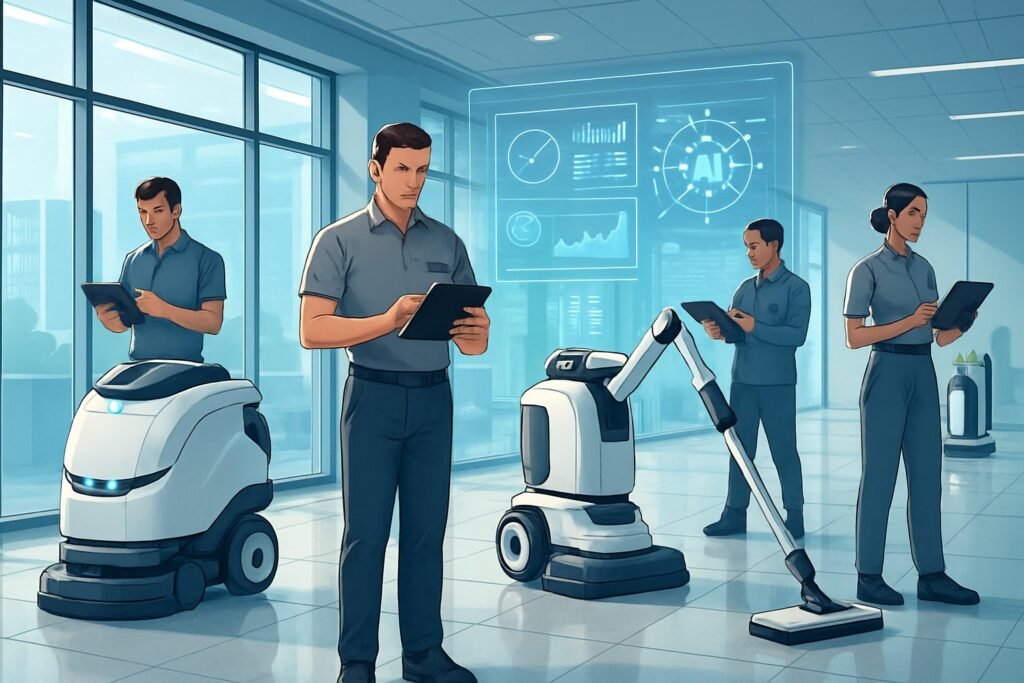
Forward-thinking cleaning business owners are realizing automation isn’t just about replacing manual labor. AI can optimize routes on the fly, predict when equipment needs fixing, and track performance data to make sure standards stay high.
Modern tools like intelligent scheduling platforms and automated messaging free up serious time. Owners can finally focus on growing their business instead of drowning in daily details.
Key Takeaways
- AI and automation can cut labor costs by up to 30% while improving quality and consistency.
- Smart tech like robotic cleaners and AI scheduling lets owners focus on growth, not just daily grind.
- Companies that jump on AI tools early get a real edge—better efficiency, happier clients, and higher profits.
AI and Automation: Transforming Cleaning Business Models
AI and automation are flipping cleaning business models upside down. They’re opening up new ways to deliver services and even new revenue streams that just weren’t possible before.
Redefining Service Delivery with Artificial Intelligence
AI is changing the game for cleaning companies and their clients. Smart scheduling systems can now predict staffing needs using past data and facility requirements.
These systems build optimized schedules automatically, factoring in who’s available and where they’re located.
Predictive maintenance is a big win for bigger clients. AI looks at how equipment gets used and schedules maintenance before things break.
That means fewer emergencies, fewer headaches, and smoother operations.
AI-powered translation is breaking down language barriers. Diverse teams can now get work orders in their own language, which improves quality and cuts down on mistakes.
Real-time quality control is here, too. AI checks photos of cleaned areas and spots things people might miss.
Clients get proof of what was done, which helps build trust.
Route optimization algorithms save time between jobs. Teams spend more time cleaning, less time stuck in traffic. That efficiency goes right to the bottom line.
The Shift to Intelligent Automation in Operations
Intelligent automation is pushing out old-school manual processes. Paper checklists and scribbled schedules? Those are fading fast as digital tools take over.
Inventory management systems now predict when you’ll run low on supplies. They analyze usage at each client site and order more before you run out.
No more emergency supply runs or piles of unused products.
Automated marketing tools are finding new clients that actually fit your business. They create targeted ads and nurture leads, so owners can focus on operations while AI brings in new business.
Workloading software figures out exactly how much labor and supplies a facility needs. No more guessing—companies can avoid both understaffing and wasting money on too many people.
Time tracking’s gotten smarter, too. With geofencing, employees can only clock in at the right location.
That stops time theft and keeps billing accurate.
Emerging Business Models and Value Creation
AI is helping cleaning companies move from just being service providers to becoming tech-savvy partners.
Subscription-based models use AI to offer predictive cleaning. Companies monitor how spaces get used and adjust cleaning schedules automatically.
Clients pay for results, not just hours.
Data-driven insights are now a new revenue stream. AI can spot ways to save energy or make better use of space in a client’s building.
Cleaning companies become partners, not just vendors.
Performance-based contracts are getting popular. AI quality control means payment depends on actual cleanliness, not just time spent.
That aligns incentives for everyone.
AI is also enabling dynamic pricing. Companies can adjust rates based on demand, building complexity, or market shifts—automatically.
The value goes beyond cleaning. AI analytics help clients cut costs and boost productivity. Those insights can justify premium pricing and build stronger relationships.
Innovative Applications of AI in Cleaning Services
Artificial intelligence is changing cleaning businesses in three big ways: autonomous cleaning equipment that handles repetitive work, intelligent scheduling that saves time and money, and smart quoting tools that spit out accurate proposals in minutes.
Robotic Vacuums and Floor Cleaners for Large Facilities
Commercial cleaning robots are now handling millions of square feet in offices, hospitals, and stores every day. They use computer vision and machine learning to move around complex spaces and dodge obstacles.
These robots map entire buildings during their first run. They use those digital layouts to clean more efficiently.
Key capabilities include:
- Autonomous navigation with sensors and cameras
- Real-time obstacle detection
- Automatic charging when batteries get low
- Integration with building management systems
When big facilities roll out robotic cleaners for daily maintenance, they see labor costs drop by 20-30% right away. Robots tackle the repetitive stuff overnight, while people handle the details.
These systems collect tons of data on cleaning patterns and traffic flows. Facility managers can use this info to make better decisions about maintenance and resource allocation.
AI-Driven Scheduling and Route Optimization
Smart scheduling platforms crunch thousands of variables to build the best routes and timelines for cleaning crews. They factor in traffic, client preferences, team skills, and equipment needs all at once.
AI scheduling delivers real results:
- Cuts drive time between jobs by up to 40%
- Stops double-bookings and scheduling headaches
- Adjusts for weather or traffic on the fly
- Matches cleaners’ skills to the right jobs
But it doesn’t stop there. Advanced systems can even predict when clients are likely to reschedule, and suggest new time slots before issues pop up.
Route optimization taps into live traffic data from the internet to reroute teams instantly. If a road shuts down, the system finds a new way.
These platforms save owners 15-20 hours a week on admin work. That’s time they can put back into growing the business.
Smart Quoting Tools like Quote2Clean
Generative AI is changing how cleaning companies build quotes. Tools like Quote2Clean analyze property details, service needs, and local rates to generate spot-on quotes in minutes.
The old way meant site visits, manual math, and endless back-and-forth. Smart quoting tools slash that process and boost accuracy.
Advanced features include:
- Automated pricing by square footage and service level
- Satellite imagery integration for property checks
- Dynamic pricing for changing market conditions
- Pro proposals with branded templates
These systems learn from past wins to make future quotes even sharper. Machine learning picks up which pricing works for different clients and services.
In the future, AI will handle routine quote generation, so sales teams can focus on building relationships and handling the tricky deals. That means faster responses and better odds of winning new business.
Business Benefits: Efficiency, Cost Savings, and Consistency
AI and automation drive real operational efficiency and can cut overhead by up to 75% in some manual processes. These tools deliver more reliable service, which helps businesses grow and stand out.
Reducing Labor Costs and Operational Overhead
Automated equipment slashes staffing needs for routine cleaning. Robotic floor cleaners can work overnight without anyone watching.
That can drop labor costs by 40-60% for basic maintenance.
AI-powered scheduling makes sure staff get assigned based on real demand. The system looks at historical data to predict cleaning needs.
Smart scheduling trims overtime and cuts down on wasted trips.
Route optimization means less time on the road—crews spend more time cleaning, less time driving. Fuel bills shrink, and productivity rises.
Automated quoting speeds up sales from days to minutes. AI tools review the facility and generate accurate proposals instantly.
That means less paperwork and more time for growth.
Predictive maintenance is now possible. Smart sensors alert managers before equipment fails.
Preventive maintenance saves on repairs by catching issues early.
Enhancing Service Consistency and Quality
AI-driven systems get rid of human error in scheduling and task completion. Automated reminders keep every location on track for regular service.
Clients get dependable results every time.
Robotic cleaners follow the same patterns every night. They keep pressure, speed, and coverage consistent.
Quality stays high no matter who’s working that day.
Real-time monitoring shows cleaning progress and flags areas that need attention. Managers get instant alerts if something’s missed.
Quality control shifts from reactive to proactive.
Digital checklists and mobile apps make sure everyone follows the same steps. Training gets easier, and service quality improves.
Customer feedback comes in automatically. AI spots trends and improvement areas before clients even complain.
Adjustments happen fast, based on real data.
Revenue Growth and Competitive Advantage
Value comes from offering things others can’t. AI-powered teams finish jobs faster and with fewer resources.
That means fatter profit margins.
Tech-savvy clients are drawn to modern, automated services. Customers looking for innovation prefer these solutions.
That opens the door to premium pricing.
Data analytics uncover upsell opportunities within existing accounts. AI can spot when a client might need extra services.
Cross-selling gets easier with these insights.
Competitive advantage comes from faster replies and better reliability. Automated systems handle customer requests around the clock.
Manual competitors just can’t keep up.
Automation also means businesses can grow without ballooning overhead. You can scale up and keep quality steady.
Human Talent and the Evolving Workforce in an AI-Driven Industry
AI and automation aren’t just about machines—they’re changing what people do in cleaning businesses. Workers need new skills as tech takes over routine tasks.
Companies need to retrain staff and build a culture that’s ready for change.
New Job Roles and Reskilling Opportunities
The cleaning industry’s seeing new roles pop up that didn’t even exist a few years ago. AI system operators now watch over fleets of cleaning robots and troubleshoot issues.
Data analysts dig into cleaning patterns and optimize routes using AI insights.
Technology coordinators keep smart building integrations running. These jobs need a bit of tech know-how, but not hardcore programming.
Existing cleaning staff can move into these roles with focused training programs. Equipment technicians learn to maintain and repair robotic cleaners.
Quality control specialists use AI-powered tools to keep service consistent.
According to the World Economic Forum, about half of all employees will need reskilling by 2025. Cleaning companies should start training now to stay ahead.
Basic computer skills and problem-solving are now must-haves. Workers who go after tech training will find more job security and better pay.
Human-AI Collaboration and Augmentation
AI works best when it’s backing up human workers, not replacing them. Route optimization AI helps crews plan efficient days, but people still handle the trickier jobs.
Smart sensors can flag spots that need extra care, but it’s up to the cleaner to decide how to tackle it.
Robots vacuum, humans sanitize and build client relationships.
IBM’s research claims that AI-human partnerships boost productivity by 30% over either working solo. Predictive maintenance tools give technicians a heads-up before things break, saving time and money.
AI-powered scheduling even considers worker preferences and skills when assigning jobs. That leads to better work-life balance and puts the right person on the right job.
Quality monitoring AI gives real-time feedback, so workers can improve on the fly. Staff get immediate alerts if they miss a spot, which means better results and happier clients.
Managing Change and Building an Innovative Culture
Successful cleaning companies don’t rush technology adoption—they take it slow and make sure employees feel supported. Change management really starts with open conversations about how AI can make work easier, not just replace jobs.
Training isn’t a one-and-done deal. The IBM Institute for Business Value suggests at least 40 hours of annual skills development for everyone in AI-driven industries.
Leadership teams need to show genuine excitement for innovation, but they also have to address worker concerns head-on. Regular feedback sessions help spot training gaps and adjustment needs before they become bigger problems.
Recognition systems work best when they reward employees for embracing new tech and helping their coworkers learn. This kind of positive peer pressure can make change less daunting.
Regular team meetings should celebrate both tech wins and human achievements. It’s important to keep morale up and not let the human side get lost in all the innovation.
Strategies for Successful AI Adoption in Cleaning Businesses
Cleaning business owners need a structured approach to bringing in AI tech and measuring its impact. Success really depends on careful planning, tackling implementation challenges, and tracking the financial side of things.
Frameworks for Implementation and Integration
A phased approach just works for most cleaning businesses. Start with one area—maybe scheduling or route optimization—before rolling out AI to other operations.
Phase 1: Assessment and Planning
- Pinpoint routine tasks that eat up the most labor hours
- Check your current tech infrastructure and internet setup
- Figure out baseline costs for labor, scheduling, and equipment
Phase 2: Pilot Programs
- Try out AI scheduling software with a small group of clients
- Deploy a single robotic cleaner in a controlled setting
- Train a core group of staff on the new systems
Phase 3: Gradual Expansion Enterprise-level companies should connect AI systems with big data platforms. This lets them monitor multiple locations and staff performance in real time.
Smaller businesses can start with cloud-based AI scheduling tools. They don’t require much upfront investment and work well with mobile devices.
Set clear timelines for each phase. Most businesses see successful rollouts in about 3-6 months, from pilot to full deployment.
Overcoming Challenges and Ensuring Preparedness
Staff resistance is probably the toughest challenge for AI adoption. Tackle worries early by showing how tech helps rather than replaces people.
Training Requirements:
- Basic AI system operation (2-3 hours to start)
- Troubleshooting common hiccups
- Data entry and reading results
Plan for ongoing training costs. Expect staff to spend 10-15% of their time on training during the first month.
Unreliable internet can throw a wrench in AI operations. Make sure you’ve got solid high-speed connections everywhere. It’s wise to have backup options for critical sites.
Data security is a big deal with AI systems. Set up password policies and stay on top of software updates. Too many cleaning businesses ignore cybersecurity until it’s too late.
Risk Mitigation Steps:
- Keep manual backup processes ready
- Test systems on a regular basis
- Have emergency contact info for tech support handy
Start simple with AI. There’s no need to jump straight into complex enterprise solutions.
Measuring ROI and Sustaining Value
Track specific metrics to see if AI is actually delivering results. Focus on what you can measure, not just vague improvements.
Key Performance Indicators:
| Metric | Before AI | Target Improvement |
|---|---|---|
| Labor hours per job | Baseline measurement | 20-30% reduction |
| Scheduling errors | Current rate | 75% decrease |
| Customer complaints | Monthly average | 40% reduction |
| Fuel costs | Per route costs | 15-25% savings |
Figure out how long it’ll take to recoup your AI investment. Most cleaning businesses see returns in 12-18 months, mostly from lower labor costs.
Use big data analytics to spot new ways to optimize. AI systems can show you when cleaning times peak or where you’re using too many resources.
Monthly Review Process:
- Compare real savings to what you projected
- Spot any system hiccups
- Adjust AI settings as needed based on what’s actually happening
Set aside 5-10% of AI savings for upgrades and maintenance. Tech changes fast, and it’s easy to fall behind.
Document what works for future rollouts. It’ll make scaling AI across more locations or services much smoother.
Looking Ahead: The Future of AI and Automation in Cleaning Services
Industry leaders are already seeing big productivity gains from AI, and the next wave—think predictive analytics and autonomous decisions—looks even more promising. Businesses that move fast on this tech will have the edge in a fast-changing market.
Insights from Industry Leaders and Case Studies
Major facility management companies have started seeing real results with AI. Hospitals using robotic floor cleaners report 40% faster cleaning times and more consistent sanitization.
Office buildings with AI-powered scheduling systems cut labor costs by up to 25%. These systems check foot traffic patterns and adjust cleaning frequency automatically.
The World Economic Forum points to cleaning services as a major area for automation growth. Their research shows companies using AI tools complete quotes 60% faster than old-school methods.
Real-world performance data shows some eye-opening trends:
- Robotic vacuums run three times longer than human shifts
- AI route optimization shaves 30% off travel time
- Predictive maintenance brings down equipment downtime by 45%
Large contractors say generative AI helps them create detailed proposals in minutes, not hours. The tech analyzes client needs and cranks out custom service plans automatically.
Envisioning the Next Generation of Smart Cleaning
The next generation of cleaning systems will make decisions on their own, no humans needed. Advanced robots will spot spill types and pick the right cleaning method instantly.
AI will predict when a surface needs cleaning before it even looks dirty. Smart sensors will check air quality and change cleaning intensity based on how many people are around.
Generative AI platforms—think ChatGPT for cleaning—will handle customer service calls. They’ll book appointments, answer billing questions, and send real-time updates.
Integration will connect everything:
- Scheduling software talks directly to robotic cleaners
- Inventory systems reorder supplies automatically
- Customer apps give instant feedback
Mobile command centers will let operators manage entire cleaning fleets from one dashboard. They’ll keep an eye on dozens of locations and send resources where they’re needed most.
Better batteries will let robots run 24 hours a day, only stopping for quick charges during slow periods.
Adapting to Ongoing Technological Change
Cleaning business owners really need to invest in employee training now. Workers have to learn robot operation, basic troubleshooting, and how to interpret data to stay relevant.
Start small with tech adoption. Pilot one or two AI tools first to get a feel for the benefits before going all-in.
The future of cleaning is all about human-machine collaboration. Employees will supervise multiple robots and handle the trickier tasks that need real problem-solving.
Key adaptation steps:
- Partner with tech vendors for support
- Set training budgets for staff
- Build systems to collect and measure data
- Connect with AI solution providers
Financial planning should include tech upgrades every 3-5 years. Early adopters usually get a leg up, even if the upfront costs are a bit higher.
Keep an eye on industry news and hit up trade shows. The cleaning industry moves fast, and staying current is half the battle.
Frequently Asked Questions
AI and automation are shaking up cleaning businesses with smart robots, predictive scheduling, and automated quoting tools. These changes are driving better service quality, higher efficiency, and tighter cost control.
How can AI technology enhance the quality and consistency of cleaning services?
AI-powered cleaning systems use sensors and data analysis to keep cleaning standards consistent everywhere. Smart dispensers track chemical levels and usage, so you always get the right mix.
Robotic machines with AI can tell the difference between surfaces and adjust their cleaning methods on the fly. They know when to use more pressure on carpets or ease up on hard floors—no human needed.
AI systems pull real-time data on cleaning performance and flag areas that need extra attention. This data-driven approach takes out the guesswork and cuts down on human error.
Machine learning algorithms study building usage patterns to spot high-traffic areas that need more frequent cleaning. That means spaces stay cleaner throughout the day, not just after scheduled maintenance.
In what ways have robotic vacuum and floor cleaners improved efficiency in large facility maintenance?
Robotic floor cleaners work around the clock, covering huge areas during off-hours. One robot can clean thousands of square feet overnight, while human staff focus on detailed work during the day.
These machines use smart navigation to map out facilities and create the best routes, dodging obstacles and maximizing coverage. They can handle a 50,000 square foot space faster than traditional methods.
Autonomous floor scrubbers cut labor costs by handling routine maintenance on their own. One facility manager can now oversee several robots instead of juggling multiple staff for basic floor care.
Modern cleaning robots sync with building management systems, so they don’t get in the way of security or maintenance schedules. They return to charging stations automatically and get back to work when areas open up.
What are the benefits of using AI for scheduling and route optimization in cleaning businesses?
AI scheduling systems look at client patterns, building occupancy, and traffic flows to build the best cleaning schedules. They can cut travel time between locations by up to 30% with smarter route planning.
Predictive algorithms factor in weather, seasonal trends, and special events to adjust staffing automatically. No more overstaffing in slow times or scrambling during busy periods.
Smart scheduling platforms can quickly reshuffle teams when emergencies pop up or clients want changes. The AI figures out how to fit new requests in without messing up the rest of the schedule.
Route optimization software lowers fuel costs and vehicle wear by finding the shortest paths between jobs. It even checks real-time traffic to help teams show up on time.
How does AI contribute to the accuracy and speed of creating quotes and proposals in the cleaning industry?
AI-powered quoting systems scan facility blueprints, square footage, and cleaning needs to whip up accurate estimates in minutes. They automatically consider ceiling height, surface types, and how often cleaning is needed.
Machine learning uses past project data to predict labor hours and material costs more precisely. This helps avoid underestimating jobs and keeps profit margins healthy.
Automated proposal systems customize service packages based on what the client wants and their budget. They spit out professional documents with detailed service and pricing breakdowns instantly.
AI tools check competitor pricing and market rates so your quotes stay competitive but still profitable. They’ll even flag when your pricing drifts outside industry norms.
Can the integration of AI and automation in cleaning businesses significantly reduce labor costs?
Robotic cleaning systems can take over routine tasks like vacuuming and mopping, replacing several staff positions. One robot often does the work of two or three people for basic maintenance.
AI-driven scheduling cuts overtime by optimizing staff assignments and avoiding conflicts. Many businesses see labor cost savings of 15-25% thanks to smarter resource allocation.
Automated systems mean you need fewer supervisors since robots don’t need much oversight once programmed. Managers can focus more on client relationships and growing the business, not day-to-day coordination.
Smart cleaning equipment also lowers training costs and reduces turnover by simplifying tough tasks. New hires become productive faster when technology handles the technical side of cleaning.
What opportunities does AI offer cleaning business owners looking to free up time and focus on business growth?
AI takes care of routine tasks like scheduling, invoicing, and inventory management. Most owners save 10-15 hours a week that used to disappear into paperwork and coordination.
Automated reporting systems now deliver real-time insights into business performance. Owners get instant updates on profitability, client satisfaction, and operational efficiency—no more sifting through spreadsheets.
Smart systems can notice new business opportunities by analyzing client usage patterns and spotting service gaps. They’ll ping you if a client might need extra services or if the market looks ripe for expansion.
AI-powered customer service tools can handle basic client communications and service requests. This frees owners to focus on bigger-picture relationships and those high-value sales opportunities instead of getting bogged down in daily support.