Online reviews have become the deciding factor for cleaning service success. Around 93% of consumers rely on reviews when making decisions.
In the cleaning industry, trust means everything. Customers invite strangers into their personal spaces, so they do their homework.
Potential clients turn to Google, Yelp, and Facebook to check out cleaning companies before even making contact.
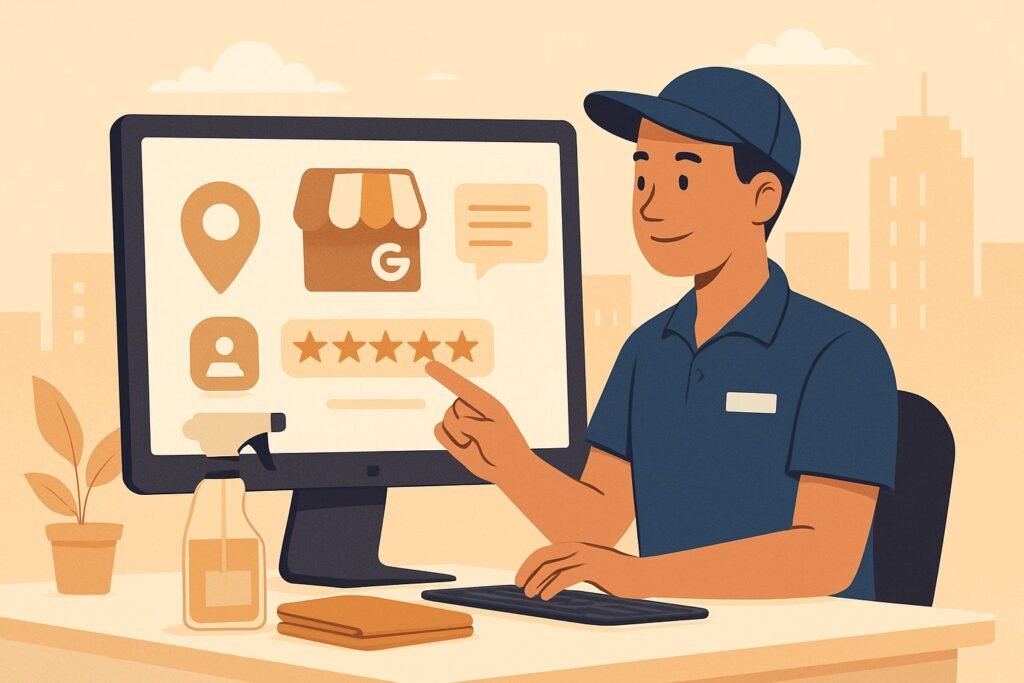
Managing online reviews can transform a cleaning business from unknown to fully booked. Positive reviews work as digital word-of-mouth, drawing in new customers even when you’re asleep.
Negative reviews, on the other hand, require a careful touch. One bad response can hurt your business’s reputation, so you’ve got to handle complaints with care.
Since cleaners work inside people’s homes, the trust bar sits higher than in most industries. Smart business owners get proactive by encouraging happy customers to share their experiences and by responding to all feedback—good or bad.
Key Takeaways
- Online reviews influence 93% of consumer decisions and help cleaning services build trust.
- Positive reviews attract customers, while negative ones need professional responses to protect credibility.
- Active reputation management helps cleaning businesses overcome customer hesitation.
The Impact of Online Reviews in the Cleaning Industry
Online reviews shape how people see cleaning services. About 70% of folks check reviews before hiring local companies.
These reviews affect customer trust, search rankings, and business growth in real, measurable ways.
Why Online Reviews Matter for Cleaning Services
Cleaning services face a unique challenge: they work in customers’ personal spaces. Online reviews help break down that “stranger danger” barrier by sharing real stories from other homeowners.
Trust Building Through Reviews:
- Reviews prove your service is worth trusting.
- Star ratings give quick credibility.
- A bunch of positive reviews eases customers’ nerves about booking.
Most customers won’t hire cleaners without reading reviews first. They want to know if your team is reliable, thorough, and trustworthy with their stuff.
A company with 50 five-star reviews will get more calls than one with only a handful. Social proof really works.
When people see others praising your team’s attention to detail, they feel more comfortable choosing you. That’s just how it goes.
The Role of Positive and Negative Reviews
Positive reviews act as free marketing. Each five-star review boosts trust and makes people more likely to book.
Benefits of Positive Reviews:
- Build instant credibility with new clients.
- Highlight strengths like punctuality or thoroughness.
- Create emotional connections through stories.
- Reduce marketing costs by bringing in organic leads.
Negative reviews sting, but they can help if you handle them well. Quick, professional responses show you care about customer satisfaction.
If you ignore complaints or get defensive, your reputation can tank fast. That’s just the reality.
Smart businesses use negative feedback to improve. They address real complaints out in the open and fix issues to avoid repeats.
How Online Reviews Influence Local SEO
Online reviews play a big role in local search results. Google looks at review quantity, quality, and how often you get new ones.
SEO Benefits of Reviews:
- Higher star ratings boost your search visibility.
- Fresh reviews show you’re actively working.
- Review keywords match what people search for.
- More reviews mean more clicks.
Cleaning services with steady, positive reviews rank higher for searches like “house cleaning near me.” Google likes businesses that customers trust.
Getting new reviews regularly matters. If your last review is from months ago, you’ll look less active.
Star ratings show up in search results, and most people skip businesses with less than 4.0 stars.
Building Trust and Attracting Customers through Positive Reviews
Positive reviews create social proof that helps cleaning services win over hesitant customers. Star ratings and customer testimonials drive decisions and give you insight into what’s working.
Leveraging Social Proof for Customer Confidence
Social proof works because people trust each other more than they trust ads. If your site shows off a bunch of positive reviews, you’ll win over nervous prospects.
Customer reviews act as digital word-of-mouth. Studies say 92% of online shoppers read reviews before buying services, so you can’t ignore this stuff.
Key social proof strategies:
- Show review counts on your website.
- Share recent feedback on social media.
- Highlight praise for reliability and quality.
- Use customer photos and before-and-after shots.
Star ratings give prospects a quick gut check. A 4.5-star average tells them you’re doing something right.
User-generated photos add authenticity. When clients post pics of their clean homes, it feels more real than your marketing images.
Showcasing Testimonials and Star Ratings
Where you put testimonials matters. Cleaning services should feature their best reviews everywhere—website, social, print, you name it.
Good places for testimonials:
- Website homepage, right at the top.
- Service-specific landing pages.
- Social media profiles and posts.
- Email signatures and newsletters.
- Printed materials like business cards.
Keep star ratings consistent across platforms. High ratings on Google, Yelp, and Facebook all add up to a stronger reputation.
Detailed testimonials beat generic praise. When reviews mention specific services or staff, they build more trust.
Fresh testimonials matter more than old ones. Update your featured reviews regularly to show you’re still delivering great service.
Using Reviews to Improve Customer Experience
Customer reviews point out what you’re doing well and what needs work. Smart cleaning services look for patterns in feedback to make improvements.
Review analysis helps you spot:
- Common complaints or problems.
- Staff members who get praised a lot.
- Services that are especially popular.
- Communication issues that annoy customers.
Positive reviews show what customers value most. If people keep mentioning punctuality, highlight your scheduling in your marketing.
Negative feedback gives you a chance to improve. If customers mention missed spots or communication gaps, tweak your process.
Review trends show how you’re doing over time. If ratings go up and comments get better, you’re on the right track.
Customer satisfaction leads to better reviews. If you consistently exceed expectations, you’ll naturally get more positive feedback.
Major Review Platforms for Cleaning Services
Google Business Profile is the most important for local visibility. Yelp and Facebook each have their own perks for building trust and connecting with different groups.
Google Reviews and Google Business Profile
Google Business Profile forms the backbone of your online presence. When people search for “cleaning services near me,” businesses with solid profiles and good reviews show up first.
Profile must-haves:
- Business name, address, and phone number.
- Service area boundaries.
- Business hours and holidays.
- High-quality photos of your team and work.
Google reviews affect your search ranking directly. The more recent your reviews, the better you’ll rank.
Google displays star ratings right in the search results. That’s often your first impression.
People expect replies within 24-48 hours. Quick, professional responses show you’re paying attention.
The “Questions & Answers” feature lets customers ask about your services. Stay on top of this section and give clear answers about what you offer, pricing, and availability.
Yelp for Cleaning Businesses
Yelp attracts customers who like to research before they buy. These folks read multiple reviews and compare companies closely.
Yelp’s algorithm prefers businesses that get reviews steadily over time. If you get a sudden rush of reviews, the system might filter some out.
Yelp success tips:
- Fill out your business profile with detailed service descriptions.
- Upload photos showing before and after results.
- Respond to all reviews, good and bad.
- Use Yelp’s messaging feature for customer questions.
Yelp users often write detailed reviews. That content helps other customers know what to expect.
The Yelp app makes it easy for clients to review you right after the job. Mention Yelp when asking for feedback.
Harnessing Facebook Reviews
Facebook reviews tie in with your social media marketing. They help cleaning businesses build community and reputation at the same time.
Local Facebook groups often discuss service recommendations. Positive reviews here can be gold.
Facebook uses a five-star system but focuses on written recommendations. Detailed reviews often include photos and stories.
You can turn off reviews on Facebook, but that usually hurts your credibility. People expect to see real feedback.
Facebook review perks:
- Reviews show up in customers’ friends’ news feeds.
- Easy sharing spreads the word.
- You can use reviews in advertising campaigns.
- Direct messaging helps with customer service.
Facebook reviews influence which businesses get recommended locally. When people ask for cleaning service suggestions, Facebook often highlights those with strong review profiles.
You can feature positive Facebook reviews in posts and stories. It’s a good way to turn feedback into more marketing content.
Encouraging and Generating Customer Reviews
Getting reviews from happy customers comes down to timing and approach. Automated systems let you ask for feedback consistently, but personal touches make requests feel more genuine.
Timing Review Requests for Maximum Response
The best time to ask for a review? Right after you finish a job, while the customer’s still feeling good about it.
Send review requests within 24-48 hours of service completion. If you wait too long, people just forget.
Peak response times:
- Same day: Text message 2-4 hours after the job.
- Next day: Email follow-up in the morning.
- Within 48 hours: Phone call for top clients.
Avoid busy times like Monday mornings or Friday evenings. Tuesday through Thursday, late morning to early afternoon, usually gets the best results.
For repeat customers, ask for reviews every 3-4 visits, not every single time. You don’t want them to get annoyed.
Automated Review Requests and Tools
Automated review requests make life easier. CRM integration can trigger review requests automatically after a job wraps up.
Most review platforms offer automated email and text campaigns. These send personalized messages with direct links to your review pages.
Key automation features:
- Triggers based on job completion.
- Links for Google, Yelp, and Facebook.
- Follow-ups for people who don’t respond.
- Analytics to track reviews.
A central dashboard shows all your reviews in one spot. It’s easy to see who left feedback and who needs a nudge.
Many cleaning services link these tools to their scheduling software. When a job’s marked as done, the system sends out the review request automatically.
Personalization in Review Generation
Personal requests work way better than generic ones. Use the customer’s name, mention their service, and point out something memorable from the visit.
Generic requests feel like spam. Personal messages show you care.
Personalization ideas:
- Use the customer’s name and service date.
- Mention specific rooms or requests.
- Reference the technician by name.
For example: “Hi Sarah, thanks for choosing us to clean your kitchen and bathrooms on Tuesday. Maria loved meeting your dog Rex! Would you mind sharing your experience on Google?”
You get the best results when you pair review requests with great service. Happy customers want to help you out.
CRM tools help you track preferences and service history. That data makes personalized requests easier and more genuine.
Responding to Reviews Professionally and Effectively
Responding to reviews builds trust with potential customers. When you reply to both positive and negative reviews, you show that your cleaning service values feedback.
Professional responses create opportunities to strengthen relationships and show off your customer support.
Crafting Responses to Positive Feedback
Positive reviews deserve more than a generic thank you. Responding thoughtfully shows genuine appreciation and highlights what makes your cleaning service stand out.
A strong reply thanks the customer by name and brings up details about the service they received. It’s a small gesture, but it leaves a big impression.
Key elements of effective positive responses:
- Thank the customer personally
- Mention specific services they referenced
- Highlight your team’s dedication
- Invite them back for future bookings
For example: “Thank you, Sarah! We’re thrilled our deep cleaning service exceeded your expectations. Maria will be delighted to hear you loved her attention to detail in the kitchen. We look forward to your next monthly cleaning!”
These responses let potential clients know you care about client satisfaction. They also give you a chance to show off your expertise and build credibility with anyone reading the reviews.
Handling Negative Reviews with Care
Negative feedback is tricky, but you can handle it without hurting your reputation. The main thing is to stay professional and show you’re willing to fix problems.
Steps for responding to negative reviews:
- Respond within 24-48 hours
- Apologize for their experience
- Accept responsibility—don’t make excuses
- Offer to talk privately
- Give contact info for follow-up
Here’s a solid response: “We sincerely apologize for falling short of your expectations, John. This doesn’t reflect our usual standards. Please contact us at [phone] so we can make this right and discuss how we can improve your experience.”
Never argue with customers in public or brush off their concerns. Owning mistakes and offering solutions can turn unhappy clients into loyal ones.
Using Response Templates and Sentiment Analysis
Templates save time and help keep your replies consistent. Still, you’ve got to tweak them for each situation if you want to sound genuine.
Basic template structure:
- Opening: Thank you or acknowledge their review
- Body: Address their specific feedback
- Closing: Next steps or an invitation
Sentiment analysis tools help you spot the mood behind reviews. They flag which comments are positive, negative, or neutral, so you know where to focus first.
Many review platforms offer automated sentiment analysis and suggested replies. But honestly, nothing replaces a real person making sure the response feels authentic.
Templates should be a starting point, not the whole answer. Make each reply personal and relevant to the customer’s experience.
Navigating Challenges in Online Review Management
As your cleaning business grows, managing reviews gets trickier. Different platforms, fake reviews, and keeping things consistent across locations all come into play.
Managing Reviews Across Multiple Locations
If you’ve got more than one location, reviews can start piling up all over the place. You need a system to keep track.
Set up location-specific monitoring for each service area. Create a Google My Business profile for every location you serve. That way, customers can leave feedback tied to their local experience.
Assign review responsibilities based on geography. One team member should handle reviews for just a couple of locations to keep responses quick.
Use review management software to pull feedback from all locations into a single dashboard. That helps you avoid missing reviews or replying too late.
Track performance metrics for each area separately. Some locations might get better ratings than others, which could mean you need to tweak training or service quality.
Respond quickly no matter the location. Customers expect the same attention wherever they are.
Identifying and Addressing Fake Reviews
Fake reviews hurt your reputation and mislead potential customers. You’ve got to know how to spot and deal with them.
Watch for signs of fake reviews: generic wording, odd posting patterns, or accounts with no history. If you see a bunch of reviews pop up at once from similar profiles, be suspicious.
Document suspicious reviews right away. Take screenshots, jot down reviewer names and dates, and note any weird language. This info helps when you report them.
Report fake reviews using the platform’s official channels. Google, Yelp, and Facebook all have ways to flag these. Follow their instructions for the best shot at removal.
Don’t ever buy fake positive reviews to drown out the bad ones. Platforms catch on, and you could end up suspended.
Focus on real feedback instead. Ask happy customers to share their honest experiences after their cleaning.
Maintaining Consistency Across Platforms
Each review platform has its own vibe, but your cleaning business should sound consistent everywhere.
Make platform-specific templates that fit the culture. Yelp can be more casual, while Google My Business tends to be formal. But always keep it professional.
Keep your business info the same everywhere—hours, services, contact details, and descriptions. Inconsistencies just confuse people.
Reply quickly no matter where the review shows up. Facebook reviews may feel more relaxed, but they’re just as important as Google ones.
Use a content calendar to check each platform daily. Aim to respond within 24 hours.
Train your staff on the quirks of each platform. Whoever manages Yelp should know its guidelines and what the community expects.
Sprinkle in consistent keywords about reliability, quality, and satisfaction. It reinforces your brand message across the board.
Integrating Online Reviews into Your Reputation and Marketing Strategy
Online reviews can do more than boost your ego—they’re a marketing goldmine. When you connect them to your digital marketing plan, you turn feedback into fuel for growth.
Aligning Reviews with Digital Marketing Efforts
Your reviews should work alongside your digital marketing. Use positive reviews everywhere you can to build trust.
Social media posts with real customer testimonials beat generic ads every time. Share screenshots of 5-star Google reviews on Facebook or Instagram. People trust other people way more than company claims.
Put reviews on your website so visitors see them right away. A reviews widget on the homepage or testimonials on service pages can make a big difference.
Add customer quotes to your emails. A monthly newsletter with a “Customer Spotlight” shows you’re keeping folks happy, not just once but all the time.
Google looks at review quantity, quality, and how recent they are when ranking local businesses. If you keep earning new reviews, you’ll probably outrank competitors with stale feedback.
Using Reviews for Continuous Improvement
Customer feedback tells you what matters most to your clients. Use it to make smarter decisions about your services.
Look for patterns in complaints. If people keep mentioning scheduling problems, maybe your booking system needs work. If they say cleaning tasks get missed, it’s time for better training or checklists.
Staff training works best when it’s based on real feedback. Praise for specific team members shows you what to encourage across your company. Negative comments about communication? That’s a training opportunity before it turns into a bigger issue.
If several clients ask for organizing services or eco-friendly products, consider adding those to your offerings. It could open up new revenue streams.
Quality control gets easier with review data. Track which tasks get the most praise and make those your standard. It helps keep things consistent for every customer.
Tracking Review Metrics and Performance
You can’t manage what you don’t measure. Keep tabs on specific review metrics to understand your reputation over time.
Key metrics to monitor:
| Metric | Why It Matters | Target Goal |
|---|---|---|
| Average rating | Shows reputation health | 4.5+ stars |
| Review volume | Indicates engagement | 10+ reviews monthly |
| Response rate | Reflects service quality | 100% responses |
| Response time | Measures responsiveness | Under 24 hours |
Run monthly audits to spot trends and opportunities. Track which services get the most positive mentions. That tells you what customers love and where to focus your marketing.
Review platform performance can vary by location and customer type. Maybe residential clients prefer Google while commercial ones use niche platforms. Knowing where reviews come from helps you prioritize.
Check out what your competitors’ reviews say. If they’re always getting dinged for reliability, make your dependability a selling point.
Don’t ignore review velocity. If new reviews dry up, it might signal a problem with customer satisfaction or your request process.
Frequently Asked Questions
Cleaning business owners have a lot of questions about managing reviews and building trust online. Here’s what comes up most often.
How can a cleaning service encourage customers to leave positive online reviews?
Timing is everything. Ask for reviews right after finishing a cleaning job—when the client’s happiest.
Send follow-up texts or emails within a day. Include direct links to Google, Yelp, or Facebook to make it easy.
Offer small incentives like 5% off the next cleaning or a free add-on. But always check the platform’s rules about incentives.
Train your staff to mention reviews. A simple, “If you’re happy with our work, we’d love a quick review online,” goes a long way.
Leave review cards after each job with a QR code linking straight to your review pages.
What are the best practices for responding to negative reviews on platforms such as Google, Yelp, or Facebook?
Reply within 24-48 hours. Quick responses show you care.
Start with an apology and acknowledge their experience. Don’t get defensive.
Keep things professional and stick to the facts. Never argue or share private info in public.
Offer to resolve the issue privately—give them a phone number or email. That shows you’re serious about fixing things.
After you resolve the problem, politely ask if they’d consider updating their review. Many will if you handle things well.
In what ways do online reviews impact the trust and acquisition of new customers for a cleaning service?
About 70% of people check online reviews before picking a local service. That makes reviews a big deal for attracting new customers.
Reviews help ease the worry of letting strangers into their homes. Positive feedback from other homeowners builds instant trust.
Google reviews affect your local search ranking. More positive, recent reviews help you show up higher in “cleaning services near me” searches.
Star ratings make a quick impression. Services with 4.5+ stars get way more clicks and calls than those with lower scores.
Detailed reviews set expectations for new customers. That means they’re more likely to be happy with what they get.
Can you provide tips for showcasing customer testimonials effectively on a cleaning service’s website?
Put testimonials above the fold on your homepage so new visitors see them right away. It’s an instant trust booster.
Whenever possible, include customer names and photos. Real faces and names beat anonymous quotes every time.
Use testimonials that mention specific services or results. “They deep cleaned my kitchen perfectly” is way better than a generic “Great service.”
Create a dedicated testimonials page with reviews from all your platforms. Sort them by service or location for easier browsing.
Add testimonials to each service page too. For example, put move-out cleaning reviews on that page to build confidence for that service.
How does a cleaning business manage its online reputation to stand out in the market?
Check all your review platforms weekly using Google Alerts or reputation management tools. That way, you catch new reviews fast.
Keep your branding consistent everywhere—same business name, logo, and contact info on Google, Yelp, and Facebook.
Encourage reviews on more than one platform. Don’t put all your eggs in the Google basket.
Share your best reviews on social media. It shows you value feedback and have happy clients.
Watch for trends in your reviews. If the same complaint pops up a lot, it’s time to fix that part of your service.
What strategies can be implemented to overcome the ‘stranger danger’ hurdle in the cleaning industry through reputation management?
Feature reviews that mention trust and security. Testimonials about reliable, trustworthy cleaners help ease safety concerns.
Highlight employee background checks and bonding when you reply to reviews. This shows potential customers that you take safety seriously.
Share reviews from customers who say they felt comfortable with the cleaning staff. These stories speak directly to that stranger danger worry.
If you can, create video testimonials. Watching real customers talk about their experiences just feels more personal.
Respond to every review in a professional way. That consistency shows you care about customer service, no matter what.
