Email marketing’s still one of the most powerful tools for cleaning businesses. It helps you connect with customers and keep those bookings rolling in, even during slow spells.
A lot of cleaning companies just lean on word-of-mouth or basic ads. But the ones who build and nurture an email list? They usually end up with a serious edge, snagging new clients and keeping regulars engaged.
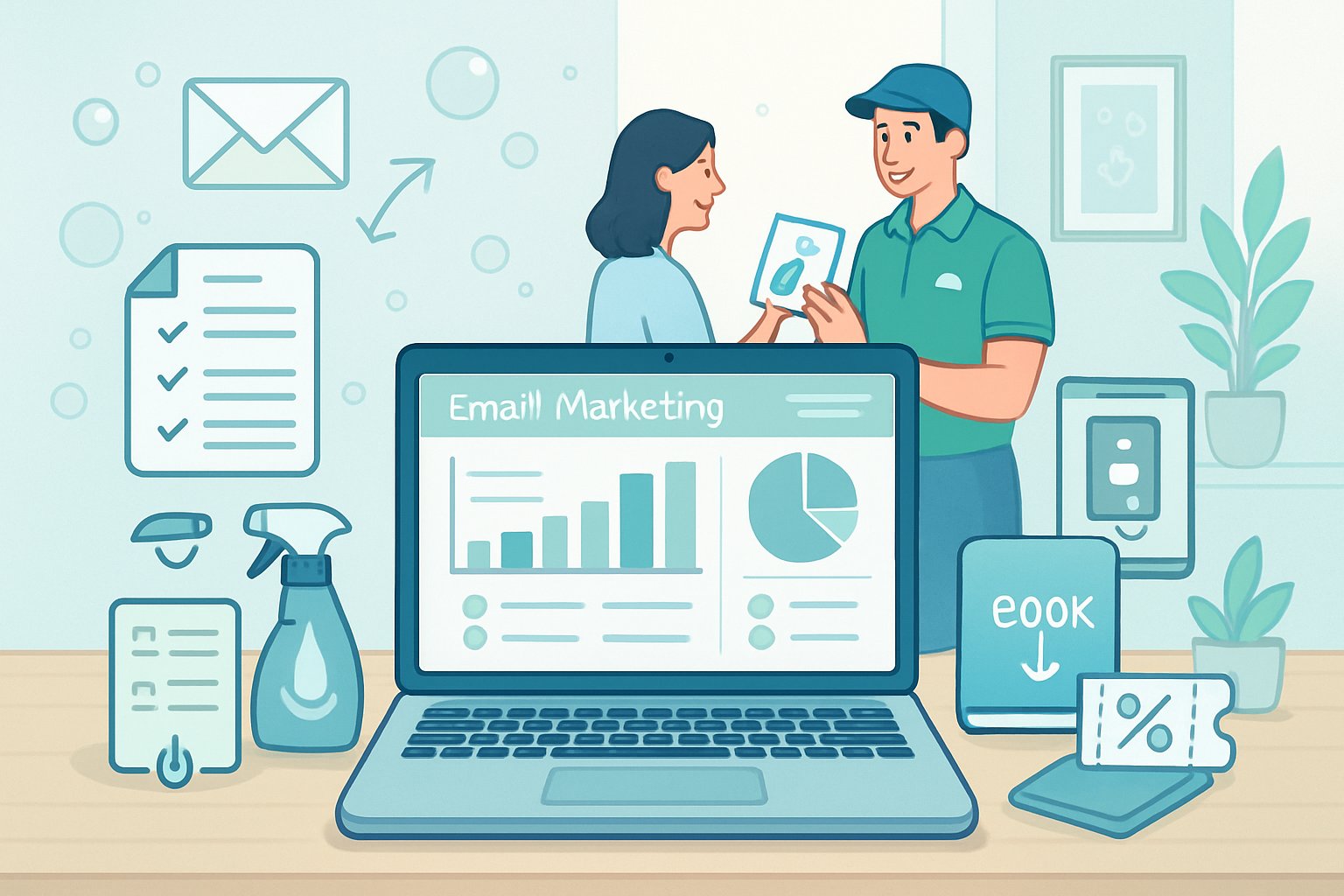
Email marketing lets cleaning businesses fill their schedules when things get quiet. You can show off your expertise with helpful content and stay in touch with customers who might otherwise forget you exist.
Lead magnets like cleaning checklists or seasonal guides attract potential customers. They also show you know your stuff.
If you want to nail email marketing for cleaning services, you’ll need to understand your audience. Segment your customers by their needs, create campaigns that match the season, and find ways to re-engage people who’ve gone quiet.
Key Takeaways
- Lead magnets like cleaning checklists and guides build trust and authority
- Segmenting your list by customer needs boosts engagement and conversions
- Seasonal campaigns and re-engagement emails help keep bookings steady all year
Why Email Marketing Matters for Cleaning Businesses
Email marketing gives cleaning businesses a direct way to drive growth and build relationships. It keeps you connected to clients, builds trust, and encourages repeat business.
Business Growth Through Email
Email marketing can make a real difference to your bottom line. It brings in more bookings and helps with client retention.
Honestly, the numbers are wild—email generates about $42 for every $1 spent. That’s tough to beat.
Key growth benefits:
- Higher booking rates: Regular emails keep your service top-of-mind
- More frequent service: Automated reminders nudge people to book again
- Upsells: You can promote extras like carpet or window cleaning
- Referrals: Happy clients who get your emails will talk you up
With email automation, you can nurture leads without lifting a finger. Someone downloads your cleaning checklist? They’ll get a series of helpful emails, building trust before you ever pitch your services.
This approach turns more leads into paying customers than just reaching out once and hoping for the best.
Building Customer Loyalty and Trust
Regular emails help turn one-time clients into loyal fans. Cleaning businesses that keep in touch by email see much higher retention.
Email lets you step into the role of expert, not just another cleaning company. Share cleaning tips, seasonal advice, and maintenance hacks. Suddenly, you’re the trusted advisor.
Trust-building content might include:
- Before and after photos
- Client testimonials
- Educational cleaning tips
- Updates about your company or team
Personalized emails go a long way. A quick thank-you after a job shows professionalism and care—people remember that.
That personal touch makes you stand out from competitors who only email when they want to sell something.
Enhanced Client Communication
Email’s a lifesaver for handling routine client communication. Automated systems send appointment confirmations, reminders, and follow-up surveys, so you don’t have to.
Here’s what gets easier:
| Email Type | Benefit |
|---|---|
| Appointment reminders | Fewer no-shows (by 30-50%!) |
| Service confirmations | No more scheduling confusion |
| Follow-up surveys | Better service quality |
| Policy updates | Clients stay in the loop |
Segmenting your emails means you can send home cleaning tips to residential clients and office advice to commercial ones.
People appreciate getting info that actually matters to them, not just generic blasts.
If you need to reach everyone fast—say, for weather delays or last-minute changes—email lists let you send one message and hit all the right people instantly.
Building Your Email List Effectively
The best cleaning businesses use smart strategies to turn visitors and prospects into email subscribers. You’ll want to mix digital opt-in forms with in-person collection.
Using Opt-In Forms and Landing Pages
Website opt-in forms are your bread and butter for new leads. Place them on your homepage, contact page, and service pages.
Pop-ups work if they offer something valuable right away. “10% off your first cleaning” can convince visitors to sign up fast.
Landing pages for specific offers convert better than generic forms. Make separate pages for things like:
- Residential cleaning checklist downloads
- Commercial cleaning guides
- Move-in/move-out specials
Keep each landing page focused on one offer. Short forms (just name and email) work best. Asking for too much info drives people away.
Timing matters. Exit-intent pop-ups catch folks as they’re about to leave. Scroll-triggered forms show up after they’ve read half a blog post.
Don’t forget mobile users. Test your forms on phones and tablets to make sure they’re easy to use.
In-Person and Social Media Collection Strategies
Face-to-face interactions are awesome for list building. After a cleaning job, ask happy clients if they want tips and special offers by email.
Bring a tablet or clipboard on estimates and jobs. Most people are happy to share their email if you ask.
Community events are great for meeting potential customers. Set up at:
- Home and garden shows
- Local business expos
- Community fairs
- Apartment events
Run a raffle for a free cleaning in exchange for emails. People who enter are usually genuinely interested.
On social media, run contests that require email entry. Share cleaning tips that link to your sign-up page.
If you’re targeting commercial clients, LinkedIn is gold. Connect with property managers and invite them to join your list for maintenance tips.
Creating High-Converting Lead Magnets
Lead magnets help you grab email addresses by offering something useful. Cleaning checklists and seasonal guides are especially effective—they solve real problems for homeowners.
Cleaning Checklists as Incentives
Cleaning checklists are fantastic lead magnets. They give people instant value and show off your expertise.
Room-Specific Checklists are always popular:
- Kitchen deep-cleaning checklist
- Bathroom sanitization guide
- Living room maintenance list
Keep checklists simple and actionable. Add practical cleaning tips people can use right away.
Move-in/Move-out checklists are perfect for folks in transition. They help people stay organized during a stressful time.
Make your checklists look good—clear formatting, checkboxes, bullet points. Add your logo and contact info, too.
Give time estimates for each task. Readers will appreciate knowing how long things should take.
Seasonal Cleaning Guides and Resources
Spring cleaning guides get a lot of downloads in March and April. They break down big cleaning jobs into doable steps.
Spring cleaning guides should include:
- Deep-cleaning steps for each room
- Supply lists
- Safety tips for cleaning products
- Shortcuts to save time
Offer exclusive discounts in your guides. “15% off spring cleaning for downloaders” works well.
Holiday prep guides are a hit before big events. Offer tips for pre-party cleaning or post-holiday messes.
Winter guides help fill your schedule when things slow down. Focus on indoor air quality and deep cleaning during cold months.
Throw in some before-and-after photos for extra impact. People love seeing results.
Keep an eye on which guides get the most downloads. Use that info to make more resources your audience wants.
Segmenting and Personalizing Your Email List
Breaking your list into smaller groups and sending tailored messages makes your emails way more effective. Open rates go up, people engage more, and you get more bookings.
Audience Segmentation Tactics
There are a bunch of ways to segment your list. Location works well for companies serving different neighborhoods.
Service history is another smart approach. Separate regular weekly clients from deep-clean or move-out customers.
You can also segment by engagement:
- Highly engaged: Open and book often
- Moderately engaged: Read sometimes, book seasonally
- Low engagement: Rarely open emails
Don’t forget about customer type. Residential and commercial clients have totally different needs. Busy professionals might want weekend slots, while retirees are more flexible.
Property size matters, too. Small apartments and big homes need different messaging and pricing.
Personalization Strategies for Better Results
Use names in subject lines and greetings. It’s a small thing, but it gets attention.
Mention specific services customers have used. Reference their cleaning frequency or favorite days.
Birthday and anniversary emails with a discount really make people feel special. Track when someone first used your service and celebrate that date.
Location-based content connects with your audience. Mention local events or cleaning challenges—like pollen season or winter salt mess.
Look at past bookings to predict what people might need next. If someone booked carpet cleaning last year, remind them it’s time again. Offer window cleaning before their usual booking month.
Set up automated triggers. After a cleaning, send a follow-up. If someone hasn’t booked in a while, send a re-engagement offer.
Developing Engaging Content and Campaigns
You can’t just send any old email and expect results. Great content and smart campaigns keep clients interested and your schedule full.
Seasonal Campaign Ideas for Cleaning Businesses
Spring cleaning campaigns are huge. Focus March and April emails on deep cleaning and whole-house refreshes. Property managers need tips for tenant turnovers.
Summer’s all about window washing and outdoor cleaning. Talk about patios, decks, and keeping commercial spaces tidy during busy months.
In the fall, promote gutter cleaning, leaf removal, and pre-winter deep cleans. Show off before-and-after autumn cleanups.
Winter campaigns can center on holiday prep and post-party cleanups. Share tips for snow removal and salt damage, and promote fresh start deep cleans in January.
Seasonal Email Ideas:
- Spring: Move-out cleaning, allergen removal, garage organizing
- Summer: Vacation rental turnovers, outdoor furniture cleaning
- Fall: Back-to-school office sanitizing, holiday prep
- Winter: Post-holiday cleanup, winter maintenance tips
Content Calendars and Scheduling
A content calendar keeps you organized (well, mostly). Plan campaigns a couple months ahead to match seasonal demand.
Weekly emails usually work best. Mondays catch people planning their week. Fridays are great for last-minute weekend bookings.
Try this monthly template:
- Week 1: Cleaning tips or educational content
- Week 2: Service spotlight or before/after showcase
- Week 3: Seasonal promo or special offer
- Week 4: Client testimonials or referral asks
Mix up your emails—don’t just sell. Aim for 60% helpful content, 30% promos, and 10% company news.
Automated drip campaigns can welcome new subscribers. Space these out over a couple weeks and introduce your services gradually.
Delivery Service Confirmations and Appointment Reminders
Service confirmations really help cut down on no-shows and just make your business look more professional. Send these emails within 2 hours of booking and include every detail about the appointment.
Confirmation Email Elements:
- Date and time in a clear, easy-to-read format
- Services included in the appointment
- Team member names if you can
- Contact information in case the client needs to change anything
- Preparation instructions for the client
Appointment reminders work best 24-48 hours before the service. Text-style reminders usually get opened more than formal emails.
If you’re doing outdoor services, like window washing, mention weather considerations.
Follow-up emails should go out within 24 hours after the service wraps up. Ask for feedback, suggest other services, and invite clients to leave an online review.
Photos of completed work can boost engagement and show off your quality.
Automated reminder sequences help clients remember their appointments and keep communication professional.
Nurturing and Re-Engaging Your Audience
If you want your cleaning business to stay top-of-mind, nurture your audience with smart email campaigns. Give value, keep in touch, and don’t let your list go cold.
Re-engagement sequences can bring back inactive subscribers. Special promotions during slow times help fill your calendar with new bookings.
Re-Engagement Email Sequences
Re-engagement sequences target subscribers who haven’t opened your emails in 60-90 days. The goal is to spark their interest again—or, if they aren’t interested, clean up your list.
A typical sequence has three emails, each a week apart. The first one asks if they still want cleaning tips and updates, with a subject like “We miss you!” or “Are you still interested in cleaning tips?”
The second email throws in an exclusive discount or a free service—maybe 20% off their next cleaning or a free add-on like window washing.
The last email says goodbye. Let them know you’ll remove them from the list unless they click to stay. It’s respectful and keeps your list healthy.
Key elements for successful re-engagement:
- Attention-grabbing subject lines
- A personal tone that asks what happened
- Special offers just for inactive folks
- An easy way to unsubscribe
Special Promotions for Slow Periods
When things slow down, targeted emails can help fill your schedule. Winter and post-holiday months often need a little extra push.
Create urgency with limited-time deals. Try subject lines like “48-hour flash sale” or “This week only: 30% off deep cleaning.” Tuesday through Thursday seems to work best for these blasts.
Effective slow-period promotions include:
- Flash sales that last 24-48 hours
- Bundle deals with multiple services
- Referral bonuses for loyal clients
- Seasonal maintenance packages
Promote services that fit the season. Spring cleaning packages sell well in March and April. Holiday prep cleaning is a hit in November and December.
Keep track of which promotions bring in the most bookings. Test different discounts and combos to see what your audience likes.
Measuring Success and Optimizing Performance
Tracking the right numbers helps you figure out which email campaigns work and which ones just don’t. Focus on how many people open your emails, click your links, and actually book your services.
Tracking Open Rates and Click-Through Rates
Open rates show how many people actually read your emails. For cleaning companies, 20-25% is a solid open rate.
Click-through rates tell you how many people click links inside your emails. Aim for 2-5%. If you’re getting that, your content and calls to action are probably working.
To boost open rates:
- Use personal subject lines with the customer’s name
- Write clear, benefit-focused headlines
- Send emails at the right times
To get more clicks:
- Use bright, easy-to-spot buttons
- Stick to one main action per email
- Keep messages short and clear
- Add customer photos or before-and-after shots
Try different subject lines and send times. Sometimes even a small tweak makes a big difference.
Analyzing Conversion Rates
Conversion rates show how many people book cleaning services after reading your email. This is the big one—it directly affects your revenue.
Track conversions for each email type. Welcome emails might convert better than monthly newsletters. Seasonal promos often beat out regular reminders.
High-converting email types for cleaning services:
- Limited-time discount offers
- Appointment reminder follow-ups
- Referral program invites
- Post-service rebooking messages
Make booking as easy as possible. Add direct links to your online scheduler. Include a phone number for those who’d rather call. Clear pricing info helps avoid confusion.
See which customer segments convert best. New customers might jump at discounts, while long-timers might respond to maintenance reminders.
Using Analytics Tools for Improvement
Email marketing tools like Mailchimp, ActiveCampaign, or ConvertKit show you campaign performance in detail.
These analytics reveal:
- Which emails get opened the most
- The best times to send
- Which customer groups engage
- How many people unsubscribe
| Metric | Good Range | What It Means |
|---|---|---|
| Open Rate | 20-25% | People read the email |
| Click Rate | 2-5% | People clicked links |
| Unsubscribe Rate | Under 0.5% | Content stays relevant |
Check these reports monthly. Look for patterns. If spring cleaning emails get more opens, send more of those. If Tuesday works better than Friday, adjust your schedule.
A/B testing can improve your email game. Try different subject lines, button colors, or message lengths. Use what works best next time.
Frequently Asked Questions
Email marketing for cleaning businesses involves some unique strategies. You’ve got to build your list, target your audience, and time your campaigns just right.
Here are some common questions—and a few practical answers—about lead magnets, organizing subscribers, and keeping folks engaged all year.
How can one effectively segment an email list for a cleaning business?
Start by dividing your list by customer type. Residential clients need different emails than commercial ones.
Geographic location matters too. Clients in different neighborhoods may want different services or pricing.
Segment by service frequency. One-time deep cleans should get different messages than weekly regulars.
Property managers and homeowners have different priorities. Managers care about cost, while homeowners want convenience.
New subscribers need a welcome series. Long-time clients deserve loyalty rewards and referral perks.
What are some successful lead magnet ideas to attract subscribers for a cleaning service?
Cleaning checklists are a classic lead magnet. A “Room-by-Room Deep Cleaning Checklist” gives instant value.
Seasonal guides are always in demand. Spring cleaning tips, holiday prep checklists, or back-to-school organization guides all work.
Stain removal guides solve urgent problems. “How to Remove 10 Common Household Stains” is a winner.
Offer free cleaning estimates through an email form. People fill out their info to get a quick quote.
Short video tutorials on cleaning basics can grab attention. Show how to dust properly or clean a bathroom in a few steps.
Eco-friendly cleaning recipes are popular, too. Natural formulas for different surfaces attract the health-conscious crowd.
What strategies can be utilized for crafting re-engagement email sequences for unresponsive subscribers in the cleaning industry?
Start win-back campaigns with a discount. A subject like “We Miss You – 20% Off Your Next Cleaning” can get noticed.
Ask what went wrong. Simple surveys about service preferences can reveal issues.
Share new services or improvements. Updates about eco-friendly products or new cleaning methods might spark interest.
Send a personal message from the owner. A quick note about company improvements feels more real than an automated blast.
Let subscribers choose how often they hear from you. Some people want monthly updates, not weekly.
Give a final warning before removal. A clear “last chance” message often gets a response.
Can you provide examples of seasonal email marketing campaigns that are effective for cleaning companies?
Spring campaigns focus on deep cleaning and decluttering. March and April are prime time for whole-house packages.
Holiday prep campaigns usually start in October. Thanksgiving and Christmas cleaning helps families get ready for guests.
Back-to-school emails in August and September target parents who want help cleaning kids’ rooms and organizing.
In college towns, May is big for move-out cleaning. Graduation means lots of apartment turnovers.
Winter weather brings indoor air quality concerns. January emails about dust removal and allergen reduction do well.
After big holidays, offer post-party cleanups. New Year’s Day packages help customers recover from celebrations.
What techniques work best for using email marketing to fill service appointments during traditionally slower business periods?
Limited-time discounts create urgency. Flash sales with 48-hour deadlines can fill your schedule fast.
Send maintenance reminders to existing clients. Quarterly deep cleans or seasonal touch-ups keep your calendar full.
Referral incentives work when things are slow. Offer credits to customers who refer friends.
Gift certificate promotions are great for holidays and birthdays. Some people would rather give an experience than a thing.
Bundle deals—like window cleaning with regular house cleaning—boost booking value.
Flexible scheduling helps, too. Offer off-peak pricing for midweek appointments to fill those empty slots.
How should a cleaning business approach creating irresistible email content to nurture leads and convert them into regular clients?
Show off before-and-after photos. People love seeing a real transformation—it’s proof you know your stuff.
Drop in a few customer testimonials. When prospects read genuine quotes from happy clients, they’re more likely to trust you.
Share some cleaning tips now and then. It’s a simple way to show you’re an expert, and it keeps your business top of mind.
Give folks a peek behind the scenes. Maybe toss in photos of your team or a quick look at your cleaning process. It helps people feel like they know you.
Send out service reminders. A quick note about rebooking based on their last appointment can make life easier for everyone.
Offer exclusive deals to your email list. People love feeling like insiders, so special discounts just for subscribers can really grab attention.