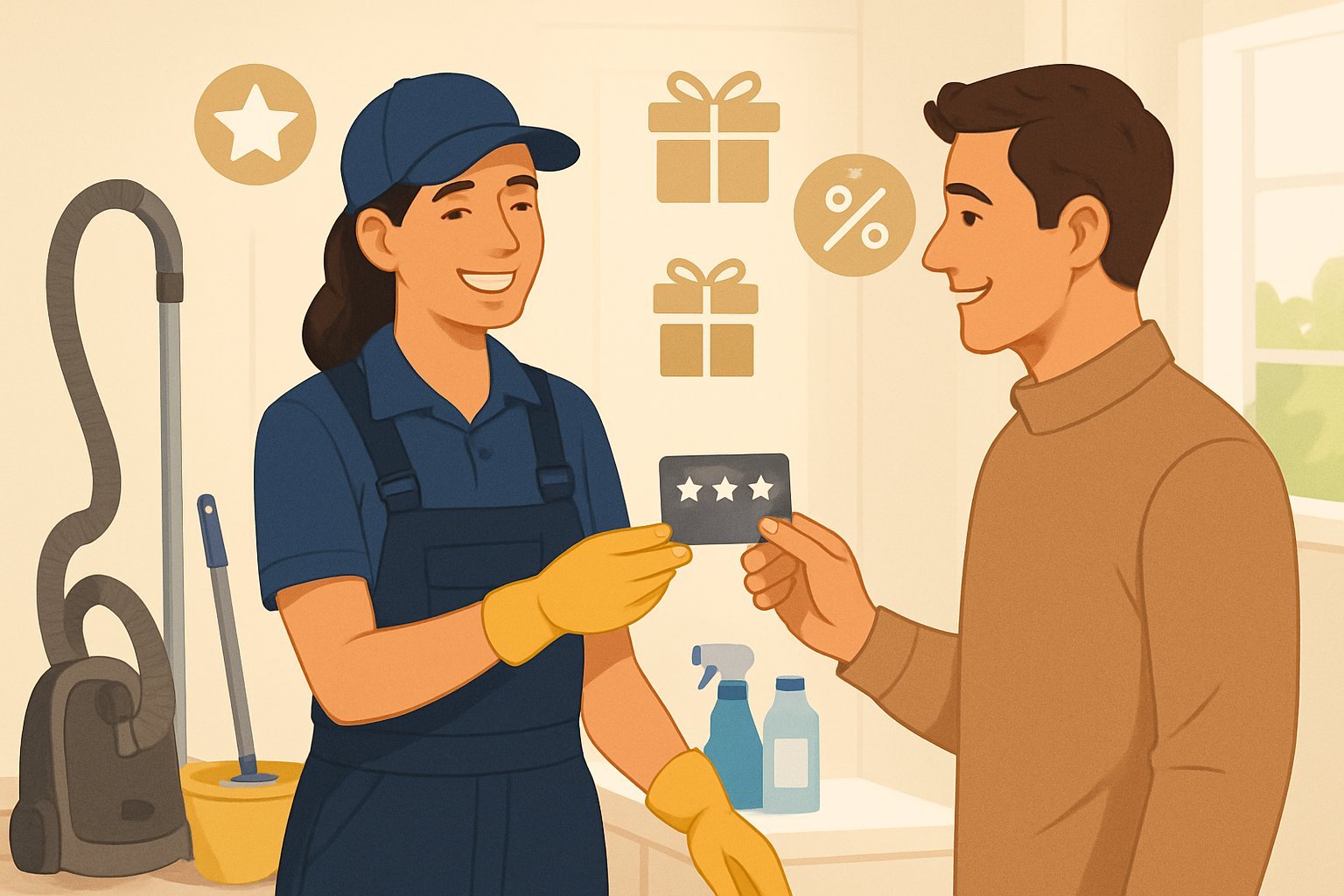
A customer loyalty program can transform a cleaning service from a one-time transaction business into a thriving company with predictable revenue streams. Building a structured loyalty program with rewards like every 10th clean free, anniversary discounts, and VIP perks helps cleaning services retain customers while increasing their lifetime value. These programs work because they give clients compelling reasons to stick with one service provider instead of shopping around for the cheapest option.
The cleaning industry faces unique challenges when it comes to customer retention. Many clients view cleaning as a commodity service and make decisions based purely on price. However, loyalty programs change this dynamic by creating emotional connections and tangible benefits that go beyond cost. When customers earn points toward free services or receive special treatment as VIP members, they develop a sense of investment in the relationship.
Effective loyalty programs require more than just offering rewards. The real success comes from choosing the right reward structure, timing communications properly, and making benefits clear and valuable to customers. A well-designed program can boost customer retention rates by up to 50% while generating valuable referrals and positive reviews that attract new clients.
Key Takeaways
- Loyalty programs turn price-focused cleaning clients into committed long-term customers through structured rewards and VIP benefits
- The right reward structure combined with clear communication can increase customer retention rates by up to 50%
- Successful programs require ongoing optimization based on customer behavior and feedback to maintain engagement and effectiveness
Understanding the Value of Customer Loyalty Programs
Customer loyalty programs create lasting connections between cleaning services and their clients while driving measurable business results. These programs boost retention rates, increase revenue per customer, and build strong brand relationships that lead to sustainable growth.
Importance of Customer Retention in Cleaning Services
Customer retention costs far less than finding new clients. Studies show that keeping existing customers costs five times less than acquiring new ones.
Cleaning services face unique retention challenges. Customers can easily switch providers since many companies offer similar basic services. Building loyalty becomes critical for long-term success.
Regular cleaning services create natural opportunities for loyalty programs. Clients book weekly, bi-weekly, or monthly appointments. This frequency makes reward tracking simple and meaningful.
Loyal customers provide steady income streams. They book services consistently and rarely cancel appointments. This predictability helps cleaning businesses plan schedules and manage cash flow better.
Retained clients also refer new customers. Happy long-term clients trust their cleaning service enough to recommend it to friends and family. These referrals convert at higher rates than cold leads.
Impact on Business Growth and Profitability
Loyal customers spend more money over time. They often add extra services like deep cleaning, window washing, or organizing. These add-ons increase the average transaction value.
Customer lifetime value grows significantly with loyalty programs. A client who stays for three years instead of one year triples their total value to the business. This extended relationship directly impacts profitability.
Loyalty programs reduce marketing costs. Businesses spend less on advertising when they retain more customers. The money saved can go toward improving service quality or expanding operations.
Repeat customers require less sales effort. They already trust the service and understand the process. This efficiency allows staff to focus on delivering quality work instead of constant selling.
Loyal clients also provide valuable feedback. They care about the service quality and will share suggestions for improvement. This input helps cleaning services enhance their offerings.
Customer Experience and Brand Loyalty
Loyalty programs improve the overall customer experience. Clients feel valued when they receive rewards for their continued business. This positive feeling strengthens their connection to the brand.
Recognition matters more than just discounts. Simple gestures like remembering client preferences or celebrating service anniversaries create emotional bonds. These personal touches set cleaning services apart from competitors.
Consistent service quality builds trust over time. Clients develop confidence in their cleaning team’s abilities. This trust forms the foundation of lasting brand loyalty.
Loyalty programs create anticipation and engagement. Customers look forward to earning their next reward. This excitement keeps the cleaning service top-of-mind between appointments.
Satisfied loyal customers become brand advocates. They defend the cleaning service in conversations and online reviews. These authentic endorsements carry more weight than paid advertising and attract similar high-quality clients.
Choosing the Right Loyalty Program Structure for Cleaning Services
The structure of your loyalty program determines how customers earn and redeem rewards, which directly impacts participation rates and long-term retention. Each program type offers different benefits for cleaning services, from simple point accumulation to exclusive membership perks.
Points-Based Loyalty Programs
Points-based systems are the most common loyalty program structure for cleaning services. Customers earn points for each service they purchase or dollar they spend.
How Points Systems Work:
- Customers earn 1 point per dollar spent on cleaning services
- Points accumulate over time in their account
- Customers redeem points for free cleanings or discounts
This structure works well for cleaning services because it’s easy to understand. Customers see immediate value after each cleaning appointment.
Setting Point Values: Most cleaning services offer 100-200 points for a free cleaning. This typically requires 10-20 paid cleanings to earn a reward.
The points system creates a clear path to rewards. Customers know exactly what they need to do to earn their next benefit.
Tiered Rewards Systems
Tiered loyalty programs group customers into different levels based on their spending or visit frequency. Each tier offers increasingly valuable rewards and perks.
Common Tier Structure:
- Bronze: 1-5 cleanings per year
- Silver: 6-12 cleanings per year
- Gold: 13+ cleanings per year
Higher tiers receive better benefits like priority scheduling, exclusive discounts, or bonus services. This encourages customers to book more frequently to reach the next level.
Tier Benefits Example:
- Bronze: 5% discount on services
- Silver: 10% discount plus priority booking
- Gold: 15% discount plus free add-on services
Tiered programs work especially well for cleaning services with diverse customer bases. They reward your best customers while encouraging others to increase their usage.
Visit-Based and Frequency Programs
These programs focus on the number of cleanings rather than money spent. They’re perfect for cleaning services that want to encourage regular bookings.
Punch Card Style: The classic “10th cleaning free” model falls into this category. Customers receive a stamp or credit for each completed cleaning.
This approach is simple and transparent. Customers immediately understand the value proposition without complex calculations.
Frequency Bonuses: Some cleaning services offer bonuses for consistent scheduling:
- Monthly cleanings: 10% discount
- Bi-weekly cleanings: 15% discount
- Weekly cleanings: 20% discount
Visit-based programs encourage habit formation. Regular customers become less likely to switch to competitors.
Membership and Subscription Models
Membership programs require customers to pay an annual or monthly fee for exclusive benefits. This model works well for established cleaning services with loyal customer bases.
Membership Benefits:
- Discounted service rates
- Priority scheduling
- Free emergency cleanings
- Exclusive seasonal offers
VIP Cleaning Club Example: $99 annual membership includes:
- 20% discount on all services
- One free deep cleaning per year
- Priority booking during busy seasons
Subscription models provide predictable revenue for cleaning services. Members feel exclusive and receive genuine value for their commitment.
Some cleaning services combine membership with service subscriptions. Customers pay monthly for guaranteed cleaning slots at discounted rates.
This structure works best for premium cleaning services. The upfront cost filters for committed customers who value convenience and exclusive treatment.
Designing Effective Rewards for Long-Term Clients
A cleaning service’s reward structure should focus on repeat business through tiered incentives, special milestone recognition, and personalized benefits that make clients feel valued. The most successful programs combine automatic rewards with exclusive perks that increase in value as the relationship grows.
Every 10th Clean Free and Repeat Purchase Incentives
The “10th clean free” model creates a clear path for customers to earn rewards through repeat purchases. This system works because clients can easily track their progress toward the free service.
Cleaning services should implement a punch card system or digital tracking. Each completed service moves the client closer to their reward. This approach encourages customers to stick with one provider rather than switching between companies.
Variation options include:
- Every 8th clean gets 20% off
- Every 12th clean includes carpet cleaning
- Buy 6 months upfront, get the 7th month free
The key is making the reward feel achievable. If clients need 20 cleanings to earn something, they may lose interest. Ten visits strikes the right balance between value and attainability.
Services can also offer smaller rewards along the way. A 10% discount after the 5th clean keeps momentum building toward the bigger prize.
Anniversary Discounts and Exclusive Offers
Anniversary rewards recognize the relationship milestone between the cleaning service and long-term clients. These exclusive benefits should reflect the duration of the partnership.
First-year clients might receive 15% off their anniversary month. Three-year clients could get 25% off plus a free add-on service like interior oven cleaning.
Anniversary reward tiers work well:
- Year 1: 15% discount
- Year 2: 20% discount + free window cleaning
- Year 3+: 25% discount + choice of premium service
Exclusive discounts should also extend to seasonal promotions. Loyal customers get early access to spring cleaning packages or holiday preparation services before these offers reach new customers.
Birthday discounts add a personal touch. A free room cleaning or 20% off the next service shows the company remembers individual clients beyond just their cleaning schedule.
These exclusive offers make repeat clients feel special and valued for their loyalty.
VIP Perks and Personalized Rewards
VIP status transforms regular customers into privileged clients who receive personalized rewards based on their specific needs and preferences. This level goes beyond standard discounts to create unique experiences.
Priority scheduling gives VIP clients first choice of appointment times. They can book last-minute services or change schedules without penalty. This flexibility has real value for busy customers.
Personalized rewards might include:
- Free upgrades to eco-friendly products
- Complimentary deep-clean of one room quarterly
- Personal account manager for all scheduling
- Custom cleaning checklists for their home
VIP clients should receive exclusive communication about new services before general customers. They get first access to book seasonal services like post-party cleanup or moving preparation.
The service can track individual preferences in client files. If someone always requests extra attention in the kitchen, their VIP reward might be a free appliance deep-clean.
These personalized touches increase customer satisfaction because clients feel understood. The cleaning service becomes less replaceable when they know exactly what each VIP customer values most.
Using Loyalty Programs to Drive Customer Retention
Well-designed loyalty programs create measurable improvements in customer retention rates by giving clients compelling reasons to continue using your cleaning service instead of switching to competitors. These programs work by systematically rewarding repeat business and building stronger emotional connections that transform one-time customers into long-term advocates.
Improving Customer Retention Rates
Customer retention rates increase significantly when cleaning services implement structured loyalty programs. Research shows that even a 5% improvement in customer retention can boost revenue by 25% to 95%.
Loyalty programs reduce customer churn by creating switching costs. When a client has earned credits toward their next free cleaning, they hesitate to start over with a new service.
Key retention metrics to track include:
- Monthly customer retention rate
- Customer lifetime value
- Average time between service cancellations
- Repeat booking frequency
Cleaning services should measure retention rates before and after launching their loyalty program. Most businesses see retention improvements within 3-6 months of implementation.
The program creates predictable customer behavior patterns. Clients become accustomed to earning rewards and plan their cleaning schedules around program benefits.
Encouraging Consistent Repeat Business
Loyalty programs drive repeat business by making regular bookings more rewarding than sporadic service calls. Customers develop habits around earning and redeeming rewards.
Effective strategies for repeat business include:
- Progressive rewards that increase in value with frequency
- Booking streaks that offer bonuses for consecutive monthly cleanings
- Seasonal incentives during slower periods
The “every 10th clean free” model works particularly well because it requires consistent engagement. Clients must book regularly to reach the reward threshold.
Time-sensitive offers create urgency for rebooking. Anniversary discounts and birthday specials give clients specific reasons to schedule additional services.
VIP perks make frequent customers feel valued. Priority scheduling and exclusive add-on services encourage clients to maintain their loyalty program status.
Building Long-Term Customer Relationships
Customer relationships strengthen when loyalty programs focus on recognition rather than just transactions. Personal touches and exclusive benefits create emotional connections that extend beyond basic cleaning services.
Long-term relationships develop through consistent communication about program benefits. Clients who understand their progress and upcoming rewards stay engaged longer.
Relationship-building elements include:
- Personalized milestone celebrations
- Exclusive member-only communications
- Special recognition for program anniversaries
Customer lifetime value increases as relationships deepen. Loyal clients often upgrade to premium services and refer new customers more frequently.
The program provides regular touchpoints for relationship building. Each reward earned or redeemed becomes an opportunity to reinforce the client’s decision to stay with your service.
Trust builds when clients see consistent delivery of promised benefits. Reliability in both cleaning quality and reward fulfillment creates lasting customer relationships.
Enhancing Engagement and Advocacy with Loyalty Initiatives
Loyalty programs for cleaning services become more powerful when they create active customer engagement and encourage clients to become brand advocates. Game-like features, referral incentives, and feedback systems transform routine service relationships into dynamic partnerships that drive long-term growth.
Increasing Customer Engagement Through Gamification
Gamification adds fun elements to loyalty programs that keep clients interested between cleaning visits. Cleaning services can create point systems where customers earn badges for milestones like booking their fifth appointment or maintaining service for six months.
Progress tracking through mobile apps or email updates shows clients how close they are to rewards. A visual progress bar toward their next free cleaning creates anticipation.
Challenges and achievements work well for cleaning services. Clients might earn bonus points for booking recurring services or trying add-on services like window cleaning.
Seasonal competitions can boost engagement during slower periods. Spring cleaning challenges or holiday preparation contests encourage additional bookings while building community among clients.
Tiered status levels like Bronze, Silver, and Gold memberships give clients goals to reach. Each tier unlocks better perks, creating ongoing motivation to stay loyal.
Leveraging Referral Programs and Word-of-Mouth Marketing
Referral programs turn satisfied clients into active promoters of the cleaning service. Offering both the referrer and new client a free cleaning creates strong incentives for word-of-mouth marketing.
Double-sided rewards work better than one-sided bonuses. When both parties benefit, clients feel good about making referrals and new customers feel welcomed.
Social media integration makes sharing easier. Clients can post about their positive experiences directly through the loyalty app, earning points for user-generated content.
Customer referrals should be tracked and celebrated. Recognizing top referrers with special perks or public acknowledgment encourages continued advocacy.
Timing matters for referral requests. Asking for referrals right after a great cleaning experience increases success rates. Automated follow-up messages can prompt satisfied clients to share.
Capturing Feedback and Encouraging Customer Reviews
Customer feedback collection through loyalty programs provides valuable insights while showing clients their opinions matter. Post-service surveys linked to reward points encourage participation.
Review incentives motivate clients to share experiences online. Small point bonuses for Google or Yelp reviews help build the service’s online reputation.
NPS surveys built into loyalty communications measure customer satisfaction and identify potential advocates. Clients who give high scores can be invited to join referral programs.
Follow-up communication after feedback shows the cleaning service takes suggestions seriously. Clients who see their input leads to improvements become stronger advocates.
Multiple feedback channels accommodate different preferences. Some clients prefer quick text surveys while others like detailed online forms. Offering both options increases response rates.
Communicating Loyalty Program Benefits Effectively
Clear communication helps customers understand program value and drives participation in your cleaning service loyalty program. Effective messaging through multiple channels and personalized approaches ensures clients know about rewards like free services and anniversary discounts.
Promoting Your Loyalty Program to Clients
Cleaning service owners should announce their loyalty program through welcome packets for new customers. Include simple program cards that explain rewards like “Every 10th clean is free” in plain language.
Staff training plays a key role in program promotion. Team members should mention loyalty benefits during service visits and explain how points accumulate toward rewards.
Key promotional materials include:
- Program overview cards with service vehicles
- Welcome emails explaining enrollment steps
- Service confirmation texts mentioning point earnings
- Invoice statements showing current point balances
Create urgency with limited-time enrollment bonuses. Offer double points for the first month or a discount on the next service for immediate sign-ups.
Display program benefits prominently on service uniforms and vehicle signage. Visual reminders help existing customers remember to enroll and participate actively.
Utilizing Digital Channels and In-Person Messaging
Email campaigns work well for loyalty program updates and reward notifications. Send monthly statements showing points earned and available rewards to keep the customer experience engaging.
Text messaging provides instant updates when customers earn points or qualify for rewards. Send alerts like “Congratulations! Your next cleaning is FREE” after the 9th service.
Effective digital communication methods:
- Welcome emails explaining program benefits
- Point balance updates via email or app
- Reward reminders through text alerts
- Social media posts featuring member success stories
In-person communication during service visits builds stronger connections. Technicians can mention upcoming rewards or suggest using accumulated points for services.
Create simple program materials that explain exclusive benefits clearly. Use visual aids showing the path from enrollment to free services and VIP perks.
Personalization and Targeted Communication
Personalization improves customer loyalty program effectiveness by addressing individual client needs and preferences. Track service frequency and spending patterns to customize reward communications.
Send anniversary emails celebrating client relationships with special discounts. Mention specific services they use most often and suggest relevant rewards or upgrades.
Personalized communication strategies:
| Communication Type | Personalization Method | Example |
|---|---|---|
| Email campaigns | Service history | “Your monthly deep cleans earned 120 points!” |
| Text alerts | Timing preferences | Notifications sent on preferred days |
| Service visits | Past interactions | Mentioning favorite cleaning products |
Address customers by name in all communications and reference their specific service schedule. This approach makes the customer experience feel more valuable and exclusive.
Segment customers based on service frequency and spending levels. High-value clients receive information about premium VIP perks, while occasional customers learn about basic reward milestones.
Track which communication methods work best for different customer groups. Some prefer email updates while others respond better to text messages or in-person conversations.
Managing and Optimizing Your Loyalty Program for Continuous Improvement
A cleaning service loyalty program requires ongoing monitoring and adjustments to remain effective. Data collection and program management form the foundation for making informed decisions that improve customer retention and service quality.
Tracking Data and Customer Behavior
Cleaning services should track key metrics to understand program performance. Important data points include enrollment rates, redemption frequency, and customer lifetime value changes.
Essential Metrics to Monitor:
- Active member participation rates
- Average time between bookings for loyalty members
- Redemption rates for different rewards
- Customer retention rates compared to non-members
Track customer behavior patterns like booking frequency and service preferences. Members who book monthly cleanings may respond differently to rewards than those who book quarterly deep cleans.
Use simple tracking methods like spreadsheets for smaller operations. Record when customers join, redeem rewards, and book additional services. Larger cleaning companies can use customer management software to automate data collection.
Monitor which rewards customers use most often. If few customers redeem anniversary discounts but many use the free 10th cleaning, adjust the program accordingly.
Adjusting Rewards Based on Analytics
Analytics help identify which rewards drive the most customer engagement. Review program performance every three months to spot trends and opportunities for improvement.
Common Adjustments Based on Data:
- Changing point values if redemption rates are too low
- Adding new reward types for underserved customer segments
- Modifying communication frequency based on response rates
- Adjusting tier requirements if too few customers advance
Test different reward structures with small customer groups. Compare results between customers who receive standard rewards versus enhanced benefits. This approach minimizes risk while gathering useful feedback.
Pay attention to seasonal patterns in your cleaning business. Customers may prefer different rewards during spring cleaning season versus holiday periods. Adjust offerings to match these natural cycles.
Remove rewards that show consistently low usage after six months. Replace them with options that better match customer preferences and business goals.
Program Management and Scalability
Effective program management requires clear processes and assigned responsibilities. Designate one team member to oversee the loyalty program and handle day-to-day operations.
Key Management Tasks:
- Processing reward redemptions
- Updating customer records
- Communicating program changes
- Training staff on program details
Create simple procedures for common situations like expired rewards or customer complaints. Document these processes so any team member can handle loyalty program issues consistently.
Plan for program growth as your cleaning service expands. Consider how the program will work with more customers, additional service areas, or new cleaning services.
Set annual budgets for loyalty program costs including rewards, administrative time, and any software expenses. Track actual costs against budgets to ensure the program remains profitable.
Regular staff training ensures consistent program delivery. Team members should understand reward structures and be able to explain benefits to customers during service visits.
Frequently Asked Questions
Business owners commonly ask about reward structures, timing, and communication strategies when developing loyalty programs. These questions focus on practical implementation details that directly impact customer retention and program success.
What are the best practices for structuring a tiered loyalty program for cleaning services?
A three-tier system works best for cleaning services. The first tier starts after three cleanings with basic rewards like 5% discounts.
The second tier begins at ten cleanings. Customers receive 10% discounts and priority scheduling during busy periods.
The top tier activates after twenty cleanings. Members get 15% discounts, free add-on services, and dedicated customer support lines.
Points should accumulate automatically with each service. One point per dollar spent creates simple calculations for customers and staff.
Clear tier requirements help customers understand their progress. Display current status and next milestone on receipts or digital platforms.
How can anniversary discounts be implemented to enhance customer retention in the cleaning industry?
Track the date of each customer’s first cleaning service. Send anniversary reminders two weeks before the date arrives.
Offer 20-25% discounts during anniversary month. This percentage provides meaningful savings without hurting profit margins significantly.
Include anniversary bonuses like free carpet cleaning or window washing. These add-ons increase service value while showcasing additional offerings.
Send personalized messages acknowledging the relationship milestone. Thank customers for their continued trust and business partnership.
Create urgency by limiting anniversary offers to 30 days. This timeframe encourages quick booking while remaining reasonable for busy schedules.
What types of rewards are most effective in encouraging repeat business for a cleaning service?
Free services generate the strongest customer response. Every tenth cleaning free creates clear value that customers easily understand.
Percentage discounts work well for budget-conscious clients. Offer 10-15% off regular services after reaching specific milestones.
Priority booking appeals to busy customers. Guarantee preferred time slots for loyalty members during peak seasons.
Free add-on services introduce customers to new offerings. Include window cleaning, oven cleaning, or garage organization at no extra charge.
Referral bonuses create dual benefits. Give existing customers $25 credit for each new client they bring to the business.
Can you provide examples of successful VIP perks that have been used in the cleaning service sector?
Dedicated phone lines reduce wait times for VIP customers. These members reach staff immediately without standard hold periods.
Free seasonal services add significant value. Include spring deep cleaning, holiday preparation, or post-party cleanup for top-tier members.
Flexible scheduling changes accommodate last-minute needs. Allow VIP customers to reschedule within 24 hours without penalties.
Premium supplies enhance the cleaning experience. Use eco-friendly or luxury products exclusively for VIP properties.
Personal account managers build stronger relationships. Assign dedicated staff members who understand specific preferences and requirements.
What are the most effective ways to communicate the benefits of a loyalty program to cleaning service customers?
Use simple language when explaining program benefits. Avoid complex point systems or confusing tier structures in all communications.
Display benefits prominently on invoices and receipts. Include current point balance and next reward milestone on every transaction.
Send monthly program updates via email or text. Highlight progress toward rewards and announce special member-only promotions.
Train all staff members on program details. Ensure team members can answer questions and explain benefits during service visits.
Create visual materials like flyers or cards. Leave these items at customer locations to remind them about available rewards.
How does offering a free cleaning after a certain number of services impact long-term client loyalty?
Free service rewards create strong psychological motivation. Customers feel they receive genuine value for their continued business relationship.
The “buy nine, get the tenth free” model increases booking frequency. Clients schedule more regular cleanings to reach the reward milestone faster.
Free cleanings reduce price sensitivity for future services. Customers focus less on cost when they perceive ongoing value from the program.
This reward structure improves retention rates by 30-50%. Customers rarely switch providers when close to earning free services.
The anticipation of free cleaning keeps customers engaged. They track progress toward rewards and maintain regular service schedules.