The biohazard and crime scene cleaning industry gives entrepreneurs a shot at solid earnings, even when the economy tanks. Experienced operators can pull in over $75,000 a year.
This specialized field calls for professionals who clean and sanitize spaces impacted by traumatic events, unattended deaths, or any kind of biohazard mess. If you complete the right certifications and training, you can earn anywhere from $25 to $75 an hour—sometimes more.
You’re providing a service that law enforcement and property owners really need, often on short notice.
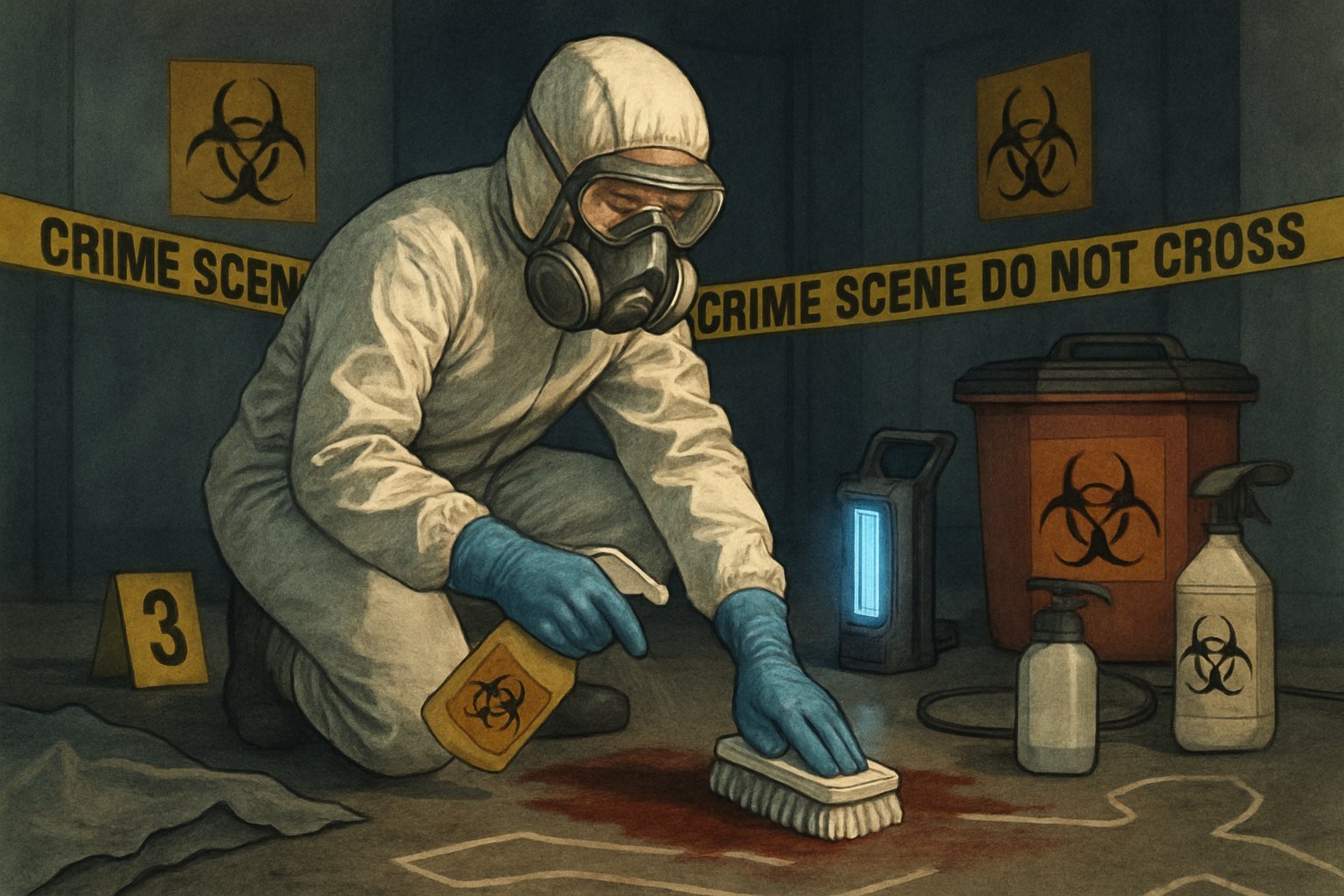
Success here isn’t just about cleaning skills. You’ll need OSHA Bloodborne Pathogens certification and specialized biohazard training to stay safe.
The job demands pricey equipment—HEPA-filtered vacuums, full protective gear, and serious disinfectants. You’ll also face emotional hurdles, especially when you’re working around trauma and grieving families.
To build a profitable business, you’ll want contracts with police departments, coroners, insurance companies, and restoration firms. Make sure you’ve got the right licenses, insurance, and you’re following EPA disposal rules.
Networking matters. If you master the technical stuff and connect with the right people, you can carve out a thriving business in this niche.
Key Takeaways
- Crime scene cleaning requires OSHA certification, specialized equipment, and proper disposal training to operate legally and safely.
- The emotional demands of traumatic cleanup work require mental resilience and professional boundaries to maintain long-term success.
- Building contracts with law enforcement, insurance companies, and restoration firms creates steady revenue streams for established operators.
Overview of Biohazard and Crime Scene Cleaning
Crime scene cleaning means getting rid of blood, bodily fluids, and other biological contaminants after traumatic events. Biohazard cleanup also covers infectious diseases, chemical spills, and hazardous environments.
The industry serves law enforcement, families, businesses, and insurance companies. They all need help after violent crimes, accidents, or contamination incidents.
What Is Crime Scene Cleaning?
Crime scene cleaning is all about decontaminating places where traumatic events have happened. A cleaner removes blood, bodily fluids, tissue, and other biological materials from surfaces, furniture, or even the building itself.
This isn’t your average cleaning gig. Crime scene cleaners use special chemicals and gear to fully sanitize the area.
They have to get rid of every trace of biological contamination so the space is safe again.
Bio-recovery technicians don’t just handle crime scenes. They clean up after suicides, unattended deaths, accidents, and medical emergencies.
The goal is always the same: total decontamination and restoration.
Key responsibilities include:
- Removing all biological materials
- Disinfecting contaminated surfaces
- Disposing of hazardous waste properly
- Restoring areas to pre-incident condition
Cleaners have to follow strict safety protocols. They wear protective equipment and stick to health regulations to avoid bloodborne pathogens.
Types of Scenes and Incidents
Crime scene cleaners show up for all kinds of biohazard situations. Each one brings its own set of challenges and safety needs.
Violent crimes—homicides, assaults, robberies—leave blood and bodily fluids everywhere. These jobs often mean scrubbing walls, floors, and furniture.
Unattended deaths can go undiscovered for days or weeks. Decomposition creates a serious mess that needs special removal techniques.
Industrial accidents might involve a lot of blood loss or chemical exposure. Sometimes you’re dealing with both biological and chemical hazards at once.
Suicide cleanup is tough emotionally, and it has to be thorough. Families are often present and need compassion.
Other incidents can involve drug labs, hoarding, infectious disease outbreaks, or sewage backups. Each one calls for different expertise and gear.
Demand and Industry Landscape
The biohazard cleanup industry has a steady stream of work—unfortunate, but true. Law enforcement, insurance companies, and property owners call for these services regularly.
Demand stays pretty consistent whether you’re in a city or out in the country. Cities tend to see more violent crime, while rural areas have more unattended deaths. Industrial regions bring in accident-related jobs.
Primary customers include:
- Police departments
- Insurance companies
- Property management companies
- Hospitals and healthcare facilities
- Private families
There’s real growth potential in this job market. Many places just don’t have enough trained technicians.
That leaves the door open for new businesses and solo operators.
You’ll find more competition in big cities, where multiple companies already operate. In rural areas, though, you might be the only game in town.
Essential Certifications and Training Requirements
Crime scene cleaners need specific certifications to handle dangerous materials safely and legally. OSHA bloodborne pathogens training is step one, but you’ll also need specialized equipment and hazardous waste credentials.
OSHA Bloodborne Pathogens Certification
OSHA’s Bloodborne Pathogens Standard (29 CFR 1910.1030) is a must for anyone working with infectious materials. This certification teaches you how to protect yourself from diseases like HIV, hepatitis B, and hepatitis C.
The training covers exposure control plans and emergency procedures. You’ll learn how to clean up blood and bodily fluids safely.
Key Training Components:
- Disease transmission methods
- Exposure incident protocols
- Medical surveillance requirements
- Record-keeping obligations
Most courses take 4–8 hours. You’ll need a yearly refresher to stay certified.
Online courses are out there, but hands-on practice is always better.
Employers have to provide this training for free. You can’t start cleanup work until you’re certified.
Biohazard and Pathogen Training
Specialized pathogen training takes you beyond basic OSHA rules. Crime scene cleaners face all sorts of biological hazards, so you need advanced knowledge and skills.
Training covers the types of pathogens you’ll find at crime scenes. You’ll learn about bacteria, viruses, and other infectious agents.
The coursework also teaches specific decontamination methods for each hazard.
Common Pathogens Encountered:
- Methicillin-resistant Staphylococcus aureus (MRSA)
- Clostridium difficile
- Tuberculosis bacteria
- Various bloodborne viruses
You’ll get into the details of how cleaning agents interact with chemicals and how pathogens survive on different surfaces. Training also explains how to dispose of contaminated materials the right way.
Many programs offer Certified Bio-Recovery Technician credentials. The American Bio Recovery Association provides a respected certification in the field.
Personal Protective Equipment Training
Personal protective equipment training shows you how to choose, use, and maintain your safety gear. Proper PPE keeps you safe during cleanup.
The training covers different protection levels, depending on how severe the contamination is. You’ll learn when to use basic gear and when you need full protective suits.
Fit testing for respirators is a big deal here.
Essential PPE Components:
- Level A: Full encapsulation suits with supplied air
- Level B: Supplied air with chemical-resistant clothing
- Level C: Air-purifying respirators with protective suits
- Level D: Standard work uniforms with minimal protection
Decontamination procedures matter as much as wearing the gear. You’ll practice taking equipment off safely so you don’t contaminate yourself.
Most programs want you to get hands-on with actual equipment. You’ll need to prove you can use it before you get certified.
HAZWOPER and Specialized Credentials
If you’re handling hazardous waste, you’ll need Hazardous Waste Operations and Emergency Response (HAZWOPER) certification. The 40-hour HAZWOPER course covers chemical hazards and emergency response.
You’ll learn about site characterization, air monitoring, and emergency protocols. Chemical compatibility and storage are also on the menu.
HAZWOPER Training Levels:
- 40-hour certification for hazardous waste sites
- 24-hour certification for occasional exposure
- 8-hour annual refresher training required
Extra credentials can help you land more work. The Institute of Inspection Cleaning and Restoration Certification (IICRC) offers advanced programs. Some states require medical waste transporter certifications.
Many workers stack multiple certifications to broaden their expertise and stand out to employers.
Specialized Equipment and Safety Protocols
Crime scene cleanup professionals rely on specialized protective gear and professional-grade cleaning equipment to handle biohazards safely. The right tools keep workers safe and ensure thorough decontamination.
Personal Protective Equipment (PPE)
Personal protective equipment is your first defense against bloodborne pathogens. Workers always wear disposable nitrile gloves that resist punctures and chemicals.
Double-gloving is common when handling sharp or heavily contaminated materials.
Safety eyewear and face shields protect against splashes and airborne nasties. Regular safety glasses don’t cut it for this work.
Full face shields are better than goggles alone.
Protective footwear includes disposable shoe covers or boots you can decontaminate. Steel-toed boots help if you’re dealing with heavy debris.
Disposable coveralls made from liquid-resistant material cover the whole body. They need to connect well with gloves and footwear to keep skin safe.
Protective Suits and Respirators
Protective suits cover you completely in high-risk situations. Tyvek suits block chemicals and liquids but still let air through.
These need to fit right—too loose or too tight, and you’re at risk.
Level C protective suits come out for the worst jobs. They offer more chemical protection but take extra training to use safely.
N95 respirators filter out 95% of airborne particles, but sometimes you need more. P100 respirators do a better job with biological contaminants.
Full-face respirators protect your eyes and lungs at once. Fit testing is a must.
Self-contained breathing apparatus (SCBA) comes into play when air quality is terrible or chemicals are unknown.
Decontamination Tools and Cleaning Agents
HEPA-filtered vacuums suck up contaminated particles without spreading them around. Never use a regular vacuum for biohazards.
Enzymatic cleaners break down blood and tissue at the molecular level. They work better than standard disinfectants for organic messes.
Hospital-grade disinfectants kill bacteria and viruses after the main cleaning. The EPA regulates these for effectiveness.
UV light equipment can spot hidden contamination you’d otherwise miss. It helps guarantee nothing gets left behind.
Foggers and electrostatic sprayers spread disinfectants over big areas. They’re great for hard-to-reach spots.
Containment barriers keep clean areas safe from cross-contamination. Plastic sheeting and negative air machines help create safe work zones.
Emotional Demands and Mental Resilience
Crime scene cleaning takes mental toughness. You’ll deal with traumatic environments almost every day, so you need good coping skills and professionalism.
Handling Traumatic Scenes
Cleaners face suicide sites, homicides, unattended deaths, and nasty accidents. The visuals and emotions can stick with you if you’re not prepared.
You might spend hours or even days at a scene—unlike first responders, who leave quickly. That extended exposure can make it tough to keep your distance emotionally.
Common traumatic scenarios include:
- Violent crime aftermaths with blood and tissue
- Decomposed remains from unattended deaths
- Suicide scenes in family homes
- Hoarding situations with biohazards
- Overdose locations
The isolation at some scenes can hit hard. Many deaths happen when someone dies alone, going undiscovered for weeks. Those jobs combine physical and emotional challenges.
Companies have to prepare new hires for these realities. You can’t last in this business if you’re not ready for the psychological load.
Developing Compassion and Professionalism
Good cleaners find the balance between empathy and professional boundaries. You’ll need to read situations and respond to grieving families with care.
Key professional skills include:
- Listening without giving advice
- Respecting personal belongings and space
- Maintaining dignity for the deceased
- Avoiding judgment
- Communicating clearly about what’s happening
You’ll meet family members, landlords, or employers who are in crisis. Everyone processes trauma differently, so be flexible in how you communicate.
Being able to compartmentalize emotions is vital. You want to show empathy, but you can’t let the grief or circumstances overwhelm you.
Many cleaners find meaning in helping families start healing. That sense of purpose can keep you going, even on the hardest days.
Coping Strategies for Stress
Mental health support keeps crime scene cleaners from burning out or developing secondary traumatic stress. These workers face tough scenes and need real ways to handle what they witness.
Effective coping methods include:
-
Regular exercise and physical activity
-
Peer support groups with other cleaners
-
Professional counseling or therapy
-
Stress management like deep breathing
-
Clear work-life boundaries
Crime scene cleaning companies should offer employee assistance programs and mental health resources. Counseling gives workers a safe space to process what they’ve seen.
A lot of experienced cleaners come up with their own routines for unwinding after work. Some meditate, pick up hobbies, or talk with close friends about their day.
If workers notice sleep problems or start feeling emotionally numb, that’s a sign to reach out for more support. Catching these warning signs early makes a big difference.
Legal, Insurance, and Regulatory Considerations
Crime scene cleanup businesses deal with a maze of legal requirements and need special insurance coverage. Federal OSHA standards and state rules shape how companies legally handle biohazards.
Insurance and Liability Coverage
Crime scene cleanup companies need insurance that regular cleaning services just don’t. Standard general liability insurance won’t cover biohazard exposure or bloodborne pathogen claims.
Essential insurance types include:
-
Professional liability insurance – Covers mistakes in cleanup procedures
-
Pollution liability coverage – Protects against environmental contamination claims
-
Workers’ compensation – Required in most states for employee protection
-
Commercial auto insurance – Covers vehicles transporting hazardous waste
Insurance carriers usually ask for proof of OSHA bloodborne pathogen training before they’ll issue policies. Companies pay higher premiums than regular cleaning services because the risks are just that much greater.
Business owners also have to think about bonding. Police departments and restoration companies often require cleanup contractors to carry surety bonds between $10,000 and $50,000.
Compliance With State and Federal Regulations
Federal OSHA standards set the baseline, but states often add extra licensing and permit rules for biohazard cleanup.
Key federal requirements:
-
OSHA Bloodborne Pathogens Standard compliance
-
DOT hazardous materials transportation regulations
-
EPA waste disposal guidelines
Common state-level requirements:
-
Trauma Scene Waste Practitioner Permits (California)
-
Medical Waste Transportation Permits (Alabama, Florida)
-
Generator Permits for waste handling (Ohio)
Some states make companies pass biohazard knowledge tests before giving out permits. It’s up to each company to research local requirements—missing something can lead to big fines or even being shut down.
You need to keep records of every cleanup, all training, and all waste disposal paperwork. Regulators can ask for this at any time.
Securing High-Value Contracts and Building Partnerships
Strong partnerships with police departments, restoration companies, and government agencies bring steady work for crime scene cleaning companies. These relationships depend on trust, reliability, and real expertise with sensitive biohazard jobs.
Partnering With Police Departments
Police departments run into crime scenes needing professional cleanup all the time. Building relationships with law enforcement brings in referrals and contracts.
Direct outreach is the way to go here. Show up at local stations and talk with detectives or supervisors who handle crime scenes. Bring business cards and highlight your 24/7 availability.
Officers want fast response times, especially during active investigations. Companies should offer round-the-clock service and promise to show up within two to four hours. That kind of reliability builds trust.
Credentials count in this field. Show off your OSHA Bloodborne Pathogens and HAZWOPER certifications in all your materials. Police departments want to work with people who know what they’re doing.
Some departments keep preferred vendor lists for biohazard cleanup. Apply by submitting insurance, licenses, and proof of training. Once you’re on the list, referrals come straight to you.
Working With Restoration Companies
Restoration companies handle water damage, fire, and mold, but not usually biohazards. These partnerships bring steady work to crime scene cleaners.
Water damage jobs sometimes involve sewage or other hazards that general restoration crews can’t or won’t touch. Crime scene cleaners can step in for the risky parts.
If your company knows how to handle insurance billing, restoration partners will notice. Understanding claims and working with adjusters makes you more valuable.
Subcontracting agreements make these partnerships official. The restoration company holds the main contract and brings you in for biohazard work. It benefits both sides and keeps your calendar full.
Cross-referral programs help everyone. You send them general restoration jobs, and they send you biohazard work. It’s a win-win.
Marketing to Government and Private Clients
Government agencies and private property owners offer big contract opportunities for crime scene cleaners. Each group wants a different approach and specific paperwork.
Government contracts usually require certain certifications and higher insurance limits. Companies often need $1–2 million in general liability and professional liability coverage. Some clients want bonding, too.
Property management companies oversee rentals where traumatic events sometimes happen. They need reliable cleanup to get units rentable again, fast. Build relationships with big management firms for repeat work.
Healthcare facilities—hospitals and nursing homes—sometimes need biohazard cleanup for incidents with blood or other materials. If you prove you’re reliable and follow rules, these clients will call again.
Insurance companies sometimes hire cleanup services directly. Adjusters keep lists of preferred vendors. Getting on those lists takes solid insurance, bonding, and a good track record.
Frequently Asked Questions
People starting out in biohazard and crime scene cleaning need OSHA certifications, the right safety equipment, and a thick skin. You’ll also need proper insurance and strong connections with law enforcement and restoration partners.
What certifications are necessary for professionals in biohazard and crime scene cleaning to comply with OSHA Bloodborne Pathogens standards?
Workers need OSHA Bloodborne Pathogen Standard certification (29 CFR 1910.1030). This training covers safe handling of blood and bodily fluids.
Many states add hazmat training or trauma scene cleanup credentials. Check your location for extra requirements.
Companies have to keep compliance paperwork on file. Workers need to recertify regularly to stay up to date.
Business owners should double-check state licensing rules. Some places also require special permits for transporting biohazard waste.
What specialized equipment is essential for biohazard and crime scene remediation work?
Personal protective equipment means full-body suits, respirators, and puncture-resistant gloves. Eye protection and shoe covers are a must.
Cleaning gear includes commercial-grade biohazard containers and EPA-approved disinfectants. You’ll need chemicals tough enough for viruses, bacteria, and fungi.
Specialized tools might include air scrubbers, ozone generators, and moisture meters. Sharps containers keep needles and broken glass safe.
Transporting waste sometimes calls for refrigerated units. Vehicles must meet hazardous waste rules.
What are the emotional challenges faced by technicians in the biohazard and crime scene cleaning industry, and how does one prepare for them?
Technicians see traumatic scenes—violent deaths, suicides, accidents. The visual impact can stick with you.
Workers often meet grieving families at their lowest. That emotional weight is tough.
Preparation means counseling resources and employee assistance programs. Companies should check in on mental health regularly.
Training covers coping skills and stress management. Some businesses even require psychological evaluations before hiring.
What insurance policies must a biohazard and crime scene cleaning business carry to operate legally and safely?
General liability insurance covers property damage and injury claims. Professional liability protects against mistakes in cleanup.
Workers’ compensation is required for employees. Pollution liability covers risks to the environment.
Commercial auto insurance protects vehicles carrying hazardous materials. Some government contracts also require bonding.
Coverage amounts depend on state rules, but many contracts ask for at least $1 million in coverage.
How can a biohazard and crime scene cleaning service secure contracts with local law enforcement agencies?
Police departments keep preferred vendor lists for cleanup services. Companies need to apply through official channels.
You’ll need proper licenses, proof of insurance, and sometimes background checks for your team.
Networking at law enforcement events helps build relationships. Professional associations can open doors, too.
Departments expect fast response times—usually 24/7 availability. If you can deliver that, you’re already ahead.
What steps should be taken to establish partnerships with restoration companies for biohazard and crime scene cleaning services?
Restoration companies often subcontract specialized biohazard work. They want partners who have the right certifications and equipment.
If you want to connect, aim your marketing at water damage and fire restoration businesses. Those teams run into biohazard situations all the time.
Make sure partnership agreements clearly spell out service standards and response times. Lay out pricing up front to avoid headaches later.
You could set up joint training programs so restoration teams know when they’re dealing with a biohazard. Referral incentives can keep the business flowing both ways.