Cleaning businesses serve all sorts of clients, but a lot of owners miss an important group: people with disabilities. The Americans with Disabilities Act (ADA) says businesses have to make their services accessible, and that covers digital access, how you communicate, and the way you deliver cleaning.
For cleaning companies, this means your website should work with screen readers, you should offer different ways for clients to reach you, and you might need to adjust your services to fit different needs.
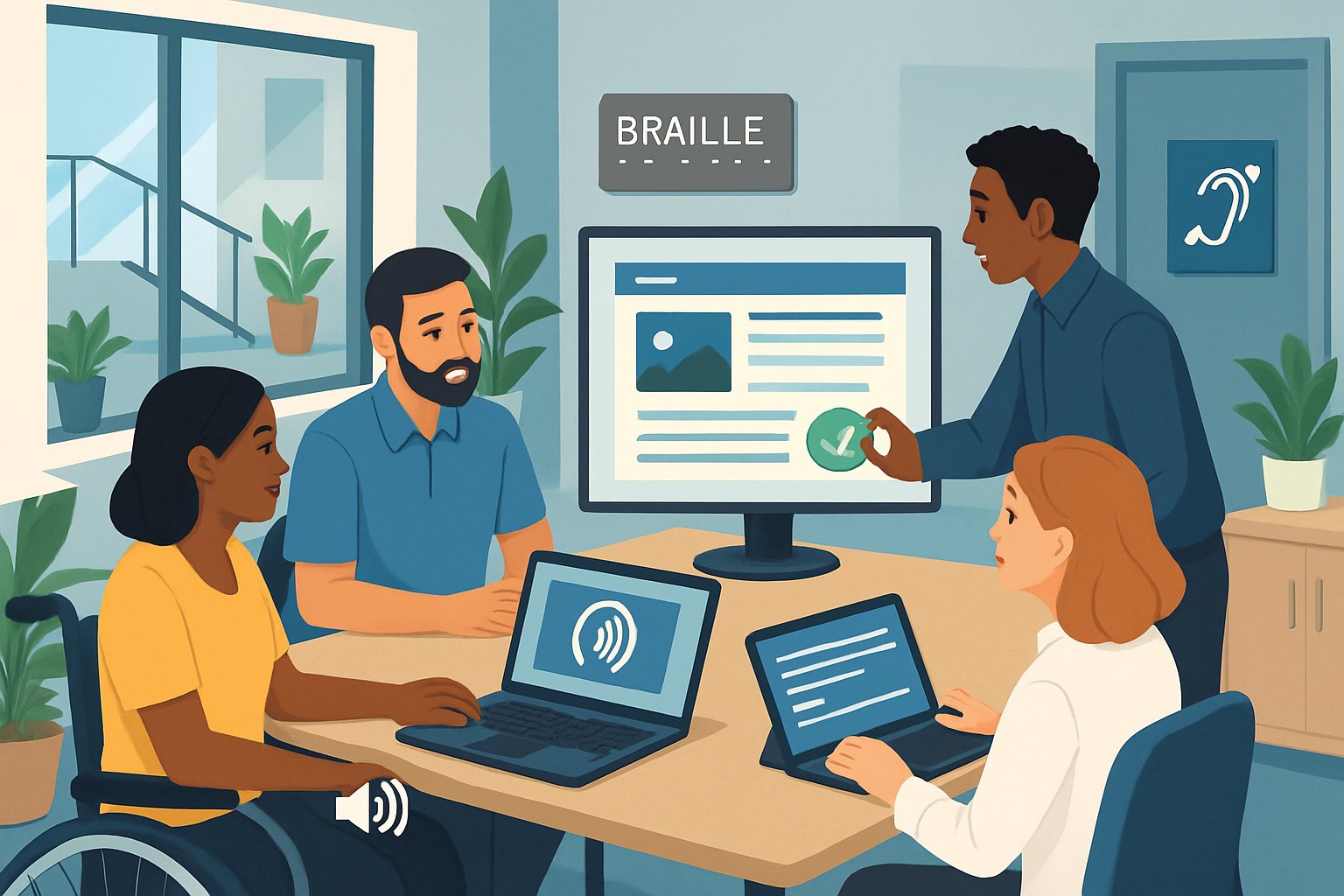
If you make your cleaning business ADA-compliant, you don’t just avoid legal trouble—you can also reach over 61 million Americans with disabilities. The ADA covers employment, customer service, and digital platforms. So, cleaning businesses really need to think about accessibility at every step.
A lot of business owners think compliance is complicated and expensive, but honestly, even small changes can make a big difference. You’ll also protect yourself from lawsuits.
The cleaning industry is competitive. If you focus on accessibility, you’ll stand out. Companies that care about inclusion usually get happier customers, a better reputation, and a bigger market.
If you understand ADA requirements and put practical solutions in place, you’ll create a more welcoming environment for everyone. You’ll also build a stronger, more resilient company.
Key Takeaways
- ADA compliance means cleaning businesses need accessible websites, communication, and services for people with disabilities.
- Simple improvements can help you avoid legal risks and open your business to millions of new clients.
- Regularly test and maintain your accessibility features to stay compliant and show you care about inclusion.
Understanding ADA Compliance for Cleaning Businesses
The Americans with Disabilities Act sets rules cleaning service owners have to follow if they want to serve everyone legally and effectively. These rules cover hiring, customer service, and digital accessibility.
What Is ADA and Why It Matters for Service Businesses
The ADA is a federal civil rights law that protects people with disabilities from discrimination. There are about 61 million Americans with disabilities, so this is a big deal.
If you own a cleaning business, ADA compliance means you have to make your services accessible. That covers how you talk to clients, how you deliver cleaning, and even how you show your business online.
Key areas for service businesses:
- Employment practices – Hire and accommodate employees with disabilities.
- Customer service – Give all clients equal access.
- Digital presence – Make your website work with screen readers and other assistive tech.
- Communication methods – Offer different ways to reach your business.
If you ignore ADA rules, you could face legal trouble. Lawsuits about accessibility have gone up a lot lately.
Cleaning businesses serve all kinds of people—elderly clients, people with disabilities, you name it. If you meet ADA standards, you can reach this important group and avoid legal headaches.
Titles I, II, and III: Key Sections that Affect Your Business
The ADA has five main parts, called titles. Three of them affect cleaning services directly.
Title I is about employment. You need to offer reasonable accommodations for employees with disabilities. This might mean changing work schedules or getting adaptive equipment.
Title II covers state and local government services. If you clean for government contracts, you’ll need to meet stricter accessibility standards.
Title III is about public accommodations and commercial facilities. This one affects how you serve private customers.
| Title | What It Covers | Impact on Cleaning Businesses |
|---|---|---|
| Title I | Employment | Hiring practices, workplace accommodations |
| Title II | Government services | Government contracts, public facility standards |
| Title III | Public accommodations | Customer service, website accessibility |
ADA website compliance falls under Title III. Your business website has to work with screen readers and assistive tech. That means adding text descriptions for images and making navigation simple.
Legal Requirements and Accessibility Guidelines
Cleaning business owners need to know the federal laws that set accessibility compliance standards. These rules cover digital platforms and how you deliver services.
Overview of ADA, WCAG, and Section 508
The Americans with Disabilities Act (ADA) is the main law that says businesses must give equal access to people with disabilities. Title III covers all public-facing businesses, no matter how big or small.
ADA rules don’t spell out exact website standards. Courts usually look to the Web Content Accessibility Guidelines (WCAG) as the standard. Most businesses aim for WCAG 2.1 Level AA.
Section 508 of the Rehabilitation Act is for federal agencies and their contractors. If you clean for the government, you’ll need to meet these tougher requirements.
There are three levels:
- Level A: Basic features
- Level AA: Most businesses aim for this
- Level AAA: Even stricter, but not required
WCAG 2.1 guidelines say your content should be perceivable, operable, understandable, and robust. This covers things like visual design, keyboard navigation, clear language, and tech compatibility.
The Legal Risks of Non-Compliance
If you don’t comply, you risk legal action from the Department of Justice or even private lawsuits. ADA violations can mean paying damages, attorney fees, and making expensive changes.
Website accessibility lawsuits have gone up. Small cleaning businesses aren’t safe from these cases. Plaintiffs often go after booking systems, service descriptions, or contact forms.
You might face:
- Legal defense costs from $10,000 to $50,000
- Settlement payments between $15,000 and $25,000
- Website fixes and ongoing monitoring costs
Legal risks aren’t just about websites. How you deliver services, communicate, and even your office setup all need to be accessible. You can’t turn away clients with disabilities.
Making Your Website Accessible to All Clients
Website accessibility means clients with disabilities can actually use your cleaning business’s online services. If you follow accessibility standards, you remove barriers, meet legal requirements, and reach more people.
Key Elements of Website Accessibility
Alt text is essential for screen readers. Every photo of your cleaning services should have a description. For example, “team member vacuuming office carpet” is way better than just “cleaning photo.”
Color contrast makes text readable for people with visual impairments. Aim for a contrast ratio of at least 4.5:1 for normal text. Dark text on light backgrounds usually works.
Text alternatives need to replace all non-text content. That includes buttons, icons, and graphics. Screen readers rely on these to help clients get around.
Keyboard navigation lets clients move through your site without a mouse. Every clickable thing should work with the tab key and enter.
ARIA labels and ARIA landmarks tell assistive tech about your page’s structure. These bits of code mark out main content, navigation, and forms for screen readers.
How to Meet WCAG and ADA Standards
The Web Content Accessibility Guidelines (WCAG) 2.1 AA are your go-to legal benchmark. They’re built around four ideas.
Content needs to be perceivable in more than one way. Add captions to service demo videos and keep your color contrast strong.
Every function should work with different input methods. Make your site fully keyboard-accessible, and avoid content that flashes a lot.
Keep things understandable and predictable. Use simple language in service descriptions and keep navigation the same across pages.
Your site should work with all kinds of assistive tech. Use semantic HTML—headers, nav tags, and main content areas help with compatibility.
Test your site often. Use automated tools and also try manual keyboard testing to catch issues.
Ensuring Usable Website Navigation
Website navigation should have a clear structure and keep menu items in the same place on every page.
Keyboard accessibility means users can see which item is selected—focus indicators matter here. They help keyboard users know where they are.
Responsive design makes sure your cleaning business site works on phones and tablets. Text should still be readable when zoomed in to 200%.
Skip links help screen reader users jump straight to the main content. Put these links at the very top of each page.
Form fields need clear labels that don’t disappear when you start typing. If something goes wrong, error messages should explain what happened and how to fix it.
A search feature helps clients find services fast. Include search suggestions and make sure results pages work with assistive tech.
Accessible Communication with Clients
Good communication means using clear language that works with assistive technology and offering different formats for different needs. Digital forms and emails need features that let screen readers and other tools work properly.
Writing Clear and Inclusive Content
Clear language makes things easier for everyone, especially clients with cognitive disabilities or learning differences. Use simple, direct sentences and skip the industry jargon when you can.
Include text alternatives for images and visuals. Alt text helps screen readers describe what’s in a photo. For example, “kitchen countertop before cleaning shows grease stains” is much more useful than just “before photo.”
Let clients resize text. Your website and digital materials should let people scale fonts up to 200% without breaking anything.
Use headings and bullet points to organize info. This helps both people and assistive tech get around your content.
Phone scripts and email templates should work for different preferences. Some clients may want written confirmation instead of a phone call, especially if they have hearing loss.
Accessible Digital Forms and Emails
Digital forms need features that work with screen readers and other assistive tech. Every field should have a clear label saying what’s needed.
Error messages should be specific. Instead of “Invalid entry,” say “Please enter a 10-digit phone number without dashes or spaces.” That way, everyone knows what to do.
Keep email communication accessible. Use good subject lines and organize info with headers and lists.
Text alternatives for images or logos in emails matter. A lot of email clients block images by default, so alt text makes sure your message still gets across.
Forms should be easy to use with just a keyboard. The tab order should make sense and match how the form looks.
Ensuring Accessibility in Service Delivery
Cleaning businesses need to remove physical barriers and meet communication needs to serve clients with disabilities well. ADA compliance goes beyond your website—it’s about how you deliver services and how your staff interacts with everyone.
Physical Accessibility of Cleaning Services
You should make sure your service delivery works for clients with different physical disabilities. That covers how staff enter homes, move equipment, and talk to clients during visits.
Equipment and Access:
- Train staff to use different entry methods if doors are tricky.
- Use cleaning equipment that fits in tight spaces or wheelchair-accessible areas.
- Don’t block accessible paths while cleaning.
Communication During Service:
- Staff should face clients and speak clearly.
- Use visual cues or gestures if needed.
- Written confirmations should use large, easy-to-read fonts.
Scheduling Flexibility: Offer flexible scheduling. Some clients may need cleaning at certain times because of medical appointments or equipment charging.
Train your staff on disability awareness. They should always ask before moving mobility aids and know not to pet or distract service animals.
Accommodating Clients with Different Needs
Different disabilities call for specific accommodations in how cleaning services get delivered. When businesses really get these needs, they can offer equal access and still keep their standards high.
Sensory Disabilities:
- Some clients with hearing impairments might want text-based communication for any schedule changes.
- People with visual impairments often appreciate detailed verbal descriptions of what’s been cleaned.
- Strong chemical odors can be a problem for certain clients, so fragrance-free products may be a must.
Mobility-Related Accommodations:
Clients who use wheelchairs or mobility devices need clear pathways during service. Cleaning staff should talk with clients before moving furniture or personal items.
Cognitive Disabilities:
Some folks need more time to process information or just prefer straightforward communication. Service agreements should come in plain language formats.
Service Animal Considerations:
Staff need to know that service animals have legal access rights. Never separate these animals from their handlers or treat them like pets during a cleaning visit.
Businesses should keep records of requested accommodations and train staff to handle them the same way every time.
Testing, Auditing, and Maintaining Accessibility
Regular accessibility audits help cleaning businesses spot barriers that block disabled clients from using their services. Manual testing with assistive tech and automated tools gives a fuller picture of what needs fixing.
Accessibility Audit Tools and Methods
Automated testing tools can quickly catch many common accessibility problems. WAVE (Web Accessibility Evaluation Tool) scans websites and flags issues like missing alt text or bad color contrast.
Axe goes deeper, providing detailed reports and suggestions for accessibility fixes. These tools check against WCAG 2.1 AA standards, looking at forms, navigation, and content structure.
Automated tools only find about 30% of accessibility issues, though. Business owners should run these tests every month. Plenty of tools offer browser extensions, making the process easy.
Some tools generate detailed reports, which cleaning companies can use to track progress. They also check if sites work with screen readers and test keyboard navigation.
Manual and User Testing Best Practices
Manual testing catches what automated tools miss. Owners should try to use their websites with only a keyboard, checking all forms, buttons, and booking systems.
Screen reader testing is key. NVDA (free) and JAWS (paid) are the most common screen readers. Owners should actually listen to how these programs read out their website.
Testing with real users who have disabilities gives the best feedback. Cleaning companies can invite disabled clients to try their booking process and share thoughts.
User testing should include people with different disabilities—vision, hearing, and motor impairments all present unique challenges. These sessions reveal real-world problems that technical audits might overlook.
Manual testing should happen every three months. Owners should document every issue and keep track of fixes.
Business Benefits of Accessibility Compliance
Making your cleaning business ADA-friendly isn’t just about following rules—it really pays off. Compliance opens the door to new customers and protects you from legal headaches.
Expanding Your Market
People with disabilities make up over 1.3 billion potential customers around the globe. In the U.S. alone, more than 70 million adults report some form of disability.
That’s a huge market that most cleaning companies ignore. When a business makes its services accessible, it taps into this overlooked group.
Accessible websites let disabled clients find and book services easily. Clear communication methods like text or email help clients with hearing difficulties. Physical accessibility at your office makes clients with mobility aids feel welcome.
Small business owners might worry about the costs of accessibility. Honestly, many improvements don’t cost much at all.
Simple changes—like adding alt text to images or improving color contrast—are cheap and can bring in customers who couldn’t reach you before. The disability community values businesses that include them, often becoming loyal customers and spreading the word.
Boosting Brand Reputation
ADA compliance says a lot about your company’s values. It shows you care about serving everyone, not just some.
People notice how businesses treat different groups. Many prefer to support companies that actually walk the talk on social responsibility.
Accessible businesses stand out from competitors who ignore these needs. That reputation spreads through word-of-mouth, especially online.
Social media amplifies both the good and the bad. Customers love to share stories about businesses that go the extra mile for accessibility.
Positive online reviews help small business owners a lot. Accessible services often earn praise from grateful customers.
Brand trust grows when people see you care about all customers. That trust brings repeat business.
Companies that focus on accessibility also attract employees who value inclusive workplaces. This makes hiring and keeping great staff easier.
Staying Ahead of Legal Trends
ADA-related lawsuits have shot up lately. Many target businesses with inaccessible websites or services.
Legal exposure brings big financial risks for small business owners. Settlements, legal fees, and forced changes can add up fast.
Courts now often rule that business websites must meet accessibility standards. Cleaning businesses aren’t exempt.
Proactive compliance protects you from expensive legal messes. It’s much cheaper to fix things now than after a lawsuit.
The legal landscape keeps moving toward stricter requirements. Businesses that get ready early don’t have to scramble later.
Prevention is always cheaper than reacting after trouble starts. Smart owners invest in accessibility before legal problems hit.
ADA compliance also shows you’re making a good faith effort to serve everyone. That can help in court and shows you take your responsibilities seriously.
Frequently Asked Questions
Cleaning business owners have plenty of questions about ADA compliance, staff training, and how to serve clients with disabilities. Knowing your legal obligations and practical strategies helps create inclusive services and avoid legal trouble.
What are the legal requirements for ADA compliance in a cleaning business?
The Americans with Disabilities Act says cleaning businesses must provide equal access for people with disabilities. This means making reasonable accommodations and ensuring physical locations are accessible.
You must allow service animals everywhere customers normally go. Don’t charge extra fees for accommodating clients with disabilities or refuse service because of disability.
You need to offer effective communication for clients who are deaf, hard of hearing, or have speech disabilities. This might mean written communication, emails, or text messaging.
Your business website has to meet accessibility standards under the ADA. That includes working with screen readers and keyboard navigation for those who can’t use a mouse.
How can I ensure my cleaning services are accessible to clients with disabilities?
Offer flexible scheduling so clients can get the time they need for consultations or appointments. Some people may need extra time to explain their cleaning needs.
Service agreements and contracts should be available in several formats—large print, electronic versions for screen readers, and plain language.
Train your staff to work in homes with mobility equipment like wheelchairs, walkers, or hospital beds. Cleaners need to know how to clean around medical equipment safely.
Provide several payment options. Online payments, phone payments, and flexible billing help clients with all kinds of disabilities manage their accounts.
In what ways can ADA compliance expand my cleaning business market?
People with disabilities are a big customer base that lots of cleaning services miss. The CDC says 61 million adults in the U.S. live with a disability.
Many people with mobility limitations, chronic illnesses, or age-related disabilities need regular cleaning. These clients often stick with reliable providers and keep long-term contracts.
Accessible cleaning services attract referrals from healthcare providers, disability organizations, and social workers. These networks often recommend businesses that show they care.
Word-of-mouth in the disability community can really boost business growth. Satisfied clients love to share recommendations.
What are the best practices for making a cleaning business website accessible?
Every image on your site should have alt text that screen readers can interpret. Make sure descriptions actually explain what’s in the image.
Your website needs to work with just a keyboard. Many people can’t use a mouse and rely on keyboard commands.
Text should have enough color contrast so people with vision impairments can read easily. Let users adjust font sizes, and make sure your site works well when magnified.
Contact forms and booking systems must work with assistive tech. Label every form field clearly, and make error messages helpful.
Add closed captions to videos and provide transcripts for audio. People with hearing impairments need access to all your content, too.
How can I effectively communicate with clients who have different types of disabilities?
For clients who are deaf or hard of hearing, offer several ways to communicate—email, text, written notes. Sometimes, video calls with sign language interpreters are necessary.
When working with clients who have vision impairments, speak clearly and describe locations or actions. Skip phrases like “over there”—be specific.
Clients with cognitive disabilities may need simple language, written instructions, and extra time. Break down plans into smaller steps.
Always talk directly to the client, not their companion or interpreter. Use your normal voice unless asked otherwise, and avoid sounding patronizing.
What steps should be taken to train cleaning staff in ADA compliance and accessibility awareness?
Staff training should go over proper etiquette when interacting with people who have disabilities. For example, don’t pet or distract service animals, and always ask before offering help.
Employees need clear instructions on cleaning around medical equipment and mobility devices. They should know which items are safe to move and which ones need special handling—or shouldn’t be touched at all.
Training should also cover different ways to communicate with people who have disabilities. Staff can practice using written notes, speaking clearly, and just being patient during conversations.
Role-playing exercises help staff get comfortable with different accessibility situations. Sometimes it’s the only way to really see what works and what doesn’t.
Keep records of who attended training sessions and when you update the material. Documentation protects the business and makes sure everyone gets the same accessibility education.