
Local SEO Beyond Google My Business: Winning Area Search Results
Win local search past your Google Business Profile: citations, service pages, review velocity, and the on-page signals that rank cleaners locally.
 R Rashdi
·
August 20, 2025
·
21 MIN READ
R Rashdi
·
August 20, 2025
·
21 MIN READ
Most business owners think a Google Business Profile is enough to win local searches. While your Google Business Profile matters, true local search dominance requires a complete strategy that reaches beyond Google’s platform.
Many profitable businesses miss out on qualified leads because they ignore critical ranking factors that Google uses to decide which companies show up for “near me” searches.
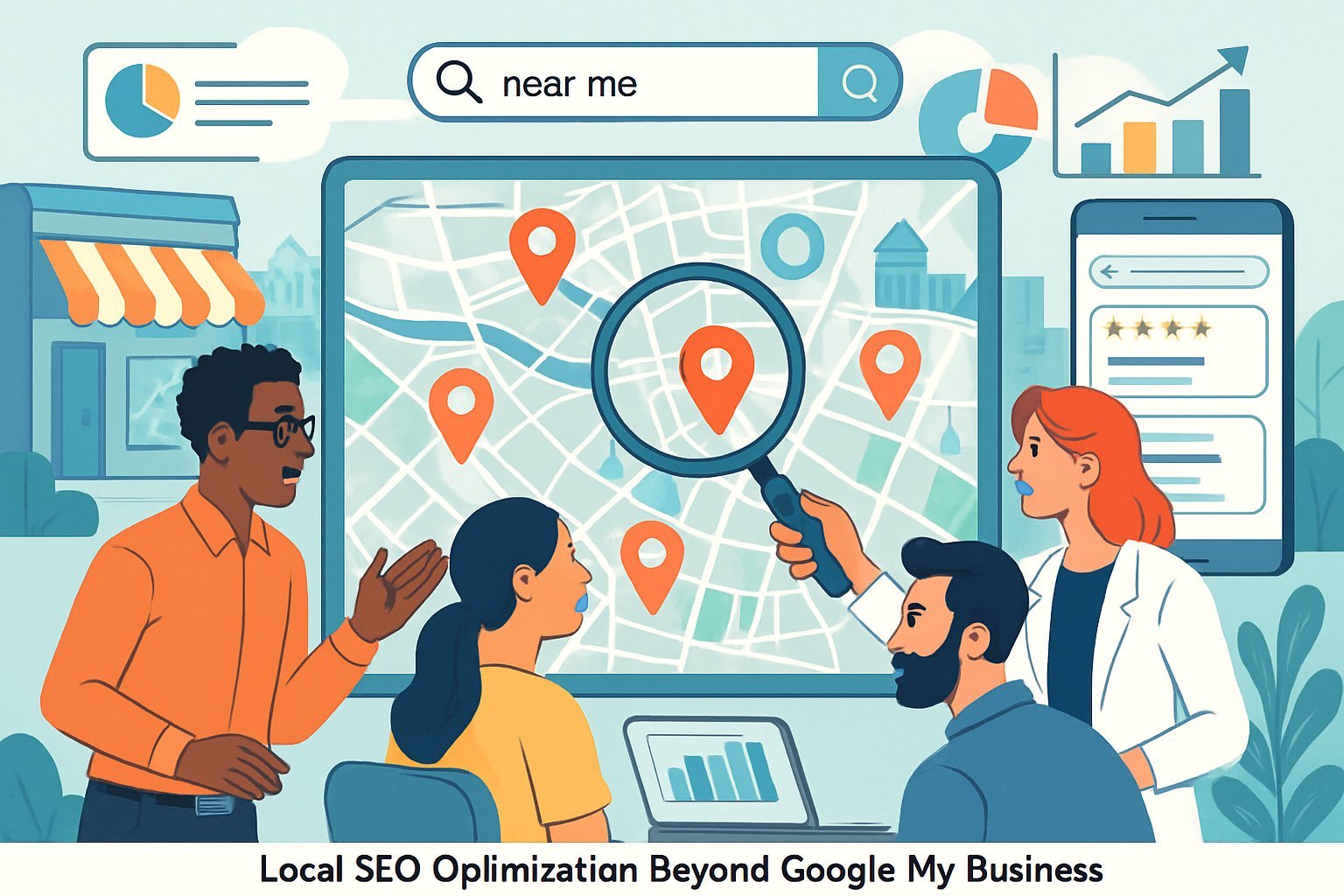
Local SEO success depends on building trust signals across the entire web. Search engines look for consistent business information, quality local links, and location-focused content to determine which businesses deserve top rankings.
Smart business owners realize that local citations, directory listings, and area-specific pages work together to create a strong presence. Competitors who skip these steps just can’t keep up.
The businesses that dominate local search results use proven strategies that most owners never even consider. These tactics capture buyers who are ready right now.
Key Takeaways
- Local search success requires consistent business information across multiple online platforms beyond just Google Business Profile.
- Building quality local links and getting listed in relevant directories significantly improves search rankings for location-based queries.
- Creating unique content for each service area helps businesses capture customers searching in specific neighborhoods and cities.
Optimizing for ‘Near Me’ Searches
Near me searches drive high-intent customers to local businesses through strategic keyword placement and mobile-first optimization.
Success here means understanding local search patterns and using location-based content that matches how people actually search for nearby services.
Understanding User Intent for Local Queries
Local searchers usually fall into two main groups: implicit and explicit intent. Implicit searches like “dentist” or “pizza” signal local needs without location words, while explicit searches add phrases like “near me” or specific city names.
High-intent local searches typically follow this pattern:
- Navigational: “Starbucks” (looking for a specific brand)
- Informational: “best pizza toppings” (researching options)
- Transactional: “pizza delivery near me” (ready to buy)
- Commercial: “cheapest oil change near me” (comparing prices)
Roughly 76% of customers who search locally on mobile visit a business within 24 hours. That makes transactional “near me” queries extremely valuable.
Users add “near me” for a bunch of reasons, sometimes wanting results closer than what Google first shows, sometimes not realizing Google already knows their location. Some folks search for places they’ll visit later, like “restaurants near me” when planning a trip.
Google figures out your location using IP addresses, account data, search history, and GPS. Usually, it shows results within at least 3 square kilometers or areas with 1,000+ people.
Implementing ‘Near Me’ Keywords Strategically
You can boost organic rankings by placing “near me” keywords in the right spots, without making your content sound spammy. Focus on page titles, headers, and URLs instead of cramming location phrases everywhere.
Effective places to use “near me”:
- Title tags: “Emergency Plumber Near Me – 24/7 Service”
- H1 headers: “Find Quality Auto Repair Near Me”
- URL structure:
/services/dentist-near-me/ - Meta descriptions: Drop in natural mentions in service blurbs
Case studies show this approach can lift organic rankings. Still, local pack rankings usually don’t improve from “near me” optimization alone.
Try creating separate landing pages for different “near me” variations. For example, a dental practice could have pages for “dentist near me,” “teeth cleaning near me,” and “emergency dental care near me.”
Content should focus on:
- Service availability and hours
- Response times for urgent needs
- Coverage areas and neighborhoods served
- Customer testimonials mentioning location
Don’t overdo the “near me” phrases. One mention in the title, one in an H2, and a few natural references throughout the content work better than stuffing keywords.
Leveraging Voice Search for Local Discovery
Voice searches run longer than typed ones. People ask things like “Where’s the closest coffee shop?” instead of just “coffee shop near me.”
To optimize for voice search, use natural language patterns. FAQ sections that mirror real speech win. Instead of “Plumbing Services,” try “What plumbing services do you offer?”
Common voice search patterns for local businesses:
- “What time does [business] close?”
- “How far is [business] from here?”
- “What’s the phone number for [business]?”
- “Is [business] open now?”
Structure content to answer these questions directly. Use conversational headings and complete sentences, plus schema markup so search engines understand your answers.
Local business schema should include operating hours, phone numbers, addresses, and service areas. This data feeds voice assistants when they answer location-based questions.
Create location-specific FAQ pages. A restaurant, for instance, could answer “What’s good at [restaurant name]?” or “Does [restaurant] deliver to [neighborhood]?”
Mobile Optimization for Local Search
Most local searches now happen on mobile devices, so mobile optimization is crucial for “near me” visibility. Site speed and user experience directly affect local search rankings.
Key mobile optimization elements:
- Page load speed: Under 3 seconds for local searches
- Click-to-call buttons: Easy access to phone numbers
- Simple navigation: Clear paths to location and hours
- Local information: Address and directions front and center
Google’s mobile-first indexing means your mobile performance impacts all your search rankings. Use Google’s PageSpeed Insights to spot speed issues.
Location pages should load fast and show key info right away. Customers searching “near me” want quick answers about availability, location, and how to contact you.
Design for thumb navigation with big buttons and touch-friendly elements. Local searchers often browse while walking or driving, so make sure interfaces are simple and accessible.
Critical mobile features:
- One-tap calling and directions
- Visible business hours
- Simple contact forms
- Fast-loading images and maps
Test your site on real mobile devices in different locations. Connection speeds vary, and local searchers might have slow data when they need your services most.
Building Local Citations
Local citations are mentions of your business name, address, and phone number across the web. Keeping these citations consistent tells search engines your business is legit and helps improve your local rankings.
Ensuring NAP Consistency Across Platforms
NAP stands for Name, Address, and Phone number. You need to make sure this info matches exactly everywhere online.
Even tiny differences can confuse search engines. For example, using “St.” on one site and “Street” on another creates inconsistency. The same goes for abbreviations like “LLC” versus “L.L.C.”
Create a master document with your exact NAP format. Use this as your reference for all future citations.
Key elements to standardize:
- Business name format (including punctuation)
- Street address abbreviations
- Phone number format (with or without dashes)
- Suite or unit numbers
Check Google Search Console to see how your business appears online. Search for your business name and address to spot citations that need fixing.
Choosing High-Quality Citation Sources
Citation sources aren’t all equal, so focus on platforms search engines trust and that fit your industry.
High-priority citation sources:
- Google Business Profile
- Apple Maps
- Bing Places
- Facebook Business Page
- Yelp
A plumber gets more from HomeAdvisor than from a generic directory.
Local directories matter for geo-specific searches, and city chamber of commerce sites or local newspaper business sections carry strong local authority.
Check competitors’ citations with tools like BrightLocal or Moz Local, and note directories where they show up consistently, those likely have value for you too.
Skip low-quality directories with spammy content or bad user experience. Those can damage your reputation instead of helping.
Auditing and Cleaning Up Existing Citations
A lot of businesses have incorrect or duplicate citations without knowing it. Regular audits help you keep citation quality high.
Start by searching for your business name and phone number in Google. Look for any variations of your business info across different sites.
Common citation problems to fix:
- Outdated phone numbers or addresses
- Duplicate listings on the same platform
- Incorrect business categories
- Missing or wrong website URLs
Contact directory sites directly to request corrections. Most platforms let business owners claim their listings. Keep records of your correction requests and follow up if changes aren’t made.
Use citation management tools to track your listings. Services like Yext or Synup help keep things consistent across multiple platforms automatically.
Remove totally inaccurate listings if you can. If a directory won’t remove false info, document your correction attempts for your own records.
Getting Listed in Online Directories
Online directory listings help businesses show up in more search results when people look for services nearby. The trick is picking the right directories, filling out your profiles completely, and keeping info accurate everywhere.
Identifying Relevant Local and Niche Directories
Start with the big directories that matter most for local SEO: Google Business Profile, Bing Places, Apple Maps, and Facebook Business Pages.
Then, focus on directories specific to your industry. Restaurants should prioritize Yelp, TripAdvisor, and OpenTable. Healthcare providers need Healthgrades and WebMD. Home service companies benefit from Angie’s List, HomeAdvisor, and Thumbtack.
Local chamber of commerce websites often offer directory listings that search engines trust. These sites usually have strong domain authority in their areas.
Check where your competitors are listed. Search your main keywords and note where top-ranking businesses appear. That’ll show you which platforms Google sees as relevant for your industry.
Industry associations often have member directories. These specialized listings tend to rank well for niche searches and provide quality backlinks to your website.
Regional directories can matter too. Many cities have local business listing sites that residents actually use. These platforms might not have huge traffic, but they reach your exact target audience.
Maximizing Visibility With Complete Profiles
Fill out every field in directory profiles. Incomplete listings perform worse in search and don’t help potential customers much.
Use the same business name, address, and phone number everywhere. This info should match what’s on your website and Google Business Profile.
Write unique descriptions for each directory. Don’t just copy-paste the same text everywhere. Add relevant keywords naturally, explain what makes your business different, and upload high-quality photos of your space, products, or services.
A lot of directory users browse images before they read text.
Add your website URL and link to specific location pages if you can, which pulls in directory visitors and helps your local SEO.
Pick the most accurate business categories available. Choose primary categories that match your main services and add secondary ones for extras.
Include operating hours, accepted payment methods, and special services if the directory allows it. Complete profiles build more trust with potential customers.
Avoiding Duplicate Listings and Category Errors
Multiple listings for the same business location just confuse search engines and split your online presence. Search for existing profiles before creating new ones.
Claim existing listings instead of starting from scratch. Sometimes previous owners, employees, or automated systems already made profiles you can verify and update.
Use the same business name everywhere. Variations like “ABC Company” versus “ABC Co.” create inconsistencies that hurt your local search.
Double-check address formatting for each directory. Some sites want specific formats or abbreviations that might be different from your standard address.
Remove or merge outdated listings from old locations, business names, or closed services. These duplicates dilute your search presence and can confuse customers.
Pick business categories carefully. The wrong categories mean you won’t show up in relevant searches and might even break directory guidelines.
Check your listings regularly for unauthorized changes. Some directories let the public edit info, which can add errors or outdated details over time.
Local Link Building Strategies
Getting quality backlinks from local sources tells search engines your business has strong community ties and real geographic relevance. These strategies focus on earning links from organizations, media outlets, events, and websites in your target market area.
Earning Backlinks From Local Organizations
Local nonprofits, chambers of commerce, and professional associations offer great link opportunities. These groups usually have websites with high local authority and are always looking for business partnerships.
Join your city’s chamber of commerce. Most chambers include member directories with website links and company descriptions. The annual membership fee usually runs from $200 to $500, but you get ongoing link value.
Reach out to local nonprofits that fit your business values. Many organizations list sponsors and supporters on their websites. Offer services, donations, or volunteer time in exchange for a mention and a link.
Professional associations in your industry often have local chapters. Join these groups to get into member directories and access networking opportunities. Real estate agents can join local realtor associations, while restaurants might connect with culinary organizations.
Trade organizations sometimes publish member spotlights or success stories. Pitch story ideas about your business achievements, community involvement, or industry expertise. These articles usually include backlinks to your website.
Building Partnerships With Local Media
Local newspapers, radio stations, and TV channels are always hungry for fresh content. If you position your business as a reliable source for industry commentary and local news, you’ll often get noticed.
Reach out to beat reporters who cover your industry with story pitches that matter, not sales fluff.
A financial advisor could offer market insights during economic changes, a contractor might comment on housing trends when things shift locally.
Press release distribution can work for genuinely newsworthy events. Grand openings, big hires, awards, and community initiatives all make for solid stories.
Local media outlets sometimes publish press releases with very little editing. You might even get your website link included.
Put together a media kit with high-quality photos, company background, and executive bios. Make journalists’ lives easier by giving them ready-to-use materials.
Offer expert commentary when there’s breaking news in your field. Respond quickly to journalist requests through services like HARO, or just keep an eye on local news social media accounts.
Sponsoring Community Events for PR Opportunities
Event sponsorship is one of those classic win-wins. You get brand awareness and link opportunities, while the event gets support.
Sports leagues, festivals, charity runs, and school fundraisers are almost always looking for sponsors.
Find events that actually match your target audience. A fitness studio might sponsor a 5K, while a family restaurant could back a youth sports team.
Sponsorship packages usually include website listings, program mentions, and social media shout-outs. Make sure you negotiate for specific link placement in your sponsorship agreement.
Many events will list sponsors on their main site, event pages, and partner directories. Ask for links from every spot they’ll allow.
Create event-specific landing pages on your website. This gives organizers a relevant page to link to, not just your homepage.
Include event details, your sponsorship role, and related services. It makes the partnership feel more real.
Consider year-round partnerships with recurring events. Annual festivals, weekly farmers markets, and seasonal happenings can keep your business visible in the community.
Acquiring Links From Relevant Local Sites
Local blogs, city websites, and community forums are goldmines for targeted links. They serve your exact area and usually welcome local business partnerships.
City government websites often keep business directories and economic development pages. Reach out to the economic development office and make sure your business shows up in all the right places.
Local bloggers love writing about community businesses, especially if there’s a unique story or strong local connection. Find bloggers who cover your industry or neighborhood and offer them something special, an exclusive interview or behind-the-scenes look, maybe.
Tourism boards and visitor bureaus promote local businesses to travelers. Restaurants, hotels, attractions, and shops can often snag listings on official tourism sites.
Community Facebook groups and neighborhood sites like Nextdoor are informal but powerful. Jump into discussions, answer questions, and build real relationships. Sometimes, these lead to links from local websites and blogs.
Creating Location-Specific Content
Location-specific content helps businesses show up in local searches, focused on what’s unique about your area rather than generic service descriptions.
Publishing Local Landing Pages
Local landing pages target the specific areas your business serves, and each one needs unique, original content, no copy-pasting between cities.
Create separate pages for every city or neighborhood you serve, no physical office needed.
Key elements for local landing pages:
- City or neighborhood name in the title tag
- Local keywords throughout
- Unique service descriptions for that area
- Local business hours and contact info
- Embedded Google Map showing your service area
Make the content 100% original per location, because swapping city names in the same paragraph doesn’t cut it anymore.
Strong local pages mention landmarks, neighborhoods, and specific local needs. A roofing company might talk about the wild weather in their region, for example.
Highlighting Community Stories and Events
Community-focused content shows you know the area and care about it. It also connects you with local residents in a way that generic content never will.
Write about local events you sponsor or attend. Cover community fundraisers, festivals, or partnerships with other businesses.
Some community content ideas:
- Local charity work and sponsorships
- Community event participation
- Partnerships with other local businesses
- Local awards or recognition
- Behind-the-scenes stories from local projects
Mention actual event names, venues, and organizations. It makes your content feel real and rooted in the community.
Photos from local events add authenticity. They show you walk the walk.
Showcasing Local Customer Testimonials
Local testimonials build trust fast and help search rankings, because folks want to hear from real customers right in their area.
Customer stories should mention specific neighborhoods, which makes them feel genuine and locally relevant.
A strong local testimonial includes:
- Customer’s first name and area of town
- The specific service you provided
- Local landmarks or streets, if possible
- Before and after photos
- Results achieved or problems solved
Video testimonials are especially powerful, seeing a customer speak on camera just feels authentic.
Ask satisfied customers to mention their neighborhood in reviews, natural local keywords without the forced sound.
Expanding Beyond Google
Google is not the only place a local business needs to show up. Yelp, Bing Places, Apple Maps, and social media all offer different ways to connect with local customers.
Leveraging Yelp, Bing Places, and Apple Maps
Yelp is huge for restaurants and service businesses. Claim your Yelp profile, upload great photos, respond to reviews fast.
Encourage happy customers to leave feedback. It really does matter.
Bing Places powers Microsoft’s search engine and voice assistant Cortana. You’ll need to verify your location and keep NAP (Name, Address, Phone) info accurate, and Bing Places feeds other Microsoft services, so it’s worth the effort.
Apple Maps reaches iPhone and Mac users through Siri, so claim your listing with Apple Business Connect and add hours, contact details, and photos.
Apple Maps integrates with Apple Pay and other iOS features, which is great for mobile customers.
Each platform uses its own ranking factors. Keep your information consistent everywhere to help search engines trust your business.
Importance of Industry-Specific Review Platforms
Industry-specific platforms often matter more than general review sites, Healthgrades for healthcare, Avvo for legal, Angi and HomeAdvisor for home services.
These platforms attract people who are ready to buy. A dentist’s Healthgrades profile reaches folks actually looking for dental care. An attorney’s Avvo listing connects with people who need legal help now.
Identify the top 3-5 platforms in your industry. Claim your profiles, fill them out completely, and keep an eye on reviews.
Industry sites often let you add more detailed service info than general directories.
Utilizing Social Media for Local Visibility
Facebook Business Pages show up in local search results and let you post updates, events, and customer photos. The check-in feature helps build local credibility.
Enable location services and encourage customers to tag your business. It’s an easy win.
Instagram works best for visual businesses like restaurants, salons, and shops. Use location tags and local hashtags to get seen by nearby users.
Stories with behind-the-scenes content help build community connections.
TikTok is quickly becoming a discovery platform. A big share of consumers find local businesses through social media these days.
Short videos showcasing your products, services, or community involvement can reach new audiences fast.
Post locally relevant content regularly. Share community events, local partnerships, and customer stories to build real connections.
Frequently Asked Questions
Local businesses often get tripped up by technical SEO and wonder which tactics actually work. Here are some of the most common questions and what’s worked for others.
How do I show up for ‘near me’ searches?
Focus on conversational keywords that match how people actually talk. Voice searches like “where’s the best pizza near me” need a different approach than traditional typed searches.
Fill out your Google Business Profile completely. Use every field, categories, attributes, hours, services. Missing info can knock you out of local results, so create location-specific content that helps search engines understand your geographic relevance.
Mention neighborhoods, landmarks, and local references throughout your website.
Add schema markup so search engines know your exact location. Local business schema with address, phone, and coordinates can improve near me search results.
Make sure your website works well on mobile. Most near me searches happen on phones, and slow or clunky sites get ignored.
What are local citations and do they matter?
Keep your business info consistent everywhere. Your name, address, and phone number should match exactly across all directories.
Start with the big directories first. Google Business Profile, Bing Places, Apple Maps, and Yelp all carry serious weight.
Industry-specific directories often give you better results than generic ones. A restaurant gets more value from food-focused sites than from a random listing.
Check local government and chamber of commerce websites for business listings, sources that carry a lot of trust with search engines.
Monitor your citations regularly. Outdated info, duplicates, or mistakes can hurt your rankings.
Which directories are worth listing in?
Google Business Profile is non-negotiable. It feeds Google Maps and local search results directly.
Bing Places and Apple Maps Connect also matter. They serve different users and search engines, so don’t skip them.
Review-driven platforms like Yelp, TripAdvisor, and industry-specific review sites build trust and influence rankings.
Local chamber of commerce directories and city business listings carry high authority. Search engines love official local sources.
Industry-specific directories reach the right audience. Healthcare providers should use Healthgrades, while restaurants should look at OpenTable and similar sites.
How does a small business build local links?
Local sponsorships are a great way to build links and community ties. Sponsor a youth sports team, local event, or charity drive and you’ll often get a link from their website.
Join your chamber of commerce. Membership usually includes a directory listing with a website link, which search engines trust.
Pitch newsworthy stories to local news outlets. If you’re involved in the community, launch a new service, or make a local impact, let area publications know.
Partner with complementary local businesses for mutual links. A wedding venue could exchange links with florists, photographers, or caterers.
Guest post on local blogs and websites. Share your expertise and build relationships with sites that serve your target audience.
Does location-specific content really rank?
Write content that speaks to specific neighborhoods, not just broad areas. Mention districts, streets, or landmarks to create stronger local signals.
Do local keyword research. Residents might search for a “downtown repair shop” or “eastside dentist” instead of just “city + service.”
Cover community events to show local involvement. Write about festivals, government meetings, or issues that matter to your audience.
Build hyperlocal landing pages for different parts of your service area, separate pages that let you target each neighborhood’s search terms directly.
Include local statistics, demographics, economic data, or trends that make your content genuinely useful in your area.
Are local SEO tools and courses worth paying for?
Local SEO tools can take over the tedious stuff, like building citations or tracking rankings. Platforms such as BrightLocal and Moz Local make these tasks way less painful.
I find that keyword research tools geared toward local searches pick up on location-specific opportunities that generic tools just miss. They dig into neighborhood-level search terms and even pull up data about the local competition.
Review management tools let businesses keep up with feedback across multiple platforms. You get automatic alerts when someone leaves a new review, so you can jump on it right away.
Training courses give business owners a more organized way to learn about the latest local SEO tactics. Plenty of folks appreciate having someone walk them through technical things, like how to handle schema markup or set up citations.
Analytics integration lets businesses actually see how their local SEO is doing in the real world. Tracking phone calls, direction requests, and foot traffic paints a much clearer picture of ROI than just looking at website visits.
Local SEO is a long-payback channel, it earns leads months after the work is done. Pair it with the faster-payback channels in our cleaning service marketing guide so you have leads coming in this month while SEO compounds in the background.

Written by
Rashdi has spent 15+ years building and managing enterprise software, and has worked with US cleaning businesses since 2006. He founded CleanerHQ.