
Client Contracts 101: Protecting Your Cleaning Business Legally
 R Rashdi
·
November 30, 2025
·
19 MIN READ
R Rashdi
·
November 30, 2025
·
19 MIN READ
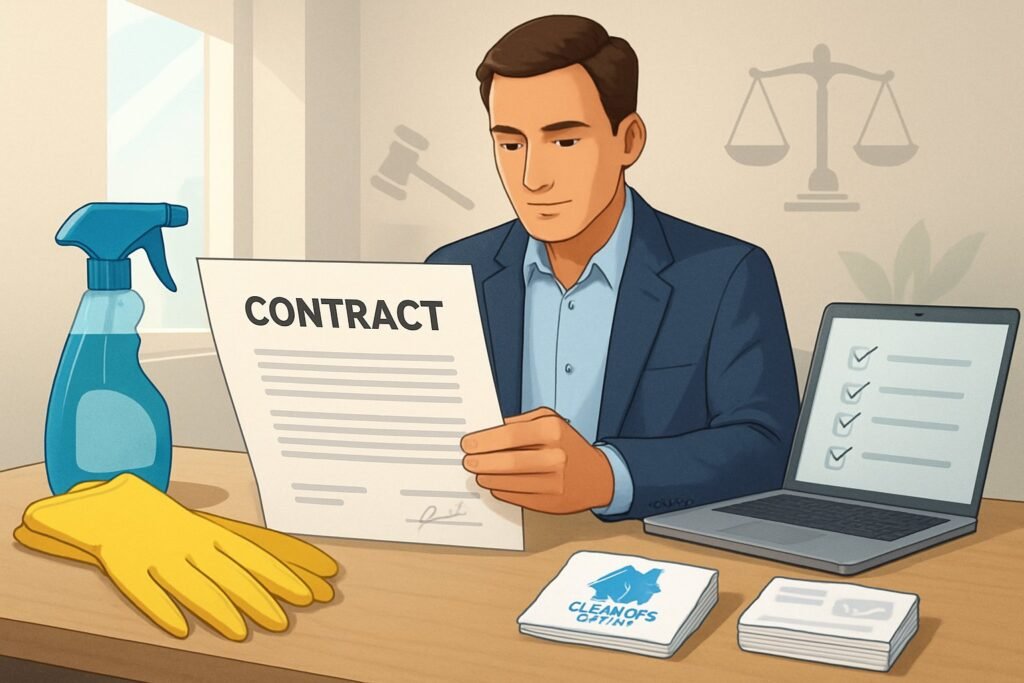
Running a cleaning business without proper contracts is like working without a safety net. Every day, cleaning service providers face potential disputes over payment terms, damage claims, and service expectations that could have been avoided with the right legal protections in place.
A well-written cleaning contract acts as your business’s first line of defense against costly disputes, unpaid invoices, and liability claims. It spells out exactly what services you provide and what you charge.
These agreements protect both residential and commercial cleaning businesses. They set clear boundaries, covering everything from cancellation policies to damage liability limits.
Smart cleaning business owners know contracts do more than formalize relationships. They set professional standards, cut down on confusion, and give you legal leverage when things go sideways.
Whether you clean homes or handle big commercial accounts, the right contract clauses can make all the difference. Nobody wants to spend their days fighting over misunderstandings, or worse, losing money.
After agreeing the service terms for a home-cleaning client, use the first-visit client checklist and welcome pack to confirm access, preparation and crew instructions. The pack helps set up the visit; it does not replace your service agreement.
Write visit-change and entry terms that match your service agreement. Use the cleaning service cancellation policy to work through notice, fees, deposit treatment and exceptions, then have the finished wording checked for your location.
Key Takeaways
- Cleaning contracts protect your business from disputes by clearly defining services, payment terms, and liability limits.
- Essential contract clauses include detailed scope of work, cancellation policies, and damage liability protections.
- Well-drafted agreements prevent misunderstandings and provide legal recourse when client issues pop up.
Fundamentals of Cleaning Contracts
A cleaning contract lays the legal groundwork between service providers and clients. It sets expectations and protects everyone involved.
These agreements can look very different in residential and commercial settings, and each arrangement comes with its own quirks.
Importance of Written Agreements
Written contracts keep cleaning businesses out of trouble because courts actually enforce them when things go wrong.
Key Protection Benefits:
- Clear service expectations for both sides
- Defined payment terms and schedules
- Limits on liability for property damage
- Termination procedures and notice requirements
A verbal agreement? Not much use. If a client refuses to pay or claims damages, you don’t have much to stand on without written documentation.
Written contracts also boost your professionalism. Clients tend to see businesses with formal agreements as more reliable and established.
This perception helps you charge higher rates and attract better customers. Not a bad bonus.
The contract acts as a reference during service delivery. Both parties can check the agreement if questions come up about scope, frequency, or responsibilities.
Residential vs. Commercial Cleaning Contracts
Residential and commercial cleaning contracts come with different requirements and levels of complexity. Knowing these differences helps you create the right agreement for each client.
Residential Contract Features:
- Simple service descriptions
- Weekly or bi-weekly schedules
- Individual homeowner as client
- Basic liability coverage
- Shorter contract terms
Commercial Contract Features:
- Detailed service specs
- Multiple cleaning frequencies
- Business entities as clients
- Higher insurance requirements
- Longer-term agreements
Commercial contracts often include performance standards, quality metrics, certifications, background checks for staff, and detailed reporting.
Residential contracts focus more on basic tasks and flexible scheduling, with simpler cancellation policies and lower liability limits.
Essential Parties and Roles
Every cleaning contract needs to spell out who’s involved and what they’re responsible for. This clarity keeps confusion and disputes at bay.
Primary Parties:
- Service Provider: The cleaning business or individual contractor
- Client: The homeowner, business, or property manager
- Property Owner: Sometimes different from the client, especially in rentals
Each party has its own duties. The business brings trained staff, proper equipment, and reliable service, while clients provide access, clear instructions, and timely payment.
Key Responsibilities to Define:
- Who brings cleaning supplies and equipment
- Building access procedures and security codes
- How to communicate about scheduling changes
- How to report property damage
Some contracts loop in third parties like property managers or facility coordinators. These folks might approve work or handle payments on the client’s behalf.
Clear role definitions stop problems before they start, like being unable to get in the building or not knowing who can approve extra work.
Defining the Scope of Work
A clear scope of work keeps everyone on the same page. It protects both cleaning companies and clients from confusion and disappointment.
Specific service descriptions, custom approaches for different clients, and measurable performance standards lay the groundwork for solid cleaning contracts.
Detailed Description of Services
Cleaning contracts need to spell out exactly what the company will do. Vague terms like “clean the office” just set everyone up for arguments.
For office spaces, the scope should cover tasks like emptying trash, vacuuming carpets, mopping floors, and sanitizing restrooms. Kitchen areas need their own details, cleaning appliances, wiping counters, restocking supplies.
Essential service details:
- How often each task happens (daily, weekly, monthly)
- Which rooms or areas get cleaned
- Who handles equipment and supplies
- Any special requirements or restrictions
Residential contracts need different specifics. They should cover bedrooms, bathrooms, kitchens, and living areas, listing exact tasks like dusting furniture, cleaning windows, or organizing closets.
The contract should also say what’s not included. That way, clients know not to expect extra work for free.
Customizing for Different Client Types
Different clients need different cleaning approaches. A doctor’s office? Way stricter sanitizing than a law office. Restaurants? Grease removal and food safety come first.
Commercial clients often need:
- Floor care and carpet cleaning
- Window washing schedules
- Restroom maintenance programs
- Trash removal coordination
Retail spaces focus on customer areas and fitting rooms. Warehouses care more about floor cleaning and break room upkeep. Every industry has its own quirks, and contracts need to reflect that.
Residential clients usually want:
- Flexible scheduling
- Personal preference accommodations
- Pet-friendly products
- Security and privacy protections
Size matters, too. Large facilities need detailed zone-by-zone breakdowns. Small offices? Simpler lists work just fine. There’s no need to overcomplicate things.
Checklists and Performance Standards
Performance standards give everyone a clear sense of what “good enough” means. These measurable goals stop disputes before they start, which is why solid contracts include specific quality metrics.
Restrooms get checked for cleanliness, supplies, and odor, while floors should be free of visible dirt, stains, or debris.
Sample performance standards:
- No visible dust on surfaces
- Trash bins emptied and clean
- Floors free of spots and streaks
- Supplies restocked to agreed levels
Checklists help cleaning teams stay consistent, and they prove the work got done. Many companies use digital checklists that timestamp each job.
The contract should say how often quality checks happen. It should also explain what happens if standards aren’t met, maybe a free re-clean or a service credit.
Key Legal Clauses to Protect Your Business
Your cleaning contract needs solid clauses that set expectations, limit liability, and lock in service standards. These details protect your business and let customers know you’re serious about quality.
Terms and Conditions
The terms and conditions set the ground rules and spell out what you’ll do, and what you won’t.
Service Scope Definition
- List specific cleaning tasks for each package.
- State clearly what costs extra.
- Define how often and how long cleaning visits last.
Client Responsibilities
Your contract should lay out what clients need to do before you show up, whether that’s securing pets, clearing clutter, or making sure you can get inside.
Cancellation Policy
Make your cancellation rules clear:
- 24-hour notice for residential clients
- 48-hour notice for commercial clients
- Cancellation fees for last-minute changes
Payment Terms
Put payment details right in this section. List accepted payment methods, due dates, and late fee policies.
The terms should also explain how to report property damage and how you’ll handle claims.
Service Guarantees
Service guarantees show customers you stand behind your work, but they also protect you from unreasonable demands.
Satisfaction Guarantee Framework
Offer to re-clean specific areas within 24-48 hours if clients report real concerns. That proves you care, without opening yourself up to endless free labor.
Guarantee Limitations
Your guarantee should exclude:
- Issues not reported within the set timeframe
- Problems caused by the client after cleaning
- Pre-existing conditions or damage
Quality Standards Definition
Spell out what counts as “clean.” Use clear language about cleanliness levels, not vague promises of perfection.
Claim Process
Lay out a simple claim process:
- Written notification within 24 hours
- Photo proof of the issue
- Inspection scheduled within 48 hours
- Resolution in 2-3 business days
Limit your guarantee to the cost of re-cleaning those areas. That way, you don’t end up on the hook for huge costs.
Renewal Terms
Renewal terms help keep client relationships steady. They also give your business some stability.
Automatic Renewal Provisions
Set contracts to renew automatically unless someone gives written notice. Require 30 days’ notice for ending service or making big changes.
Rate Adjustment Rights
Include a clause that lets you raise rates once a year with proper notice. Inflation happens, your contract should account for it.
Service Modification Process
Spell out how to change service frequency or scope:
- Written requests required
- Two-week notice for schedule changes
- New pricing starts with the next billing cycle
Contract Length Options
Offer a few commitment levels:
| Contract Type | Length | Benefits |
|---|---|---|
| Monthly | 30 days | Flexibility for clients |
| Quarterly | 90 days | Price stability |
| Annual | 12 months | Discounted rates |
Early Termination Conditions
Define situations that allow immediate termination, like non-payment, access issues, or safety problems.
The renewal section can also mention seasonal adjustments for commercial clients. Some businesses need more cleaning during busy times.
Managing Payment Terms and Pricing
Clear payment terms keep your cash flow healthy and cut down on arguments. Well-defined pricing structures and late payment rules set boundaries everyone can understand.
Establishing Payment Schedules
Payment schedules should fit the service frequency and your business needs. Most residential cleaning services collect payment right after each cleaning or bill monthly for regulars.
Commercial contracts often use net 15 or net 30 terms. That means clients pay within 15 or 30 days after invoicing.
Common Payment Schedule Options:
- Per-service payment: Pay at the end of each cleaning
- Monthly billing: Invoice at month’s end for all services
- Quarterly payments: Pay three months in advance
- Annual contracts: Pay for the year upfront (with a discount)
Auto-pay setups help avoid collection headaches. Many clients like automatic credit card or bank transfers.
Make payment due dates obvious. Say exactly when you expect payment, and name which methods you accept.
Additional Fees and Invoicing Procedures
Service agreements should list all possible extra charges so nobody’s shocked when extra work costs more.
Standard Additional Fees:
| Fee Type | Typical Cost | When Applied |
|---|---|---|
| Deep cleaning | 25-50% markup | First-time service |
| Supply restocking | $10-25 per visit | When client supplies run out |
| Key replacement | $25-50 | Lost or damaged keys |
| Holiday premium | Time and a half | Major holidays |
Invoicing procedures should say when bills go out and what info they include. Most businesses invoice right after service or monthly for regular clients.
Electronic invoicing speeds up payments. Email invoices with payment links make life easier for everyone.
State late fees clearly in the contract. Typical late fees range from $25 flat to 1.5% monthly interest on overdue amounts.
Handling Late or Missed Payments
Late payment policies help protect your business from cash flow problems. Contracts should lay out what happens when clients pay late.
A standard collection process goes like this: First, send a friendly reminder 5-7 days after the due date. Next, issue a formal notice after 15 days and tack on late fees.
If payment still doesn’t come in, suspend services after 30 days until you get paid. Some contracts allow for immediate suspension if clients don’t pay.
Effective Collection Strategies:
- Send reminders by email and text
- Keep a credit card on file for backup payment
- Offer payment plans for big overdue amounts
- Use a collection service for accounts over 60 days late
Keep records of all your communication and payment history. If things get legal, you’ll want that documentation.
Some businesses ask for deposits or advance payment from clients with a history of late payments. It’s not fun, but it does lower your risk.
Handling Cancellations and Termination
Clear cancellation policies help cleaning businesses avoid lost revenue and those annoying schedule gaps. Termination clauses give both sides a way out when contracts need to end.
Cancellation Notice Periods
Most cleaning businesses ask for at least 24 hours’ notice to cancel or reschedule a cleaning. This gives owners a little breathing room to shuffle things around and maybe fill the open spot.
Key cancellation policy elements include:
- Minimum notice requirement (usually 24-48 hours)
- Accepted cancellation methods (phone, email, app)
- Late cancellation fees
- No-show penalties
Late cancellation fees usually fall between 25% and 50% of the service price. No-show fees? Those often match the entire service amount, especially if cleaners already made the trip.
Spell out how clients can cancel, multiple ways to get in touch make it easier for everyone. Phone, email, app… whatever works.
Enforce policies consistently, but keep a little wiggle room for loyal customers facing real emergencies. Sometimes, it’s just the right thing to do.
Termination Clauses and Exit Strategies
A termination clause lays out how either party can end the contract for good. It should mention notice periods, final payments, and returning keys or access codes.
Standard provisions often include:
- Required notice period (often 30 days)
- Timeline for settling the final invoice
- Returning keys, garage remotes, or access codes
- Finishing any scheduled services during the notice period
The clause should say whether someone can terminate for cause, like non-payment or property damage, or just for convenience. Either way, proper notice is a must.
Plan for smooth transitions. Schedule final cleanings and make sure clients know what to expect if they’re moving to a new provider.
Limiting Damage Liability and Protecting Your Assets
Smart businesses put clear liability limits in their contracts to avoid financial headaches. Good insurance clauses add another safety net against accidents or unexpected damage.
Insurance and Liability Provisions
Cleaning contractors should require clients to keep property insurance and clearly state that the client’s policy pays first if something goes wrong.
Essential insurance clauses include:
- Client maintains property insurance
- Contractor’s liability insurance is secondary
- Client waives subrogation rights against the cleaning company
- Both sides provide proof of insurance when asked
State that your business carries general liability insurance, but you’re not on the hook for damage that was already there. Clients should report any known problems before you start.
Some contractors ask clients to sign damage waivers for fragile or pricey items. This is especially common with high-end homes full of art or antiques.
Limits of Responsibility for Damages
Liability caps keep cleaning businesses from facing huge bills. Set limits that make sense for your risk, but don’t shortchange the client.
Common liability structures:
- Residential: Cap at contract value or $500-$1,000 max
- Commercial: Limit to monthly service fees or insurance policy limits
- One-time jobs: Fixed caps like $300-$500 per incident
Spell out which damages you won’t cover. That means consequential damages (like lost business income) or indirect damages (such as emotional distress).
Liability caps don’t protect you from gross negligence or intentional damage. If you mess up big-time or do something on purpose, courts won’t let you off the hook.
Protect yourself from old claims by setting time limits. Most contracts give clients 24-48 hours after service to report any damage.
Preventing Disputes and Handling Issues
Clear contracts and a little structure can save you from a lot of headaches down the road. Dispute resolution methods and regular check-ins help keep clients happy.
Dispute Resolution Methods
Contracts should walk clients through what to do if a disagreement pops up. This helps stop small stuff from spiraling.
Start with direct communication. Both parties need to put complaints in writing first. It creates a record and usually gets things sorted fast.
Next, try mediation. A neutral third party helps both sides find a solution. Mediation costs less than court and keeps things friendly.
If all else fails, use arbitration. One person makes a binding decision. You skip the courtroom drama and get an answer quicker.
Make sure your contract says which state’s laws apply and where disputes get handled. No one likes surprises with legal stuff.
Typical timeframes for each step:
- 10 days for initial written notice
- 30 days for direct resolution
- 60 days for mediation
Performance Reviews and Issue Reporting
Regular check-ins with clients can catch problems before they get big. Your contract should set up a system for ongoing feedback.
Schedule monthly or quarterly reviews. These meetings give clients a chance to speak up and show them you care about quality.
Make reporting issues easy. Offer a phone number, email, or online form, whatever makes sense. Just make sure someone actually checks it.
Promise specific response times. Minor issues? Respond within 24 hours, and give urgent ones immediate attention.
Keep the complaints and your fixes in writing, all of it. It’ll protect you if things get messy later.
Offer make-good services. If a client has a real complaint, throw in a free re-clean, it builds trust and usually keeps things from escalating.
Role of Confidentiality Agreements
Cleaning staff see a lot when they enter homes and offices, so a confidentiality agreement protects both your business and your clients.
Cover all private info. That means financial papers, personal stuff, business secrets, and family matters. Be specific about what stays confidential.
Apply rules to everyone. Every employee, whether full-time, part-time, or temp, needs to sign the agreement before setting foot on client property.
Lay out what happens if someone shares private information. Immediate termination or legal action? Make it clear, and protect client property, too.
Staff shouldn’t take photos or talk about security systems, valuables, or daily routines.
Set time limits. Confidentiality should last beyond employment. Even after someone leaves, they can’t spill client secrets.
Frequently Asked Questions
Understanding the legal side of cleaning contracts can save you a lot of trouble. Here are some common questions that come up, along with the basics you really need to know.
Which clauses does a residential cleaning contract need?
Include clear service details, list every task. Specify which rooms get cleaned and what surfaces you’ll tackle.
Spell out payment terms: exact cost, billing schedule, and how clients can pay. Be upfront about late payment penalties, with specific amounts or percentages.
Add insurance and liability clauses. Make sure both sides know who’s responsible for what, and require proof of insurance and bonding.
Termination clauses should say how either side can end things, including notice periods, notification method, and any early termination fees.
Don’t forget contact info for both parties at the top. Emergency procedures for lockouts or security issues should be easy to find.
How strict should my cancellation policy be?
Require written notice, usually 24 to 48 hours before the scheduled service, and say whether verbal cancellations count.
List last-minute cancellation fees, either as a dollar amount or a percentage. This protects your business from losing out.
Cover different types of cancellations, since emergencies might get different treatment than routine changes.
Offer makeup service options for cancelled appointments. Spell out how many reschedules are allowed each billing period.
Holiday and weather cancellations need their own rules. Sometimes you need a little extra notice, or maybe you just reschedule automatically.
Where should I cap damage liability?
Don’t set liability limits higher than the cost to fix or replace something. Most residential services cap it at $500 to $1,000 per incident.
Define what counts as normal wear versus actual damage. Take photos or make notes about pre-existing issues before starting the job.
Exclude certain damages, antiques, electronics, or fragile items might need a separate agreement.
Tell clients to secure valuable or breakable items before you arrive. It saves everyone stress.
Be clear about what your insurance covers and reference your liability policy limits in the contract.
What payment terms keep cash flow healthy?
Be specific: exact amounts, due dates, and payment methods. Automatic payments can really help keep things smooth.
Late payment penalties should be clear, percentages or dollar amounts, with a plan for what happens if someone doesn’t pay.
Ask for deposits from new clients, usually 25% to 50% of the first month’s cost. It shows they’re serious.
Match your billing cycle to your service frequency. Weekly cleaning gets billed weekly, monthly gets billed monthly.
Outline your refund policy, when do clients get a full or partial refund, and how long does it take?
How do service guarantees work for commercial clients?
Set measurable performance standards. Use checklists or satisfaction scores to keep things objective.
Give clear deadlines for fixing complaints. Commercial clients often want things resolved within 24 hours.
Limit remedies to re-cleaning or service credits instead of cash refunds. It keeps your business protected but still keeps clients happy.
Define how and when inspections happen. Usually, clients get 24 to 48 hours to report any issues after a cleaning.
List guarantee exclusions for things outside your control. Weather, equipment failures, or client-supplied products shouldn’t count against you.
Do contracts really prevent client disputes?
Detailed service descriptions help clear up confusion about what you’ll actually do. The contract should spell out specific duties for each room and how often you’ll handle them.
Set up communication protocols to make reporting issues or requesting changes straightforward. Decide on preferred contact methods and give a rough idea of how quickly you’ll respond.
You might want to include service completion logs or even photo evidence of finished work. These records come in handy if there’s ever a disagreement about whether you completed a job or not.
Change order procedures matter, too. If clients want extra services, make sure you get that in writing, no verbal requests without documentation.
It’s smart to review the contract regularly. Scheduled meetings give everyone a chance to raise concerns and nip potential problems in the bud.

Written by
Rashdi has spent 15+ years building and managing enterprise software, and has worked with US cleaning businesses since 2006. He founded CleanerHQ.