
Creating Service Packages That Sell: Structuring Tiered Offerings
 R Rashdi
·
September 19, 2025
·
18 MIN READ
R Rashdi
·
September 19, 2025
·
18 MIN READ
A lot of service providers run into clients who hesitate or always want a cheaper deal. Usually, the issue isn’t the price, it’s how you present your services.
If you offer too many choices or packages that aren’t clear, you’ll overwhelm people. Most just walk away.
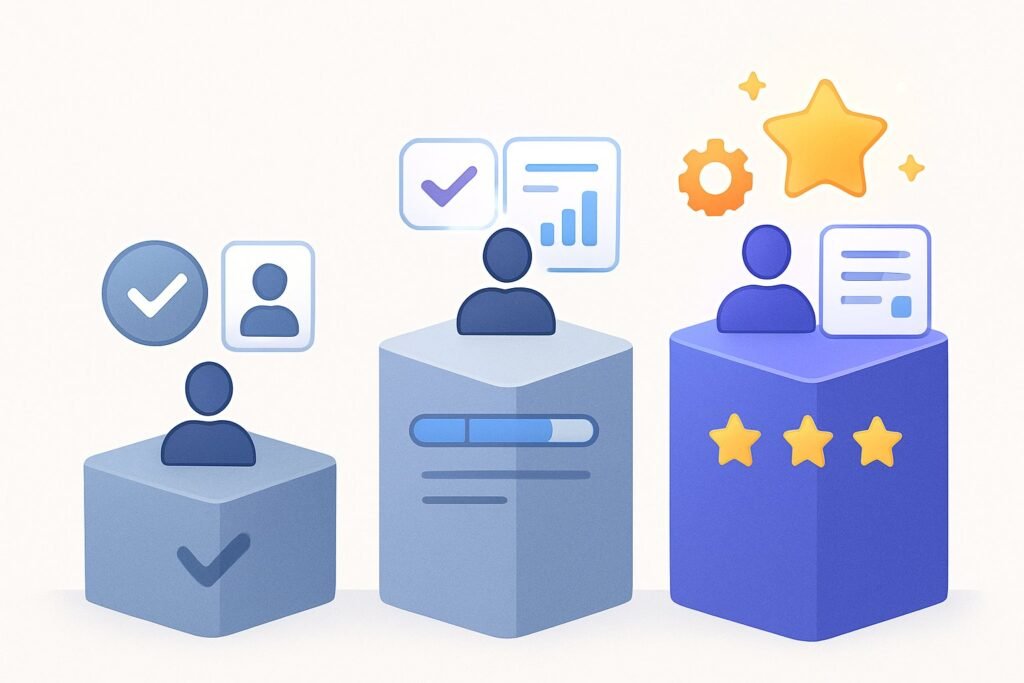
Tiered service packages, Basic, Standard, and Premium, give clients clear choices and gently nudge them toward higher-value purchases. There’s some real psychology behind this. Instead of getting lost, clients just pick the tier that matches their budget and goals.
Smart packaging does more than tidy up your services. It tends to boost average sales because people often go for the middle option or tack on extras.
The trick is building each tier with a mix of features and prices that actually make sense to buyers.
Key Takeaways
- Tiered packages cut confusion by grouping services into three options for different budgets and needs.
- Strategic pricing between tiers nudges clients toward higher-value packages.
- Well-built tiers can raise average transaction value by 20-40% and make selling a whole lot easier.
Understanding the Power of Tiered Service Packages
Tiered service packages change how businesses show off their offerings, and how clients decide. They create clear value differences between levels and give you a structured way to boost revenue per client.
Key Benefits for Businesses and Clients
Business Benefits:
Tiered packages push up average transaction value by encouraging clients to pick higher-value options. Most folks gravitate toward the middle tier, which lifts revenue above the basic level.
Service packages make sales conversations simpler. Instead of rattling off endless features, you lay out three clear options with well-defined perks.
Scalability gets easier with standardized service tiers. Your team knows what’s included at each level, so delivery’s smoother and more predictable.
Client Benefits:
Clients don’t get stuck in analysis paralysis when they see three choices. Compared to a long menu, three feels manageable, with each tier fitting a different budget and business need.
Small companies can start with basic while bigger ones go premium, and the features bundle in a way that makes sense.
Clients get services that work together without having to piece things together.
Why Tiers Outperform À La Carte Services
À la carte pricing? It’s a headache for clients, too many options, too much to think about. Studies show people delay or skip buying when they’re overwhelmed.
Tiered pricing taps into psychological anchoring. The premium package makes the standard one look like a bargain, and the basic tier gives everyone a way in.
Clients compare three packages instead of dozens of services. That’s just easier.
Benefits stand out more when you group them. Each package tells a story, basic covers needs, premium solves everything.
Standardized packages make revenue more predictable. You can actually plan, instead of guessing.
Defining Your Ideal Client and Market Segments
Knowing your clients and what they need sits at the heart of profitable service packages. Good segmentation reveals groups with different budgets, pain points, and expectations, this shapes your basic, standard, and premium tiers.
Conducting Customer Segmentation
Customer segmentation splits your market into groups with shared traits. That helps you build targeted packages for specific needs and budgets.
Start by looking at your current clients. Check out their industry, size, budget, and the problems they want solved. Group similar clients together.
Key segmentation criteria:
- Company revenue and size
- Industry or business type
- Geographic location
- Budget constraints
- Level of expertise needed
- Support requirements
Most service providers spot three segments. Budget-conscious beginners want basics at low prices, growing businesses look for more features and results, and established companies need all-in solutions with top support.
Write down each segment’s pain points, what keeps them up at night, which outcomes they care about, how much guidance they want.
Use feedback and interviews to double-check your segments. Ask clients about their biggest headaches and what they value in your services.
Using Market Research and Competitor Analysis
Market research backs up your segments and shows where you can stand out. It also helps you see how your packages stack up against the competition.
Look at your competitors’ packages, what tiers they offer, how they price, and what they bundle at each level. Then build a comparison table.
Note which ones target the same segments and how they set themselves apart.
Research methods:
- Online surveys of prospects
- Industry reports
- Social media listening for complaints
- Reading reviews of competitor services
Check customer feedback on competitor sites, what people love or hate is gold for improving your own packages.
Study how competitors price their tiers. Notice any patterns? Maybe there’s a gap you can fill.
Use this research to sharpen your segments. Sometimes you’ll find new groups, or realize one isn’t worth the effort.
Structuring Basic, Standard, and Premium Packages
The secret to solid tiered pricing is making each level clearly different and genuinely valuable. Each tier should fit a specific customer segment, with features and prices that steer clients toward higher-value options.
Essential Elements of Each Package Level
The basic tier is the entry-level for budget-minded clients. It covers core services that fix main pain points, minus the bells and whistles. Think essential monitoring, basic support during business hours, and routine maintenance.
The standard package is usually the sweet spot. It builds on the basics with add-ons like backups, better security, and longer support hours. It should feel like a natural upgrade.
The premium tier is for clients who want it all. It includes everything from the lower tiers plus advanced stuff, 24/7 support, disaster recovery, compliance, and faster response times. Premium often means some customization, too.
Each tier needs to stand alone as a real solution. Nobody should feel shortchanged, no matter what they pick.
Examples of Features and Deliverables by Tier
Basic Tier Features:
- System monitoring (business hours)
- Monthly reporting
- Basic patch management
- Email support
- Standard response time (24-48 hours)
Standard Tier Additions:
- Daily data backups
- Antivirus protection
- Remote support access
- Phone support
- Faster response time (4-8 hours)
- Quarterly business reviews
Premium Tier Enhancements:
- 24/7 monitoring and support
- Disaster recovery planning
- Advanced security audits
- Dedicated account manager
- 1-hour response time
- Custom integrations
- Compliance reporting
SaaS and streaming services do this, too. Netflix, for example, has basic, standard, and premium plans with different screen and quality limits.
Positioning Your Premium Tier for Maximum Value
Make your premium tier feel exclusive and all-encompassing. Pitch it as the go-to for businesses that can’t risk downtime or security mishaps. Focus on the outcomes, not just the features.
Use hard numbers to back up the price. Show how 24/7 monitoring prevents expensive outages, or how a dedicated manager saves hours of IT headaches. Offer add-ons so premium clients can tweak their package.
Price the premium tier high enough to make the standard one look like a deal. That’s a classic move, it nudges more people to the middle, but you’ll still attract those who want the best.
Highlight premium perks like “priority support” or “dedicated resources” to justify the bigger investment.
Pricing Strategies and Psychology for Tiered Services
Getting your prices right is more art than math. You need to know your costs, but also what your clients think your service is worth. Psychology plays a big role in nudging buyers toward higher-value tiers.
Cost-Plus vs Value-Based Pricing
Cost-plus pricing means you calculate your costs and tack on a markup. It’s safe, but you might miss out on extra profit.
For example, if it costs you $1,200 to deliver and you want a 67% markup, you’d charge $2,000 for the basic package. That works, but it ignores the value clients get.
Value-based pricing looks at what your service is actually worth to the client. If your basic package helps a business make $50,000, you can probably charge $5,000, not $2,000.
You need to know what each tier delivers. Basic solves immediate problems. Premium brings strategic advantages that are worth a lot more.
Most businesses end up mixing these methods. They cover their costs first, then adjust prices to match the value delivered.
Psychological Anchoring and Perceived Value
Anchoring happens when the first price clients see colors everything else. The premium tier acts as the anchor and makes the standard package look like a bargain.
If your premium package is $10,000, then $6,000 for standard feels fair. Without that anchor, $6,000 might seem steep.
Perceived value goes up when the differences between tiers are obvious. If you add 50% more features for only 30% more money, that’s a clear win.
Badges like “Most Popular” or “Best Value” steer clients toward certain packages. People like to feel they’re making the smart choice, and social proof helps.
Price gaps need to feel real. Tiny jumps like $500, $600, $700 don’t cut it. Bigger gaps, $500, $1,000, $2,500: make the differences pop.
Optimizing the Pricing Structure for Conversions
You want the middle tier to be the default pick for most clients. Price it so it’s the best value, and make the premium tier expensive enough to drive people to the middle.
Test your price points. Start with your best guess, then tweak based on what clients actually buy and say.
Some pricing ratios that work:
- 1x : 2x : 4x (like $1,000, $2,000, $4,000)
- 1x : 1.5x : 3x (like $2,000, $3,000, $6,000)
Watch which tiers clients choose. If everyone picks basic, your middle option might be overpriced, and if no one buys premium, maybe it’s not offering enough.
Add-ons let clients customize without complicating your core packages. Things like priority support or extra consultations lift your average sale meaningfully.
Presenting and Communicating Package Options Effectively
How you present packages makes or breaks the sale, because clients need to feel confident and clear about their choices. The right comparison, interactive tools, and benefit-driven language turn browsers into buyers.
Creating Clear Comparison Tables
A comparison table is your best friend here. It lets clients scan features across all three tiers fast.
List features down the left. Put each tier in its own column from left to right. Use checkmarks for included features, and dashes or X’s for what’s missing.
Must-have table elements:
- Package names (Basic, Standard, Premium)
- Monthly or project pricing right at the top
- Core deliverables, with real numbers
- Support and response times
- Key features that set each tier apart
Keep feature descriptions short and clear. Skip vague stuff like “marketing support” say “weekly marketing calls” or “monthly review.” Clients hate guessing.
Put the most popular package in the middle. Add a “Most Popular” badge or highlight that column.
Don’t cram in every feature. Focus on the 8-12 that matter most to your target clients.
Interactive and Visual Pricing Tools
Static PDFs just don’t cut it anymore. Interactive pricing tools let clients play with options and see live price changes as they tweak their choices.
Platforms like PricingLink offer dynamic experiences, clients click between tiers, watch features update, and add extras with real-time pricing.
Good interactive tools include:
- Clickable tier selection
- Add-on toggles that update prices
- Instant totals
- Feature highlights or animations
- Mobile-friendly design
These tools grab leads while clients explore. Built-in forms collect info from those who show real interest.
Interactive tools shine when your service is complex. Clients love being in control and exploring, rather than slogging through static docs.
Highlighting Benefits and Outcomes
Features tell clients what they get. Benefits explain why those features actually matter and what results each tier can deliver.
Turn feature lists into outcome statements. Instead of just “monthly reports,” say something like, “Track your progress with detailed monthly performance reports.” That way, deliverables feel tied to real business value.
Focus on specific outcomes:
- Time savings (“Save 10 hours per week on content creation”)
- Revenue impact (“Generate 25% more qualified leads”)
- Risk reduction (“Avoid costly compliance mistakes”)
- Growth enablement (“Scale your marketing without hiring”)
Use different benefit language for each tier. Basic packages tackle immediate issues, standard packages aim for measurable growth, and premium ones push for transformation.
Share client testimonials that highlight results from each tier. Social proof goes a long way, it eases worries and reinforces why your offer’s worth it.
Numbers and percentages make your benefits believable. Skip the vague “better results” talk, and stick with specifics clients can actually expect.
Maximizing Revenue With Upselling, Cross-Selling, and Add-Ons
Service packages open up natural chances to boost transaction value with add-ons and complementary offers. The trick is to design optional enhancements that feel genuinely useful, not pushy, and to guide clients toward higher-value solutions without being overbearing.
Designing Optional Add-Ons for Customization
Optional add-ons shine when they solve specific client problems or enhance the core service experience. Each add-on should address a pain point clients often face after buying the base package.
Popular Add-On Categories:
- Rush delivery, Pay more for faster turnaround
- Extended support, Extra consultation hours or maintenance
- Enhanced reporting, More detailed analytics or custom dashboards
- Training sessions, Onboarding or skill-building workshops
The pricing structure for add-ons should make sense. Pricing them at 15-30% of the base package usually feels affordable to clients and still keeps margins healthy.
Clients like having flexibility. Instead of forcing choices up front, offer add-ons during the sales process or even after service delivery. This keeps decisions easy and creates more chances for revenue.
Always frame add-ons as solutions, not just extras. Focus on what the client gets out of it. For instance, “Ensure project success with our implementation support” lands better than “Add 5 hours of consulting time.”
Best Practices for Upselling and Cross-Selling
Upselling works best when you show clear value differences between your tiers. Clients need to see exactly what they gain by bumping up from basic to standard or premium.
Effective Upselling Techniques:
- Compare features side-by-side in simple tables
- Highlight the most popular package, social proof matters
- Show potential ROI or time savings from premium features
- Offer limited-time incentives for package upgrades
Cross-selling feels natural when services complement each other. A web design client might easily need hosting, maintenance, or marketing too.
Time these offers well. After you deliver value, present cross-sell opportunities, satisfied clients are 70% more likely to buy more compared to new prospects.
Skip the high-pressure tactics. Instead, use customer data and past buying behavior to make recommendations that actually fit. Personalized suggestions based on real needs just work better than generic pitches.
Track which combos work best for different client types. This info helps you tweak your approach and spot the most profitable upsell and cross-sell chances over time.
Evaluating and Refining Your Tiered Offerings
Service packages need regular check-ins and tweaks to stay sharp. Smart businesses watch client feedback and performance data so they can make changes that boost sales and client happiness.
Collecting and Leveraging Client Feedback
Consistent feedback collection shows what clients really value in each tier. Gather insights at three main points: initial consultations, mid-project check-ins, and post-delivery reviews.
Direct feedback methods work best for understanding package preferences. Exit surveys with questions like “Which features did you use most?” or “What would make you choose a higher tier next time?” get right to the point. Phone interviews with recent clients can reveal even more than written surveys.
Behavioral signals sometimes tell you more than direct answers. Clients who keep asking for add-ons might need a different base package. If clients downgrade after buying, maybe your pricing is off or your value isn’t clear.
Track common feedback themes across all tiers. If lots of Basic clients want the same thing, maybe move it down from Standard, and when Premium clients never touch certain features, those might belong in Standard instead.
Adapting Packages Based on Performance and Case Studies
Package performance data tells you which tiers bring in the most revenue and profit. Track tier selection rates, upgrade requests, and client retention monthly to spot where you can improve.
Sales data analysis makes preferences obvious. If 70% of clients pick Basic but most upgrade within six months, maybe Basic is missing something essential. If Premium sales stay below 15%, your price jump could be too big or the value isn’t clear.
Case studies from successful clients help you improve your packages. If a Standard-tier client gets amazing results with certain deliverables, consider moving those to Basic for wider appeal.
Price testing works best with new clients. Try A/B testing different tier structures with similar prospects to see which setup drives more conversions. Keep track of which pricing changes boost average transaction values without hurting total sales.
Check out competitor package changes every quarter. If the market shifts, you might need to adjust your own features or prices to stay in the game.
Frequently Asked Questions
Business owners have a lot of questions about building service packages that actually drive sales and boost revenue. Most of the time, these revolve around structuring each tier, setting smart prices, and helping clients feel good about their choices.
What belongs in a basic package?
A basic package solves the core problem, nothing more. It needs a clear set of deliverables that offer real value at an entry-level price.
Make sure scope and deliverables are well-defined so clients know exactly what they’re getting for their money.
Basic packages work best with standard communication channels like email support, nothing lightning-fast, just reasonable.
Stick with essential tools, skip advanced customization, and costs stay down while results still land.
The basic tier should make it easy for clients to upgrade later. It gives budget-conscious clients what they need, but encourages them to move up when they’re ready.
How do I justify a premium price tier?
Premium packages justify higher prices by offering comprehensive solutions and personal attention. They include everything from lower tiers plus a lot more value, with advanced features and tools that make premium stand out.
Think specialized software, custom integrations, or unique methodologies, plus dedicated account management or priority support for the VIP feel.
Clients should get faster responses and direct access to senior team members.
Strategic consultation and planning add real expertise. The premium tier should feel like a partnership, not just another transaction.
Custom deliverables and tailored solutions command premium pricing. The package should feel like it was made just for that client.
How far apart should tier prices sit?
Price anchoring makes the standard tier look more reasonable by placing it between a basic and a pricey premium option. The premium price makes the middle tier seem like a deal, and value-based pricing keeps the focus on outcomes, not hours.
Each tier should spell out the bigger results clients can expect, with price jumps that reflect real differences in value.
Small price gaps just make the decision harder for clients.
Psychological pricing points work better than round numbers. Prices like $497 or $2,497 feel more thought-out than $500 or $2,500.
Bundle pricing creates perceived value by grouping services. Clients see more value in a complete package than in picking and choosing.
Do tiers really lift average ticket size?
Marketing agencies often see 40-60% jumps in average project value after moving from single-price proposals to three-tier packages. Clients usually pick the middle option, which costs more than the old single price.
Web design companies say premium tiers with ongoing maintenance and marketing support can triple project values. The first website just opens the door for longer-term work.
Consulting firms find that enterprise tiers with strategic planning and executive access can boost deal sizes by 200-300%. These packages turn one-off projects into bigger partnerships.
SaaS companies use tiered pricing to move customers from basic plans up to professional ones. That often doubles monthly recurring revenue per client over time.
Professional services firms see higher client lifetime values when premium tiers include training and implementation support. These extras help justify a much bigger upfront investment.
How many options is too many?
Highlight your most popular tier, badges like “Most Popular” help clients decide faster. Badges like “Most Popular” help clients decide faster.
Simple comparison tables with checkmarks and feature lists make differences clear in a snap.
Benefit-focused descriptions help clients see outcomes rather than features, the business results they actually want.
Interactive pricing tools let clients play with options and watch features update as they switch tiers.
Stick with three tiers. Too many choices just overwhelm people and stall the sale.
Where does the extra revenue come from?
Tiered packages let clients feel comfortable spending more. The premium option attracts those who want comprehensive solutions and have the budget for it.
When clients start with a basic package and see some results, upselling feels organic. Many will move up to higher tiers for extra features or more support.
Premium tiers tend to boost profit margins. They usually include services like strategy sessions or consultations, which cost little to provide but add a lot of value.
Package pricing also makes the sales process smoother. Clients pick from preset options instead of going back and forth for custom quotes.
Clients on higher tiers often stick around longer. They also tend to refer more business because they get better results and build stronger relationships with the company.

Written by
Rashdi has spent 15+ years building and managing enterprise software, and has worked with US cleaning businesses since 2006. He founded CleanerHQ.