The construction industry hit an estimated $21 trillion in 2024. That’s opened up huge opportunities for specialized cleaning services.
Post-construction cleaning stands out as one of the most profitable niches in the cleaning industry, with individual contracts ranging from $10,000 to well over $100,000. These jobs call for unique skills, equipment, and know-how, which means you can charge a lot more than for standard janitorial work.
Most cleaning business owners miss out on this market. They either don’t get the project phases or aren’t sure how to approach contractors.
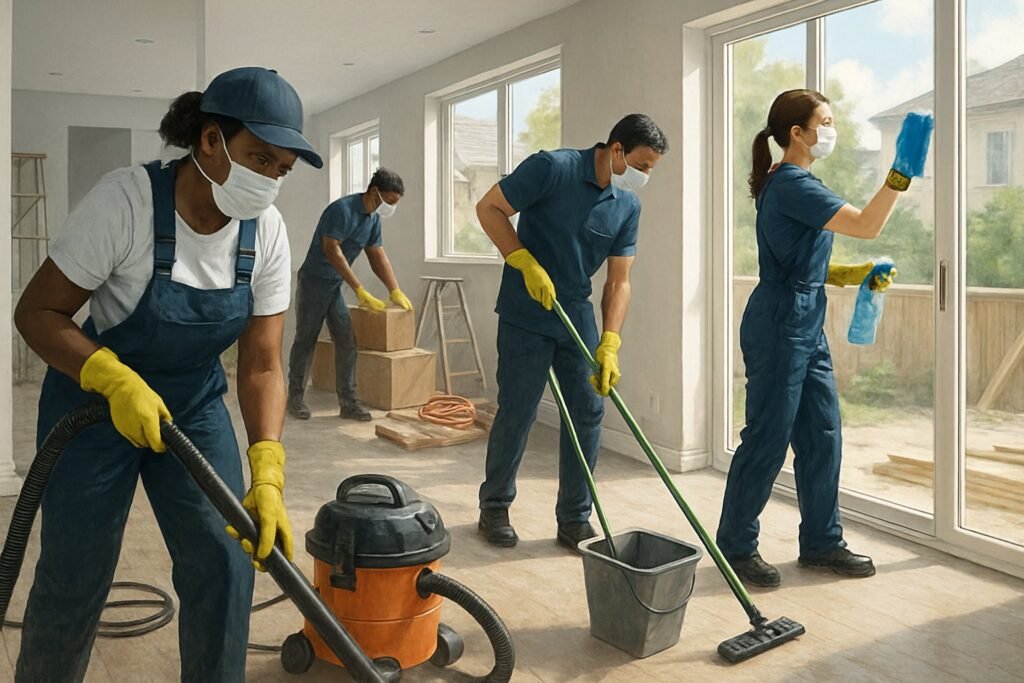
Post-construction cleaning breaks down into three main stages: rough cleaning after the big construction work, final cleaning before handover, and touch-up cleaning for last-minute issues. Each phase has its own techniques and equipment to meet builder standards.
If you want to get into construction cleanup, you’ll need more than just cleaning chops. You have to know how to read blueprints, price projects, handle safety requirements, and build relationships with general contractors.
Startup costs usually run from $10,000 to $25,000 for equipment. But if you get the business model down, the ROI can be pretty impressive.
Key Takeaways
- Post-construction cleaning pays higher margins than regular cleaning because of the specialized skills and premium rates.
- You’ll need to understand all three project phases and get good at working with contractors and builders.
- The right equipment and strict safety protocols are a must for large-scale construction cleanup.
Understanding the Post-Construction Cleaning Market
Post-construction cleaning targets construction firms and real estate developers who need thorough site cleanups. The market’s growing steadily, with revenues projected to hit $25 billion by 2033.
Defining Post-Construction Cleaning Services
Post-construction cleaning means specialized cleanup after building or renovation projects. It’s nothing like regular commercial cleaning—there’s heavy debris, dust, and leftover construction materials everywhere.
The work usually happens in three phases. Rough cleaning gets rid of big debris, construction waste, and thick layers of dust. That phase typically costs $0.10 to $0.30 per square foot.
Final cleaning is all about details—windows, floors, fixtures, and every surface—getting everything ready for move-in. That precision bumps the rate up to $0.30 to $0.75 per square foot.
Touch-up cleaning fixes any leftover messes before inspection or move-in. You’ll need gear like HEPA filter vacuums and industrial floor scrubbers to handle these jobs.
Growth and Market Trends in Construction Cleaning
The post-construction cleaning market is on the rise, thanks to more construction projects nationwide. The industry was valued at $7.34 billion in 2024, and forecasts say it’ll reach $12.8 billion by 2035.
Analysts expect a 6% compound annual growth rate from 2025 to 2033. The US construction market itself shot up by 55% in 2024, hitting about $21 trillion.
All that new construction fuels a big demand for specialized cleanup. Construction cleaning businesses get paid per project, and each job can mean a solid payout.
Profit margins here usually beat general cleaning jobs. Many post-construction cleaning companies see gross profit margins between 30-50% before overhead.
Target Clients: Construction Firms and Real Estate Developers
Construction firms are the main customers for post-construction cleaning. General contractors need reliable cleanup partners for residential and commercial projects—contracts can run from $500 to over $10,000.
Real estate developers are another big group, especially with their large residential or commercial builds. They often need ongoing cleanup services across multiple sites and phases.
Property management companies also hire construction cleanup crews for tenant turnovers and renovation work. Getting to know architects and designers can lead to more referrals.
Key client types include:
- General contractors on residential jobs
- Commercial construction firms
- Developers with multiple projects
- Renovation specialists
- Property management companies
About 60% of contractors say they value reliability and quality over the lowest price when picking cleaning partners. That means you can charge premium rates while building long-term relationships.
Core Phases of Post-Construction Cleaning Projects
Post-construction cleanup happens in three phases, each at a specific stage in the building process. Each phase tackles different messes and gets the site ready for the next step.
Rough Clean: Initial Debris and Heavy Dirt Removal
The rough clean starts after major construction wraps up but before finish materials go in. It’s all about clearing out the biggest messes and making the site safe for other trades.
Cleaning crews focus on big removal jobs here. They gather up wood scraps, metal bits, and packaging waste. Sweeping floors to get rid of thick dirt and dust is a must.
Main rough clean tasks:
- Hauling out large debris and leftover materials
- Sweeping up concrete dust from floors and surfaces
- Cleaning big dirt and residue off windows
- Getting work areas ready for mechanical installations
Crews use basic equipment like push brooms, shop vacs, and debris bins. The goal isn’t perfection—it’s just to make things clean enough for finishing work.
Skip this phase, and you’ll end up with dust in new fixtures and a much harder final clean.
Final Clean: Preparing the Site for Inspection
Final cleaning happens after construction’s done, but before the official walkthrough. This step turns a messy site into a space that’s ready for inspection.
Professional crews bring in specialized equipment and get to work on every detail.
Final clean tasks:
- Deep cleaning all floors with pro gear
- Wiping down walls, trim, and painted surfaces
- Washing windows inside and out until they’re streak-free
- Sanitizing bathrooms, kitchens, and utility spaces
- Peeling off stickers and protective films from fixtures
Crews use microfiber cloths, commercial floor machines, and HEPA vacuums. They make sure to clean light fixtures
Strategies for Efficient Workflow and Service Quality
Operational efficiency sets profitable post-construction businesses apart from those that just scrape by. Systematic approaches help teams spend less time on each project, but still keep quality high.
Equipment walkthroughs at the start of every project make sure all tools work as they should. This quick check stops delays and upholds safety standards right from the beginning.
Team scheduling systems let you match crew sizes to each job. Bigger spaces? More hands. Detail work? Bring in the veterans.
Cleaning phase coordination lines up with construction schedules. Rough cleaning clears out the big debris, final cleaning gets the place ready for move-in, and touch-ups handle last-minute surprises.
Quality control checklists keep results consistent. Everyone knows what they’re responsible for before the work begins.
Supply inventory management keeps you from running out of essentials mid-project. Automated reordering helps you stay stocked without filling the closet with extras.
Mobile equipment storage cuts down setup time between jobs. Organized trucks and portable carts mean you can grab what you need without hunting around.
Regular equipment maintenance stops breakdowns before they happen. Keeping backup gear on hand means the work doesn’t grind to a halt if something needs fixing.
Securing and Managing Builder Contracts
Getting into construction cleaning means figuring out the bidding process and connecting with the people who make decisions. Success often comes down to thorough site prep, competitive pricing, and open communication with construction teams.
How to Bid on Construction Cleaning Contracts
Bidding for a cleaning contract in construction takes a real understanding of the project’s scope and timing. Contractors usually look for bids near the end of the build.
Key bidding elements include:
- Square footage
- Cleaning phase (rough, final, or touch-up)
- Timeline and deadlines
- Special equipment needs
Most owners price jobs between $0.05 and $0.20 per square foot, depending on the phase and how tough the job is.
Rough cleaning costs less but involves hauling out more debris. Final cleaning pays better, since it’s all about the details.
Send bids quickly with clear pricing breakdowns. Split out costs for each cleaning phase to look professional and help builders see what they’re paying for.
Site Visits and Proposal Preparation
Always visit the site before you bid. There’s no substitute for seeing the space yourself.
During site visits, document:
- Total square footage
- Number of floors and rooms
- Construction materials
- Equipment access points
Take photos of every area you’ll need to clean. Look for tricky spots like high ceilings or fragile surfaces.
Aim to send a written proposal within 24-48 hours after your site visit. Spell out the scope of work, timeline, and payment terms.
Break down pricing by phase and area. This kind of detail helps builders budget and shows you know your stuff.
Building Relationships with Construction Superintendents
Superintendents usually decide which cleaning companies get invited to bid. They’re the gatekeepers.
Start by introducing yourself at active sites. Bring your business card and a quick pitch about your company.
Relationship-building strategies:
- Finish work on time
- Communicate issues right away
- Keep quality high across every job
- Stay flexible when schedules change
Once you finish a job, check in for feedback. Fix problems fast if they pop up.
Ask to get on approved vendor lists for more bidding opportunities. Regular calls or site visits keep you in their minds for the next project.
Safe and Sustainable Operations
Post-construction cleanup isn’t just about dust—it’s about safety, smart planning, and following disposal laws. These things hit your bottom line and keep you out of legal trouble.
Adhering to Safety Best Practices on Construction Sites
Construction sites can be dangerous if you’re not careful. Personal protective equipment (PPE) is non-negotiable for everyone.
Essential PPE includes:
- Hard hats
- Safety glasses
- Steel-toed boots
- Cut-resistant gloves
- Respirators for heavy dust or chemicals
Site assessment comes first. Crews need to spot hazards like exposed wires, shaky structures, or dangerous materials.
OSHA rules apply here, so workers need training on ladders, chemicals, and emergencies.
Communication protocols with contractors help avoid accidents. Teams should check in with site supervisors about ongoing work, utility shutoffs, and off-limits areas.
HEPA vacuums keep dust down and protect workers’ lungs. They also help maintain air quality.
Understanding Labor Costs and Workforce Management
Labor eats up 60-70% of expenses in post-construction cleanup. Planning your workforce well makes a big difference.
Skilled workers cost more, but they get the job done faster and better. Entry-level cleaners earn $12-15 an hour; experienced techs pull in $18-22.
Crew size varies:
- Small offices: 2-3 people
- Medium spaces: 4-6
- Large facilities: 8-12
Training investments cut turnover and boost speed. Well-trained workers finish jobs 25-30% faster than those learning on the fly.
Benefits and insurance add another 20-25% to wages. Workers’ comp is a must with all the job site risks.
Scheduling efficiency means more billable hours. Grouping jobs in the same area cuts travel and raises daily revenue.
Sometimes, it’s cheaper to subcontract specialized work—like windows or floors—than keep full-timers for every task.
Navigating Waste Disposal Regulations
Construction debris disposal is tightly regulated. Skip the rules and you’ll face fines.
Waste classification decides disposal method:
- General debris goes to landfills
- Hazardous stuff needs special facilities
- Recyclables like metal and cardboard can actually bring in money
Disposal costs range from $30-80 per cubic yard, depending on material and local rules. Factor these into your bids.
Documentation matters: keep waste manifests, disposal receipts, and transport records. Some places require permits for big loads.
Dumpster rentals run $300-800 each. Time your pickups well to avoid extra fees and keep the site clear.
Environmental compliance means stopping runoff into drains and storing hazardous stuff right. Fines can top $10,000 if you mess this up.
Many regions require recycling quotas for construction waste. Meeting them usually saves money and helps sustainability efforts.
Maximizing Profitability and Growth
Post-construction cleaning businesses can hit 15-20% net profit margins if they nail pricing, focus on B2B marketing, and keep clients coming back. Retention alone can cut acquisition costs by up to 80%.
Competitive and Premium Pricing Strategies
Pricing makes or breaks profitability. Owners should price each service phase differently.
Rough cleaning usually runs $0.10 to $0.30 per square foot. This is mostly junk removal and basic dusting after the builders leave.
Final detail cleaning gets $0.30 to $0.75 per square foot. It’s more involved and takes specialized tools and skilled workers.
For commercial work, job-based pricing often works better than by-the-foot rates. Small jobs start at $500, but big builds can top $10,000.
Smart operators aim for 25-35% gross profit margins per project. They add up labor, supplies, equipment, and overhead before quoting.
Premium pricing can work if you’re reliable and deliver quality. About 60% of contractors care more about that than price alone.
Marketing Your Post-Construction Cleaning Business
B2B outreach brings in the best clients. Reaching out to general contractors, developers, and construction managers works.
Referral networks inside the industry create a steady flow of work. Happy clients who refer you are worth their weight in gold.
A portfolio with before-and-after photos can boost leads by 30-40%. Real proof of your work attracts clients willing to pay more.
Good marketing channels:
- Industry trade shows and events
- Personalized emails to contractors
- A website with project galleries
- Networking on LinkedIn
Projects from targeted marketing usually land between $5,000 and $50,000. This beats broad advertising every time.
Customer Retention and Service Differentiation
Keeping clients is way cheaper than finding new ones. Retention can boost profits by 25-95% with just a 5% increase.
Long-term clients bring referrals too.
Key retention strategies:
- Loyalty discounts for repeat customers
- Priority scheduling for returning clients
- Consistent quality every time
- Quick, responsive communication
Standing out helps you charge more. Specialize in certain construction types or offer eco-friendly cleaning—something unique.
Building strong ties with builders and developers leads to steady income. These partnerships also make planning and growth a lot easier.
Frequently Asked Questions
Post-construction cleaning isn’t like regular cleaning. You need to know project phases, bidding strategies, equipment requirements, safety protocols, pricing models, and what quality actually means on a job site.
What are the different phases of post-construction cleaning, and what does each entail?
There are three main phases. Each phase calls for different skills and gear.
Rough cleaning comes first, right after construction wraps up. This is when crews haul out debris, dust, and leftover materials. Big tasks here include pulling down plastic sheeting and scrubbing windows.
Final cleaning follows rough cleaning. Now it’s all about details—every surface, floor, and fixture gets cleaned. Bathrooms, kitchens, and all interior spaces get the move-in treatment.
Touch-up cleaning is the last pass before inspection. Crews fix any missed spots and make sure everything meets standards. This usually happens just before handing over the keys.
How should a cleaning business approach bidding on construction cleanup contracts?
Winning bids takes research and connecting with the right people. Construction companies, general contractors, and developers call the shots.
Cleaning businesses should put together detailed proposals for every job. Spell out services, team skills, and pricing. Each bid should address what’s unique about that project.
Competitive pricing helps win contracts. Research local rates and set your prices to match. Offering packages or discounts for repeat work can help you stand out.
Building relationships in the industry is crucial. Go to trade shows, join associations, and network with contractors. Referrals and relationships often open doors.
What equipment is essential for handling post-construction cleaning jobs effectively?
You’ll need more than a mop and bucket. Startup costs for equipment run $10,000 to $25,000.
Heavy-duty vacuum systems are a must for dust and debris. HEPA filters are best for fine dust regular vacuums miss.
Floor cleaning equipment like scrubbers and polishers handle different surfaces—concrete, hardwood, tile, you name it.
Safety equipment is non-negotiable. Hard hats, safety glasses, boots, and respirators are standard.
Window cleaning tools—think squeegees, scrapers, and special solutions—tackle paint, adhesives, and residue on glass.
What safety protocols must be in place during post-construction cleaning projects?
Safety is serious on construction sites. Hazards include debris, chemicals, and unstable ground.
Personal protective equipment is a must. Workers wear hard hats, glasses, boots, and respirators. Gloves protect against sharp debris and chemicals.
Site inspection comes first. Team leads look for hazards like exposed wires or unstable structures.
Chemical safety is key. Workers need training on ventilation, mixing chemicals, and what to do in emergencies.
Communication systems keep teams in touch on big jobs. Radios help coordinate work and respond to issues quickly.
How can a cleaning business establish premium pricing for post-construction cleaning services?
Post-construction cleaning earns higher rates than regular cleaning. Specialized skills and gear justify the price.
Market positioning matters. Highlight your experience and any certifications.
Value-based pricing focuses on your expertise, not just hours worked. Clients pay for your know-how with debris, dust, and safety.
Project complexity affects rates. Bigger, tougher jobs—like high-rises or specialized builds—cost more.
Certification and training back up premium pricing. OSHA training and industry credentials show you’re worth the extra fee.
What best practices should a cleaning business follow to ensure quality in construction cleanup?
Quality control systems help you keep standards high and build real trust with clients. When you show up consistently and do good work, you’ll get those repeat contracts and maybe even a few referrals.
Detailed checklists are a must. They break down each phase of cleaning into specific checkpoints, so supervisors can actually see what’s done before moving on.
Team training keeps everyone sharp and on the same page. Bring the crew together regularly to cover new gear, safety stuff, or just refresh the basics.
Client communication keeps things transparent. If you’re giving updates as you go, clients know what’s happening and can flag problems before they snowball.
Quality inspections should happen after each phase wraps up. Supervisors need to walk through, check the work, and only then call it finished.
Documentation matters more than people think. Snap photos, jot down notes—this creates a record of what got done and helps if there’s ever a question down the line.