Landing commercial cleaning contracts takes more than just good prices and solid service. Your cleaning services proposal is often your first impression—and sometimes, it’s the only thing standing between you and a big contract.
Large commercial clients expect formal, detailed proposals that show you understand their needs and take your business seriously.
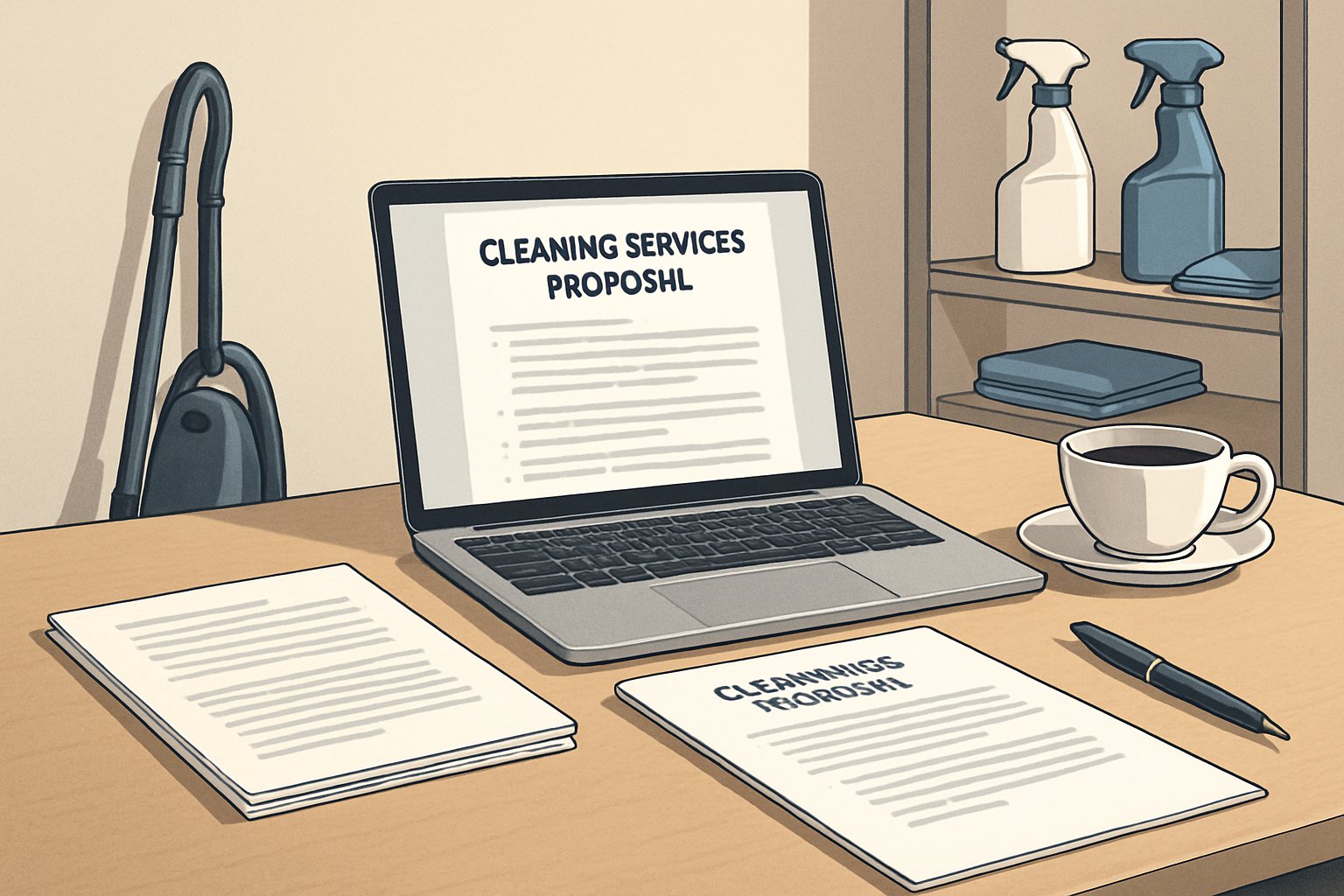
The cleaning industry can get cutthroat, especially when it comes to commercial accounts. These jobs mean steady, long-term revenue, so everyone wants in.
A good proposal does more than list your services and prices—it shows off your expertise, backs up your reputation, and gives clients confidence that you can handle their facilities. Commercial prospects usually compare several proposals, so yours needs to stand out with clear organization and a polished presentation.
Putting together a thorough proposal takes time, but it pays off when you start landing more contracts. These days, a lot of cleaning businesses use proposal software like Quote2Clean to speed up the process.
That way, they can create professional-looking cleaning proposals quickly, without sacrificing the detail that big clients expect.
Key Takeaways
- A professional proposal builds credibility and helps you rise above the competition in commercial cleaning.
- Structure matters: include your company background, a detailed scope, clear pricing, and proof of insurance.
- Proposal software can save you time and help you keep things professional.
Understanding the Importance of a Well-Crafted Proposal
A solid proposal lays the groundwork for winning commercial cleaning contracts. It shows you’re committed to quality service.
The difference between a basic quote and a detailed proposal can make or break whether a prospect chooses you.
Setting Yourself Apart from Competitors
Most cleaning companies just send over a quick price or a short estimate. When you deliver a comprehensive proposal, it immediately signals that you’re professional and pay attention to details.
Key differentiators include:
- Detailed service specs that show you’ve done your homework
- Professional formatting with your branding front and center
- Clear timelines and schedules
- Proof of insurance and bonding
When cleaning companies put effort into their proposals, they often win contracts—even if their prices are a bit higher. Prospects see a detailed proposal as a sign of how you’ll handle the actual work.
The proposal gives clients a preview of the experience they’ll get. If you cut corners here, they’ll probably expect shortcuts later too.
Building Trust and Professionalism
Commercial clients want to know you can handle their needs without drama. A well-structured proposal answers their questions before they even ask.
Trust-building elements include:
- References from similar properties
- Company background and relevant experience
- Clear communication of what makes you different
- A clean, error-free presentation
Facility managers usually compare several proposals. The company with the most professional document tends to make the shortlist.
Clients want to see that you’re organized and serious about your work. A detailed proposal proves you treat every client relationship with care.
Core Structure of a Winning Cleaning Services Proposal
A strong cleaning services proposal follows a specific structure. Each piece plays a role in convincing clients to pick your cleaning company over the rest.
Cover Letter and Introduction
The cover letter is your shot at a great first impression. Address the client by name and mention their specific cleaning needs.
Start with a clear statement of purpose. Mention when you visited the facility and what services you discussed.
Key elements to include:
- A personal greeting to the decision maker
- A quick reference to your initial meeting or walkthrough
- A straightforward statement about why you’re sending the proposal
- A tone that matches the client’s business style
Keep it to one page, max. Set the stage for the rest of the proposal.
Use simple, direct language. Skip the jargon—nobody likes to feel talked down to.
Executive Summary
The executive summary packs the most important info into a couple of short paragraphs. Some clients only read this part, so make it count.
Start by naming the client’s main cleaning challenges. Then, explain how you’ll solve them.
Highlight your competitive advantages—maybe it’s your equipment, your staff, or a unique cleaning method.
Essential components:
- The client’s top needs and concerns
- Your proposed solution in a nutshell
- The main reasons to pick you
- The total investment amount
Wrap up with a clear statement about why your cleaning company is the best fit for their needs.
Company Background
This section builds trust. Focus on experience and qualifications that matter to commercial clients.
Share how long you’ve been in business and how many similar facilities you handle. Mention any certifications or special training your team has.
Important details to highlight:
- When and how your company started
- Relevant industry experience
- Staff training and certifications
- Insurance and bonding
- Equipment and technology you use
Stick to the facts. Don’t overpromise or make claims you can’t back up.
If your management team has solid experience, mention them here. Big clients like to know who’s running the show.
Client Needs Assessment
Here’s where you prove you listened. Reference your site visit and any conversations you had.
Call out the unique challenges of their facility. A medical office isn’t the same as a retail store.
Areas to address:
- Facility size and layout
- High-traffic areas that need extra care
- Specific cleaning challenges you spotted
- Gaps or issues with their current cleaning
- Health and safety requirements
Show exactly how you’ll tackle each problem. Use real examples, not vague promises.
This kind of detail shows you’re not just sending a generic proposal—you actually care about their needs.
Detailing Services and Scope of Work
A detailed scope of work keeps everyone on the same page. Specific service descriptions and custom packages help you stand out from companies that submit vague proposals.
Defining Service Offerings
List every service you’ll perform, using plain language. Basic commercial cleaning usually covers things like emptying trash, vacuuming, and sanitizing restrooms.
Daily cleaning services typically include:
- Trash removal and liner replacement
- Vacuuming carpets
- Mopping hard floors
- Restroom cleaning and restocking
- Dusting surfaces and furniture
Weekly or monthly services often cover:
- Deep cleaning break rooms
- Interior window washing
- Floor stripping and waxing
- Cleaning light fixtures
- Supply inventory and restocking
Mention the products you use—some clients want eco-friendly or hospital-grade disinfectants. Note any areas you won’t clean.
Clear service definitions protect both you and the client. They help avoid arguments about what’s included in the price.
Customizing Cleaning Packages
Smart cleaning companies tailor packages for each client. A medical office needs different services than a retail store or warehouse.
Office buildings need:
- Daily trash and recycling pickup
- Regular carpet care
- Conference room cleaning after meetings
- Deep cleaning kitchens and break rooms
Retail spaces require:
- Floor care for heavy foot traffic
- Window and display case cleaning
- Fitting room sanitization
- Entrance maintenance
Medical facilities demand:
- Hospital-grade disinfection
- Biohazard waste handling
- Deep cleaning exam rooms between patients
- Sanitizing waiting areas
Visit the site before writing your proposal. The walkthrough helps you spot unique challenges and create a custom cleaning package.
Explain why you recommend certain services for their business. That shows you know what you’re doing.
Specialties: Carpet, Floor, and Window Services
Many commercial cleaning contracts need specialized services—and you’ll need the right equipment and training for these.
Carpet cleaning services:
- Hot water extraction
- Spot treatment for stains
- Carpet protection
- Scheduled maintenance
Floor maintenance:
- Strip and wax for VCT floors
- Concrete polishing
- Hardwood refinishing
- Stone and tile restoration
Window cleaning:
- Interior and exterior glass
- High-rise access methods
- Cleaning screens
- Pressure washing exteriors
List your certifications for specialized work. Some states require licenses for certain chemicals or waste disposal.
Spell out how often you’ll perform these specialty services. Maybe carpets get cleaned quarterly, floors waxed monthly.
Share your equipment list if it helps. Clients like knowing you use commercial-grade machines—they get better results than the cheap stuff.
Transparent Pricing and Payment Terms
Clear pricing builds trust and keeps negotiations simple. Show the value you bring, and make payment terms easy to understand.
Providing Clear Cost Breakdowns
A detailed cost breakdown spells out exactly what clients pay for. This approach builds trust and reduces objections.
Break prices down by service—list floor cleaning, restroom sanitizing, trash removal, and window cleaning separately. Show the cost per service or per square foot.
Include how often you’ll perform each service. Daily, weekly, and monthly rates should be clear.
Add supply costs separately. Let clients know if cleaning products, equipment, and consumables are included or extra. Many prefer all-inclusive pricing to avoid surprises.
List extra fees upfront. Holiday surcharges, after-hours cleaning, or deep cleans should all be visible. No one likes hidden charges.
Use simple tables to organize your pricing. Clear formatting makes it easy for decision-makers to compare you to the competition.
Flexible Pricing Models
Different clients want different payment options. Offering choices can help you win more contracts.
Monthly contracts are great for regular clients. They offer steady income and help clients budget. Maybe throw in a discount for annual commitments.
Per-visit pricing works for businesses with unpredictable needs. Medical offices or retail stores might like this during slow periods.
Offer different service tiers—basic, standard, premium. Let clients pick what fits their budget, and clearly list what’s included in each.
Volume discounts can help you win bigger facilities. Offer lower per-square-foot rates for large buildings.
Spell out payment terms. Say when you expect payment, what methods you accept, and any late fees. Many cleaning businesses collect payment at the start of each service period.
Establishing Credibility and Trust with Proof
You build trust by showing you’re reliable and know your stuff. Insurance documents, client testimonials, and case studies work wonders.
Proof of Insurance and Compliance
Insurance paperwork is non-negotiable. Clients want to see you’re covered before they let you in the door.
Include certificates for general liability insurance, workers’ comp, and bonding. Most commercial clients want at least $1–2 million in coverage.
Share any professional licenses or certifications, like ISSA training or green cleaning credentials.
Show you follow the rules. Include proof that you dispose of chemicals properly and stick to OSHA safety standards.
Keep your insurance certificates up to date and easy to find. Letting them expire can kill your credibility fast.
Including Customer Testimonials
Testimonials back up your claims with real results. Pick ones that match your prospect’s industry or concerns.
A testimonial from a medical office means more to a dental practice than a generic “great job” from anyone.
Include the client’s full name, company, and job title. Anonymous reviews feel fake and can hurt more than help.
Choose testimonials that mention specific results. “ABC Company reduced sick days by 30% after hiring us” says a lot more than “Nice cleaners.”
Pair before-and-after photos with testimonials if you can. That combo shows both satisfaction and real, visible results.
Adding Case Studies and References
Case studies prove you know how to tackle specific cleaning challenges. They let prospects see how you handle situations similar to theirs.
Break each case study into three sections: the client’s challenge, your solution, and measurable results.
For example, you might describe how you designed a specialized cleaning protocol for a food processing facility that cut contamination risks by 40%.
Reference lists should feature recent clients who’ve agreed to speak with prospects. Try to pick references from similar industries or building types.
Aim for at least three to five current references. List each reference’s name, company, phone number, and email for easy verification.
Update your reference list regularly. Outdated info frustrates prospects and makes your business look careless.
Defining Terms, Conditions, and Service Schedule
Clear terms and a defined work schedule protect both the cleaning company and the client. These details set expectations and form the backbone of a professional cleaning contract.
Proposing a Work Schedule
The cleaning schedule has to fit the client’s needs and business flow. Most commercial clients want cleaning done when it won’t disrupt their work.
Office buildings usually prefer evening or early morning cleaning. Retail spaces need cleaning after closing. Medical facilities? Sometimes they want cleaning several times a day.
Common scheduling options:
- Daily cleaning (Monday through Friday)
- Weekly or bi-weekly service
- Monthly deep cleaning
- Special event cleaning
Spell out the exact days and times. Say something like, “Daily cleaning Monday-Friday from 6:00 PM to 10:00 PM” so everyone’s on the same page.
Add backup plans for holidays and staff absences. This shows you’re prepared and helps avoid future headaches.
Terms and Conditions Overview
Terms and conditions protect both sides and define how you’ll work together. These sections cover payment terms, contract length, and responsibilities.
Be clear and specific about payment terms. Many cleaning companies bill at the start of each month instead of after services finish. That keeps cash flow steady and cuts down on collection issues.
Key terms to include:
- Payment schedule and methods
- Contract duration and renewal options
- Cancellation policies
- Equipment and supply responsibilities
- Liability and insurance requirements
Mention what happens if the client’s space isn’t ready for cleaning—locked doors, clutter, or unsafe conditions.
Dispute Resolution and Guarantees
Professional cleaning contracts need clear dispute resolution steps. This protects both you and your clients when issues pop up.
Put your customer service standards in writing. Include response times for complaints and quality issues. For instance, “We’ll respond to all service complaints within 24 hours.”
Many cleaning companies offer satisfaction guarantees. That might mean re-cleaning areas that don’t meet standards or refunding certain services.
Effective guarantee examples:
- Re-clean any unsatisfactory areas within 24 hours
- Quality inspections with documented results
- Clear process for reporting and resolving issues
Spell out steps before legal action. This could be direct communication, management review, or mediation.
Leveraging Technology for Fast, Professional Proposals
Modern proposal software saves time and boosts document quality. Smart tech automates repetitive tasks and keeps your messaging consistent.
Benefits of Using Proposal Software
Proposal software changes how cleaning companies create documents. These tools cut manual work by 80-90% compared to old-school methods.
Speed is a huge win here. What used to take a couple hours now takes maybe 15-30 minutes. Templates store your services, pricing, and company info for quick access.
Consistency comes built-in with every proposal. The format stays professional, and your brand colors, logos, and messaging all match. Clients notice when everything looks polished.
Error reduction improves with built-in checks and automated calculations. Pricing mistakes drop off. Contact info and service details fill in correctly every time.
Professional appearance gets a big upgrade too. Clean layouts, tidy formatting, and visuals like charts or tables help clients understand your services.
Tracking capabilities let you see when clients open proposals and which sections they check out most. That info helps you follow up at the right moment.
How Quote2Clean Streamlines the Sales Process
Quote2Clean tackles cleaning industry sales challenges head-on. The platform knows common cleaning services and pricing models.
Service templates cover standard tasks like office cleaning, floor care, and window washing. You can select services fast, and add custom ones when needed.
Automated calculations handle complex pricing—square footage, frequency discounts, seasonal rates. You can show multiple pricing options in a snap.
Client info management stores prospect details for future proposals. Past quotes become a base for new ones. Repeat clients get consistent pricing and descriptions.
Digital delivery sends proposals instantly via email with your branding. Clients review, approve, and sign contracts online. That speeds up approvals a lot.
Integration with your other business tools—like scheduling or accounting—means smoother workflows from quote to billing.
Frequently Asked Questions
Cleaning business owners have plenty of questions about proposals. Knowing what to include, how to price, and how to build credibility helps you win commercial contracts.
What are the key elements to include in a cleaning services proposal to ensure it appears professional and comprehensive?
A professional cleaning services proposal needs nine essentials. The cover letter introduces your company and sums up the big benefits. Company background shows off your experience.
The scope of work spells out cleaning tasks and areas you’ll handle. A clear schedule lays out how often and when you’ll clean. Transparent pricing breaks down costs and payment terms.
Proof of insurance shows you’re covered and compliant. References add third-party validation. Terms and conditions protect both parties.
Health and safety policies show you take protocols seriously. Altogether, these elements paint a complete picture of your capabilities.
How can a strong cover letter enhance the effectiveness of a cleaning services proposal?
The cover letter is your first impression—it sets the tone for everything that follows. It should grab attention and highlight what makes you different.
Address the client’s needs and challenges directly. Show them you understand their facility and cleaning standards.
Add a short mission statement and your core values. That helps clients see your commitment to quality.
Mention any specialized techniques or eco-friendly practices if you have them. The goal? Spark interest and build credibility right from the start.
In what ways can detailing a company’s background and experience influence the decision-making process of potential clients?
Company background builds trust. It shows off your years in the industry and your expertise.
List any certifications, awards, or industry recognition. That helps clients feel confident about choosing you.
Talk about team qualifications and ongoing training. Clients want to know your staff is well-trained.
A clear mission statement and values let clients connect with your company culture. Sometimes, that emotional connection matters as much as price.
Share case studies or success stories from similar clients. That helps prospects picture what success could look like for them.
What strategies should be employed when defining the scope and schedule in a cleaning services proposal to set clear expectations?
Spell out every task in the scope section. Include areas to be cleaned, how often, and any special requirements.
Use bullet points or numbered lists to make details easy to scan. Clients shouldn’t have to dig for info.
Specify exact days, times, and how long cleaning takes. Cover holidays, emergencies, and schedule changes.
Offer optional services so clients can customize their package. That way, they can expand services later if they want.
Detailed specs prevent confusion and scope creep. Clear expectations protect everyone.
How can including transparent pricing and proof of insurance in a proposal give a competitive edge in winning large or commercial cleaning contracts?
Transparent pricing builds trust. Clients want to see what they’re paying for—no surprises.
Offer tiered pricing for different budgets and needs. That opens your services to more commercial clients.
Proof of insurance shows you’re responsible and compliant. Commercial clients need that for liability reasons.
Insurance docs prove you take business seriously. It signals stability and professionalism.
Clear payment terms and discounts for long-term contracts add value. Clients can budget confidently when everything’s laid out.
Why is it important to provide references in a cleaning services proposal, and how can this build credibility with prospective clients?
References give third-party validation for your service quality and reliability. They let potential clients hear straight from folks who’ve worked with you before.
If you can provide recent references from similar facilities, even better. Those help prospects picture what success could look like for their own properties.
When you include contact info for your references, you’re showing confidence in your work. It lets prospects reach out, verify your claims, or ask their own questions.
Testimonials that mention specific improvements or cost savings? Those really stand out. They give people something solid to consider when weighing the investment.
Client logos and case studies add a visual punch and show you’ve worked with reputable organizations. This kind of social proof often nudges decision-makers toward trusting your cleaning company.
