Growing a cleaning business takes more than just delivering great results. You need a smart plan for finding and keeping clients.
The cleaning industry’s packed with competition. Still, if you use the right strategies, you can build a steady list of customers who actually trust you with their homes and offices.
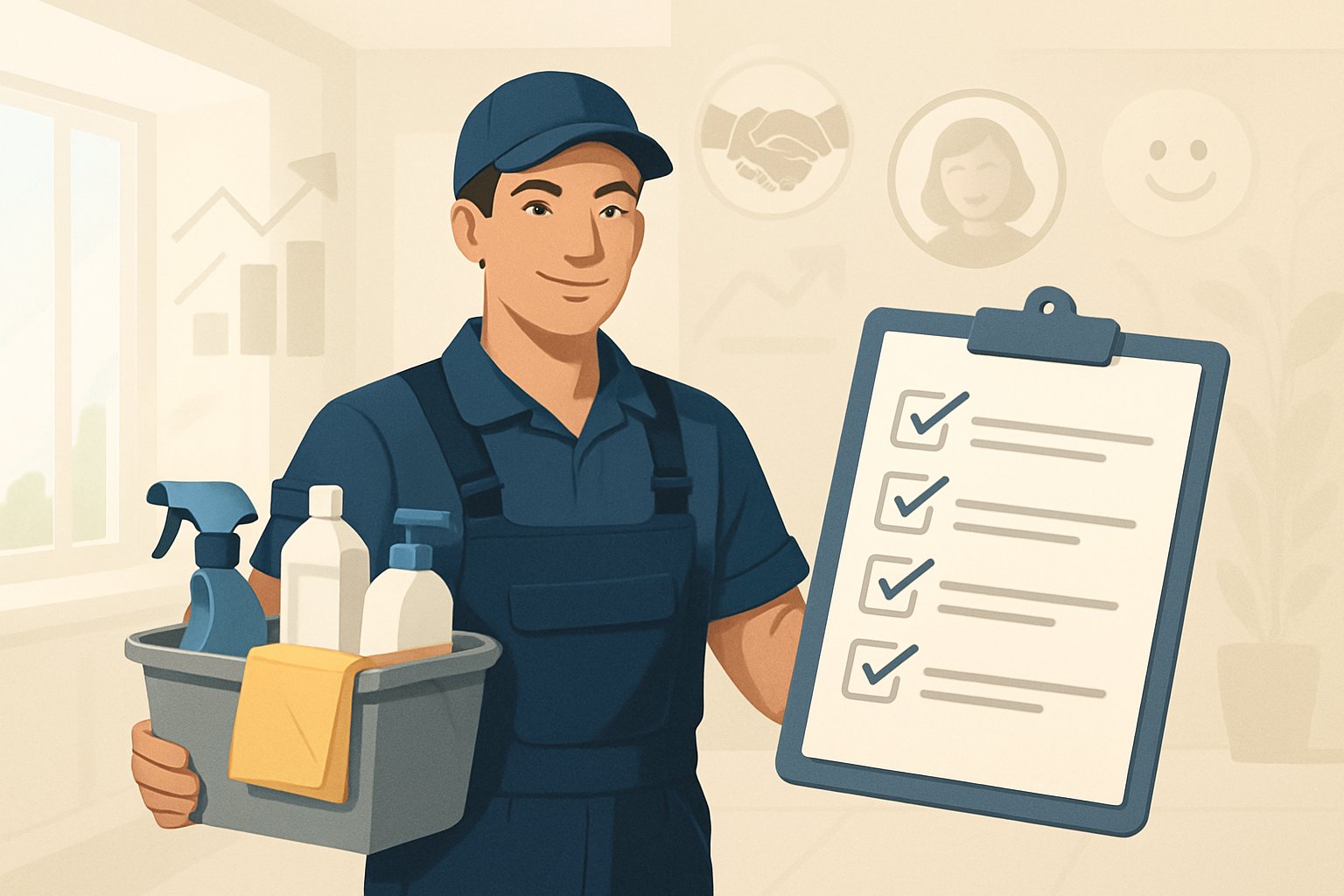
The most successful cleaning services start by figuring out exactly who their ideal customers are, then use targeted marketing to reach those groups again and again. If you’re aiming at busy families, working professionals, or local businesses, knowing who needs you most helps you spend your marketing budget where it counts.
Trust matters a ton in cleaning. Clients literally let you into their personal spaces.
Every interaction counts—whether it’s the first call or how quickly you get back with a quote. If you build strong relationships, keep up a professional online presence, and follow up fast, you’ll turn one-time jobs into loyal clients who tell their friends about you.
Key Takeaways
- Aim your marketing at specific customer types—busy families, local businesses, whoever needs you most.
- Build trust with consistent online reviews, sharp branding, and quick replies to customer questions.
- Tap into referral programs and local partnerships; word-of-mouth is gold in this business.
Identifying and Attracting Your Ideal Clients
You can’t win over everyone, so you’ve got to know who values your services the most. Targeting the right crowd starts with a close look at who they are and what they care about.
Defining Your Target Audience
First, figure out which groups are most likely to hire you. Just saying “people who need cleaning” doesn’t cut it.
Residential clients break down into a few clear groups. Busy, dual-income families are a prime target audience.
They usually have more disposable income but no time to clean. Senior citizens are another important segment.
Many older folks want to stay in their homes but need help with cleaning. Young professionals and busy parents also make excellent clients—they’ll pay for convenience and more free time.
Commercial clients include small offices, doctor’s offices, and retail shops. Property managers need reliable cleaning partners for multiple buildings.
Each group comes with different priorities, budgets, and decision-making styles. If you understand those differences, you can focus your marketing where it’ll actually work.
Analyzing Customer Needs and Preferences
Different types of clients want different things. If you get what matters most to them, you can position your services better.
Families with kids want safe, non-toxic cleaning products. They worry about chemicals left behind where kids play and eat.
Busy professionals crave reliability and consistency. They want you to show up on time and get the job done without needing their supervision.
Commercial clients care about professional appearance and liability coverage. They expect your team to look sharp and carry insurance.
Timing preferences also vary. Residential clients usually want you there during the day when they’re out.
Some commercial clients need cleaning done after hours to avoid disrupting business. Budgets are all over the place, too.
High-income families might want premium services or organic products. Small businesses often look for affordable solutions.
Communication styles can be a big deal. Some folks want detailed reports after each visit.
Others just want the job done right and don’t want to talk about it.
Creating Buyer Personas
Buyer personas turn those vague target groups into real, relatable profiles. These help you make better marketing decisions.
“Busy Professional Sarah” is a 35-year-old marketing manager with two kids. She works 50+ hours a week and treasures her weekends.
She’s got a household income above $80,000 and is happy to pay more for reliable service. “Property Manager Mike” oversees 15 small office buildings.
He needs cleaning for common areas and tenant spaces. He cares about competitive pricing, insurance, and quick replies.
“Empty Nester Barbara” is 68 and retired. She has trouble with heavy cleaning but values a personal touch and lives on a fixed income.
Include details like age, income, family situation, work schedule, pain points, and how they like to communicate. The more specific you get, the easier it is to target your marketing.
These profiles help you figure out who you’re actually talking to with each campaign.
Tailoring Marketing Messages
Generic marketing just fades into the background. If you want people to notice, speak directly to what they care about.
For busy families, stress time savings and peace of mind. Try lines like “Get your weekends back” or “Safe cleaning products for your family.”
Professional clients want to hear about reliability and efficiency. Highlight consistent schedules, trained staff, and a professional look.
Budget-conscious customers need to hear about value. Emphasize fair pricing, no hidden costs, and maybe even a money-back guarantee.
Where you put your message matters, too. Younger clients hang out on social media.
Older folks might respond better to direct mail or newspaper ads. Testimonials and reviews hit differently for each group.
Families want to hear from other parents. Business owners trust references from other companies.
Match your language and tone to your ideal client’s style. It makes your message feel more genuine and relatable.
Use the words your customers use when they talk about cleaning headaches. It helps you connect immediately.
Building a Strong and Trustworthy Online Presence
Your website and online reputation are usually what people see first. If you look professional and make it easy to get in touch, you’ll win more clients.
Creating an Optimized Cleaning Business Website
Your website is your digital handshake. Make sure it loads fast on computers and phones—most people will find you on their mobile.
Must-have website elements:
- Clear service descriptions with pricing
- Photos of your team and finished work
- Maps showing where you work
- Insurance and bonding info
Your homepage should answer what you do and where you do it. Keep navigation simple with “Services,” “About,” and “Contact” pages.
Show your business license and insurance. Most companies skip this, but it goes a long way with cautious homeowners.
Use city-specific keywords. Instead of just “house cleaning,” say “house cleaning in [your city]” so locals can find you.
Highlighting Positive Reviews and Testimonials
People read reviews before they reach out. Most customers check reviews before calling any cleaning company.
Build a testimonials page with detailed feedback. Use the client’s first name and neighborhood for authenticity.
Show reviews in different ways:
- Written testimonials with photos
- Star ratings right on your homepage
- Before-and-after photos with customer quotes
- Video testimonials if you can get them
Ask happy clients for reviews on Google, Yelp, and Facebook right after you finish the job. Make it easy—send a quick text or email with a direct link.
Reply to all reviews. Thank people for good feedback and address any complaints with a real solution and your contact info.
Implementing an Online Booking System
Let people book online, anytime. If you make them wait until business hours, they’ll just try someone else.
Pick booking software that works with your website and lets customers:
- Choose services
- Pick dates and times
- Add special instructions
- Get confirmation emails automatically
Popular booking platforms:
| Platform | Monthly Cost | Key Features |
|---|---|---|
| Housecall Pro | $49+ | Scheduling, invoicing, payments |
| Jobber | $49+ | Customer management, quoting |
| ZenMaid | $79+ | Cleaning-specific tools |
Set up automatic confirmation emails with your contact info, service details, and cancellation policy. This helps cut down on no-shows.
Put your booking button on every page. Use bold “Book Now” or “Schedule Cleaning” buttons that people can’t miss.
Maintaining Accurate Contact Information
Make sure your contact details are the same everywhere online. If they’re not, customers and search engines get confused.
Update info on:
- Your website’s header and footer
- Google Business Profile
- Social media profiles
- Directories like Yelp and Angie’s List
- Your email signature
List several ways to reach you—phone, email, maybe even text. Lots of people prefer texting for quick questions.
State your hours and how fast you usually reply. If you call back within two hours, say so.
Use a local phone number. People trust local businesses more than toll-free ones.
Mastering Local SEO and Google Listings
Local SEO puts your business in front of people searching for cleaning help nearby. If you get your Google Business Profile right, you’ll get steady leads from homeowners and businesses close by.
Setting Up and Enhancing Your Google Business Profile
Setting up a Google Business Profile is free and only takes about 15 minutes. Go to business.google.com and search for your business name.
If it’s already there, claim it. If not, add a new listing with all your details.
Google usually verifies cleaning businesses by sending a postcard. It takes about a week, but you need this step to show up in local searches.
Key things to fill out:
- Business name (use your exact legal name)
- Full address, including suite numbers
- Local phone number with area code
- Service hours, including holidays
- Primary category: “House Cleaning Service” or “Commercial Cleaning Service”
Add great photos—your team, your gear, before-and-after shots. Upload at least 10-15 images.
Include your logo and a shot of your office or vans. Write a friendly, real-sounding business description.
Mention services like deep cleaning, move-out cleaning, or office sanitizing.
Optimizing for ‘Cleaning Services Near Me’ Searches
Most folks search with location-based terms. “Cleaning services near me” gets thousands of searches every month.
Work local keywords into your Google Business Profile. Add your city and nearby neighborhoods in the description.
Good keyword combos:
- “House cleaning services in [City Name]”
- “Residential cleaners serving [Neighborhood]”
- “Commercial cleaning company [City/State]”
Post updates on Google every week—cleaning tips, promos, staff spotlights. Toss in local keywords each time.
List all the cities and towns you cover, up to about 25 miles out. Use the Services section to list what you offer.
Add prices if you can to attract people who are ready to book.
Collecting and Showcasing Online Reviews
Reviews matter for both Google rankings and customer trust. Google boosts businesses with fresh, positive reviews.
Ask happy customers for reviews right after you finish the job. Send a text with a direct link to your Google review page.
Best times to ask:
- Text within 2 hours after the job’s done
- Follow-up email after 24 hours
- Leave a printed card after deep cleans
Reply to every review within two days. Thank people for good feedback and handle complaints with care.
Make review requests part of your routine. Train your team to mention it in person.
Offer a small discount—maybe $5 off next time—for honest feedback. Aim for 2-3 new Google reviews a month.
That steady flow tells Google your business is active.
Ensuring Consistent NAP Details
NAP stands for Name, Address, and Phone number. Google checks these to confirm you’re legit and local.
If your info doesn’t match everywhere, it hurts your search rankings. Use the exact same details on every platform.
Check NAP on:
- Google Business Profile
- Website contact page
- Social media
- Yelp and review sites
- Industry directories like Angie’s List
Use your legal business name everywhere. If you’re “Smith’s Cleaning Services LLC,” don’t shorten or change it elsewhere.
Keep your phone number format the same, too. Pick either (555) 123-4567 or 555-123-4567 and stick with it.
If you move, update your address everywhere—start with Google, then hit the rest within a day or so.
Do a quick audit every month to catch any mistakes. Sometimes old listings pop up and need fixing.
Leveraging Social Media and Digital Marketing Channels
Social media gives cleaning businesses a real shot at reaching new customers and showing off their work. Visual content and targeted ads can make a big impact.
If you can build relationships with local influencers or content creators, you’ll expand your reach and start earning trust with fresh audiences.
Using Facebook and Instagram for Brand Visibility
Facebook and Instagram are go-to platforms for cleaning services wanting to show off their work and connect with locals. These visual spaces let businesses post before-and-after shots that really highlight their skills.
Key Facebook strategies include:
- Set up a business page with all your contact info.
- Post client testimonials and reviews often.
Jump into community groups and offer cleaning tips. Use Facebook Events to promote seasonal services.
Instagram’s all about visual storytelling. Post sharp photos of your work, and don’t forget hashtags like #cleaningservice or #housecleaning.
Effective Instagram tactics:
- Share Stories for behind-the-scenes peeks.
- Make Reels with quick cleaning tips.
Tag your location so locals can actually find you.
Both platforms make chatting with customers easy through direct messages. Responding quickly builds trust and turns followers into paying clients.
Creating Engaging Content on YouTube and TikTok
YouTube and TikTok are perfect for sharing cleaning tips and showing off your expertise through video. These platforms help cleaning services look like pros while drawing in new clients.
YouTube content ideas:
- Deep cleaning tutorials for different rooms.
- Product reviews and recommendations.
Try time-lapse cleaning videos or seasonal guides. Keep videos between 5-10 minutes, with clear titles and local keywords so nearby folks can find you.
TikTok’s all about quick, catchy content. Cleaning services should post 15-60 second clips that show:
- Fast cleaning hacks.
- Satisfying before-and-after reveals.
Share day-in-the-life moments from your staff. Use trending audio with cleaning footage.
Posting regularly helps build an audience that’ll remember you when they need cleaning later.
Running Targeted Ads and Promotions
Paid digital ads help cleaning businesses reach the right people nearby. Facebook and Instagram ads let you target specific groups easily.
Effective targeting options:
- Focus on a radius around your service area.
- Target age groups like 25-55—busy families, usually.
You can also filter by income, homeownership, and interests like home improvement.
Ads should highlight your best services and perks. Before-and-after photos tend to grab attention.
Promotion ideas that convert:
- Offer discounts for first-time customers.
- Create seasonal deep cleaning packages.
Try referral bonuses for current clients or bundle deals for multiple services.
Google Ads are great for catching people searching for cleaning help right now. Use keywords like “house cleaning near me” or “maid service [city name].”
Keep an eye on ad performance—track cost per lead and conversions. Adjust your targeting or budget as you figure out what’s working.
Collaborating with Influencers and Bloggers
Local influencers and bloggers can introduce your cleaning service to new audiences. This approach works especially well with home and lifestyle content creators.
Types of collaboration partners:
- Local lifestyle bloggers.
- Home organization influencers.
Parent bloggers or real estate professionals with a local following can be gold.
Partnership structures that work:
- Offer a free cleaning in exchange for social posts.
- Share discount codes for the influencer’s audience.
Consider guest posts on home blogs or making cleaning tip videos together.
Pick partners whose followers match your ideal customers. A family blogger with local fans will usually bring better results than a big account with no local ties.
Content collaboration ideas:
- Do home tours featuring your cleaning work.
- Film cleaning tip videos with the business owner.
Try Instagram takeovers during appointments or blog posts about keeping a clean home.
Ask new clients how they heard about you so you can see which partnerships actually work.
Generating Referrals and Positive Word-of-Mouth
Happy clients are your best marketers—they’ll recommend your cleaning service to friends and neighbors if you give them a reason. Set up systems to encourage these referrals and turn satisfied customers into a steady stream of business.
Launching a Referral Program
A clear referral program gives clients a reason to spread the word. Reward both the referrer and the new customer with a discount or free service.
Simple referral rewards that work:
- $25 credit for each successful referral.
- One free cleaning after three referrals.
Or maybe 20% off the next service for both people.
Keep the program simple and easy to track. Hand out referral cards with clients’ names on them—when a new client mentions the card, both get their reward.
Remind clients about your referral program in monthly emails, on invoices, and business cards. Most people forget unless you nudge them.
Pay attention to your top referrers. Give them a little extra—maybe a small gift during the holidays.
Requesting Client Testimonials
Testimonials build trust with folks who haven’t seen your work yet. Ask happy clients to jot down a few sentences about their experience.
Time your request right—right after a deep clean or when they’re clearly pleased. Don’t wait too long.
Best places to use testimonials:
- Your website homepage.
- Google My Business.
- Social media posts.
- Marketing flyers.
Make it easy for clients to write testimonials. Send a short email with a couple of questions, like what they liked best or how you solved a cleaning challenge.
Offer a small incentive, like a $10 credit, for their time. Always ask before using their name publicly.
Encouraging Word-of-Mouth Marketing
Great service naturally leads to word-of-mouth buzz. Focus on small details clients will remember and talk about.
Keep your cleaning supplies organized and use the same high-quality products every time. These touches help clients feel confident referring you.
Actions that generate conversations:
- Leave a handwritten thank-you note.
- Do a small extra task without charging.
Show up exactly on time. Send before-and-after photos after a deep clean.
Train your team to be friendly and professional every time. Clients often judge your whole business on a single conversation.
If something goes wrong, fix it fast and professionally. Sometimes, how you handle a problem sticks with clients even more than perfect service.
Utilizing Flyers and Business Cards
Physical marketing helps clients pass along your info. Keep business cards simple—just your name, phone, and main services.
Design flyers that spotlight your referral program and best reviews. Add a special offer for new clients to encourage them to act now.
Effective distribution strategies:
- Leave extra business cards with current clients.
- Post flyers on community bulletin boards.
Partner with local businesses for cross-promotion. Drop flyers into welcome packages for new residents.
Use good paper and professional printing—cheap flyers make your cleaning look, well, cheap. Keep your logo and colors consistent everywhere.
Always ask before leaving materials at businesses or apartment buildings. Building relationships with property managers and realtors opens up bigger referral opportunities.
Building Strategic Local Partnerships and Offline Outreach
The right partnerships and some offline hustle can bring in steady new clients. These relationships build trust and keep referrals coming.
Partnering With Property Managers and Real Estate Agents
Property managers and real estate agents always need cleaning services. They handle move-outs, new rentals, and property upkeep.
Real estate agents want reliable cleaners for home staging and post-sale cleanups. Their sellers need spotless homes for showings.
Property managers oversee lots of rentals and need cleaning for tenant turnovers, deep cleans, and emergencies.
To build these partnerships:
- Reach out to local property management companies and real estate offices.
- Offer competitive rates for bulk bookings.
Provide fast turnaround for urgent requests. Set up referral incentives like commissions or discounts.
Property managers especially appreciate cleaners who can handle last-minute jobs. Being available for emergencies sets you apart.
Networking With Local Businesses
Networking with other local businesses opens doors to both direct clients and referrals. Small business owners often need cleaning help or know someone who does.
Join your local chamber of commerce and show up at meetings. You’ll meet owners of offices, stores, and restaurants who might need your services.
Effective networking strategies:
- Attend business after-hours events.
- Join industry groups.
Jump into community service projects or sponsor local events.
Business owners looking for residential cleaning often ask other entrepreneurs who they recommend. A solid network means steady referrals from people who trust you.
Partner with related businesses—carpet cleaners, window washers, landscapers—for cross-referrals.
Listing on Online Marketplaces and Directories
Online marketplaces help cleaning services connect with people actively searching for help. These platforms often handle bookings and first contact.
Popular sites include TaskRabbit, Thumbtack, and Angie’s List. Each has its own fees and customer base.
Key marketplace strategies:
- Fill out profiles with photos and detailed service descriptions.
- Reply to inquiries quickly.
Keep your ratings high with great service. Use competitive pricing to win those first few jobs.
Local directories like Google My Business and Yelp help people find you in local searches and on maps.
Make sure your listings have accurate hours, service areas, and contact info. Ask happy customers to leave reviews.
Implementing Cold Outreach and Follow-Ups
Cold outreach means reaching out to potential clients who haven’t contacted you first. This works well for commercial cleaning services targeting specific businesses.
Build a list of businesses in your area—think offices, medical clinics, stores, and restaurants.
Effective cold outreach methods:
- Run email campaigns with info and pricing.
- Call decision-makers during business hours.
Visit in person with business cards and brochures. Send direct mail with special offers.
Follow up with anyone who shows interest. Most contracts come after several contacts, not just one.
Track your outreach in a spreadsheet so you know what’s working and don’t repeat yourself.
Set reminders to follow up every 2-3 weeks with warm leads. Share helpful info or special deals until they’re ready to book.
Consistency, Follow-Up, and Delivering a Personal Touch
Trust is everything in the cleaning business. Consistent communication, quick responses, and a personal touch make clients feel valued. That’s what turns one-time customers into loyal fans who tell their friends.
Promptly Responding to Inquiries and Quotes
Speed matters when someone reaches out for cleaning. About 44% of sales reps never follow up after the first contact—that’s a lot of missed business.
Try to respond to inquiries within 2-4 hours on business days. It shows you’re on the ball and genuinely interested.
When you send a quote, include:
- A clear breakdown of prices for each service.
- Your estimated time frame for finishing.
- Scheduling options in the next week.
- Contact info for quick questions.
If you don’t hear back, follow up within a day or two. Sometimes a simple “Any questions?” gets things moving.
Don’t assume silence means they’re not interested. Maybe they’re just comparing options or waiting on a family member.
Maintaining Consistent Communication
Staying in touch keeps your business top-of-mind and builds real relationships. It’s not just about booking appointments.
Send confirmation messages 24 hours before each visit. Include arrival time, team member names, and any special notes.
Check in monthly with regulars to see if their needs have changed. Ask if there are areas needing extra attention or if the schedule still works.
Seasonal messages are useful too. Remind clients about spring cleaning, holiday prep, or post-party cleanups.
Use the communication channel your client prefers. Some folks want a quick text, others like detailed emails.
Keep a simple note on each client’s preference and how often they want updates. That way you won’t overwhelm anyone, but you’ll keep those who want info in the loop.
Ensuring High-Quality, Reliable Service
Reliability sits at the heart of any successful cleaning business. Clients want to trust that their cleaning team will show up on time and deliver the results they expect.
Quality checklists help keep standards consistent. Make specific lists for each type of service—weekly maintenance, deep cleans, you name it.
Stick to the same cleaning products and methods each visit. When clients know what’s coming, they feel more at ease with the service.
Jump on quality issues the moment they come up. If a client mentions something was missed, schedule a return visit within 24 hours—no charge.
Documentation keeps standards in check for every booking. Jot down each client’s preferences, problem spots, and any special requests in their file.
Train every team member on these standards. That way, the quality holds steady no matter who’s handling the job.
Personalizing Client Interactions
Personal touches really set cleaning services apart in a crowded market. Small gestures remind clients that you see them as people, not just another job on the calendar.
Remember little details—upcoming events, new pets, family milestones. Bring these up in conversation to show you’re paying attention.
Customized service tweaks go a long way. Some clients want eco-friendly products, others need extra care in certain rooms.
Sending holiday cards or birthday greetings? It doesn’t take much time, but it sticks with people.
Keep notes about what each client likes:
- How to enter (garage code, key spot)
- Pets and quirks
- Areas that need extra attention
- Products to skip because of allergies
- Best times to reach out
Use clients’ names in every message. It’s a small thing, but it makes everything feel less robotic and more genuine.
Frequently Asked Questions
Business owners often wonder about reaching the right customers, improving their online presence, and building trust through referrals and partnerships. Here’s a run-through of practical steps to turn inquiries into loyal clients.
What are effective methods for identifying and targeting my ideal customer base for a cleaning service?
Start by looking at your local market. Dual-income households making over $75,000 usually have the need and budget for regular cleaning.
Busy professionals between 25 and 55 are another solid group. They’re often strapped for time and appreciate anything that frees up their schedule.
Small businesses and medical offices also need steady cleaning. Property managers with multiple units are always on the lookout for reliable partners during tenant turnovers.
Check neighborhood income levels using census data. Real estate websites can show you which areas have higher home values and, by extension, more disposable income.
Social media insights are surprisingly helpful. Facebook and Instagram analytics tell you which age groups and locations are most interested in cleaning services.
How can I optimize my cleaning service’s Google My Business listing to attract local clients?
Fill out your Google My Business profile completely—business hours, contact info, service area, all of it. Missing details can knock you down in search results.
Pick the most specific category, like “House Cleaning Service,” instead of just “Cleaning Service.” That helps Google connect you with the right searches.
Upload photos regularly. Before-and-after shots work especially well to show off your work.
Reply to all reviews within a day or two. Thank people for good feedback, and handle complaints with real solutions and a professional tone.
Share posts about seasonal tips or special deals. Google likes when you keep your profile fresh.
What strategies can I implement to encourage existing clients to refer my cleaning service to others?
Set up a referral program with clear rewards. Maybe $25 off the next service or a free cleaning session for every successful referral.
Ask for referrals right after you’ve done a great job. Clients are most likely to recommend you when the experience is still top of mind.
Hand out referral cards or digital codes to make the process easy. Make sure they explain what both parties get out of it.
Follow up with people who send referrals. Even a quick thank-you or a small gift goes a long way.
Social media can make referrals effortless. Clients can just share a post or tag friends who might need a hand with cleaning.
What are best practices for establishing partnerships with realtors or property managers to obtain more cleaning clients?
Realtors need dependable cleaning partners for home staging and move-outs. Reach out to agents who sell several homes a month for recurring business.
Property managers handle lots of tenant turnovers and need fast, thorough cleaning. They often juggle dozens of units and want partners who can act quickly.
Offer special rates for bulk bookings. Even a 10-15% discount can lock in steady monthly business from active realtors.
Deliver exceptional service on trial jobs. Nail those first few cleanings, and you’ll earn their trust for the long haul.
Stay in touch. A quick monthly check-in or a seasonal update keeps your service top-of-mind when they need to refer someone.
How should I handle follow-ups on inquiries or quotes to maximize conversion rates for my cleaning service?
Reply to new inquiries within two hours if you can. Fast responses show professionalism and help you beat competitors to the punch.
Pick up the phone for follow-ups about quotes. Talking in real time builds trust and lets you answer questions on the spot.
After a phone chat, send a detailed written estimate. Lay out the services, frequency options, and any special offers so clients know exactly what they’re getting.
Circle back after three to five days for folks who need time to think. Most people need more than one nudge before they commit.
Try following up by text. Short, friendly messages about scheduling usually get better responses than emails.
What are the key elements in providing a personal touch to gain trust and retain clients in the cleaning industry?
Assigning the same cleaning team to each client lets relationships form naturally. Clients notice when familiar faces show up, and it’s just more comfortable than seeing a new person every week.
Leaving personalized service notes can make a big difference. If you remember that someone prefers a certain cleaning product, or that the guest room needs extra care, it shows you’re actually paying attention.
Remembering little things—like a client’s dog’s name or what’s going on with their family—builds a connection that goes beyond just business. Sometimes, a quick chat during a visit can make everything feel less transactional.
If you’re willing to flex the schedule for a client’s emergency or special occasion, that speaks volumes. People remember when you adjust for their needs, and it’s a surefire way to earn loyalty.
Letting clients know about service or schedule changes before they happen helps avoid awkward surprises. A heads-up about a new staff member or a holiday change is always appreciated.
