How to Start a Cleaning Business in 2026
To start a cleaning business, register an LLC, get a general business license and liability insurance, buy starter supplies ($1,000-$3,500), and land your first five clients through Google Business Profile, neighborhood Facebook groups, and referrals. Most solo operators launch in 2-4 weeks for under $4,000.
 CE CleanerHQ Editorial
·
April 20, 2026
·
20 MIN READ
CE CleanerHQ Editorial
·
April 20, 2026
·
20 MIN READ
Short answer: Starting a cleaning business in 2026 takes roughly 30 days and $500–$3,500 for a solo residential launch. Form an LLC, get general liability + a janitorial service bond, register for sales tax if your state taxes cleaning services, price at 2× your loaded labor cost as the floor, and acquire your first 10 clients through Google Business Profile reviews + Google Local Services Ads + Nextdoor. Budget a 2–3 year commitment to replace a full-time salary.
Fact-checked 2026-04-21. Every legal, tax, insurance, and statistical claim in this guide is cited to a primary source — the SBA, the IRS, the U.S. Bureau of Labor Statistics, state Secretary-of-State and Comptroller offices, and Cornell Law for U.S. Code references. A full Government & Official Resources section is at the end.
Authored by the CleanerHQ editorial team with primary-operator input from Bethany (25-year luxury-to-commercial operator), Neil Patel (Maid This franchise founder, $100K+/month in LA), Josh Winningham (Cleaning Business Academy / All Clean Home), and a 10-year four-city operator. Not legal or tax advice — consult a licensed attorney and CPA in your state before acting.
Most “how to start a cleaning business” articles read like they were written by someone who has never mopped a floor for money. You’ll see the same boilerplate — get an LLC, buy a vacuum, post on Facebook, you’re in business — without any of the uncomfortable truths about pricing, insurance, or the specific month your margin is going to collapse.
This guide is different. Everything below is built on four primary-operator sources from inside the CleanerHQ knowledge base: a 25-year luxury-residential-to-commercial operator, the founder of a 30-location remote-cleaning franchise doing $100K+/month in LA, a 10-year operator who now runs a Google-marketing agency for cleaning companies, and a coach who launched his own shop before publishing the most-copied beginner’s curriculum in the industry. When they disagree with each other, we’ll show you the disagreement and explain which one applies to your situation.
By the end you’ll have a realistic 30-day launch plan, a pricing formula that won’t bankrupt you, a five-type insurance map, a day-one equipment list with specific brands, a first-10-customers playbook, and a year-one P&L that names the month most cleaning startups quietly fail. No fluff, no aspirational nonsense, no “just believe in yourself”.
Let’s begin.
Table of Contents
- Should You Actually Start a Cleaning Business?
- Phase 1: The “Grind” — Set Your Expectations Correctly
- The 30-Day Launch Plan (Week by Week)
- Startup Budget: Bootstrap vs. Standard vs. Pro
- Legal Structure: LLC vs. Sole Proprietorship (Do Not Skip)
- Insurance: The Five Types Every Cleaning Business Needs
- Pricing Your Services Without Killing Your Margin
- Day-One Equipment and Supplies (With Specific Brands)
- How to Get Your First 10 Customers
- The Five Most Expensive First-Year Mistakes
- When to Stop Doing It All Yourself (Software + Hiring Triggers)
- The Realistic Year-One P&L
- Growth Ceilings and How to Break Through
- FAQs
- Your Next Step
- Government & Official Resources
Should You Actually Start a Cleaning Business?
Before you spend a dollar on an LLC filing, get honest about what this business actually is.
The cleaning industry is labor-heavy, not product-heavy. According to the U.S. Bureau of Labor Statistics, there were roughly 2.4 million janitors and building cleaners in the U.S. in 2024, with approximately 351,300 annual openings projected through 2034 — a churn-to-employment ratio that confirms what every operator already knows: labor retention is the hardest part of this business. Your margin lives and dies at 40–50% labor cost. Every other cost — supplies, marketing, software, insurance — is a rounding error next to labor.
That has three implications:
- This is not a scalable SaaS-style business. You’re not building something where the 100th customer is free to serve. Every new recurring client requires roughly the same labor as the first.
- Your real edge is operational, not inspirational. The operators who survive year two aren’t the ones who love cleaning. They’re the ones who price correctly, schedule tightly, and keep crew turnover under control.
- It can still be a genuinely good business. Operators in the CleanerHQ knowledge base include a 25-year veteran (Bethany) with 7-figure commercial contracts, a franchise founder (Neil) doing $100K+/month in LA alone, and a 10-year 4-city operator who bought himself a different career with the proceeds. But none of them got there on vibes.
If you’re looking for low-commitment side income, you can probably do it. If you’re looking to replace a salary, this is a 2–3 year commitment with real risk in year one. Go in with eyes open.
Phase 1: The “Grind” — Set Your Expectations Correctly
Illustration slot — to be generated
Alt: Four growth phases of a cleaning business from Grind to Scale shown as a stair-step chart
Caption: Figure 1. The four phases of a cleaning-business lifecycle — Phase 1 Grind, Phase 2 No Man’s Land, Phase 3 Freedom, Phase 4 Growth.
Neil, the founder of the Maid This franchise network, breaks cleaning-business growth into four phases. You need to know where you’re about to land, because it determines everything else.
| Phase | Monthly Revenue | What It Feels Like |
|---|---|---|
| Phase 1 — Grind | $0–$10K/mo | Pure hustle. No reviews. High CAC. Sales script not dialed. Running on adrenaline. |
| Phase 2 — “No Man’s Land” | $10K–$30K/mo | Most businesses die here. Fixed costs bite hard, revenue feels high but margins are thin. |
| Phase 3 — Fun / Freedom | $30K–$50K/mo | Real money. Some delegation. Owner can take weekends. |
| Phase 4 — Growth | $50K–$100K/mo+ | Compounding. Social proof cuts CAC. Systematize and scale. |
You are entering Phase 1 — the Grind. Everything this guide teaches is Phase 1 tuned.
The honest reality check: Phase 1 operators do not make good money. You are paying — in time, cash, and emotional bandwidth — for the education you need to become a Phase 2 operator. Most startup-guide articles hide this. Don’t let them.
Your job in Phase 1 isn’t to maximize profit on any individual clean. It’s to accumulate three assets: reviews (social proof), data (which channels work in your specific market), and a tested sales script. These assets are what let you escape Phase 1 into a healthier economic tier.
The 30-Day Launch Plan (Week by Week)
Illustration slot — to be generated
Alt: Week-by-week 30-day cleaning business launch plan calendar
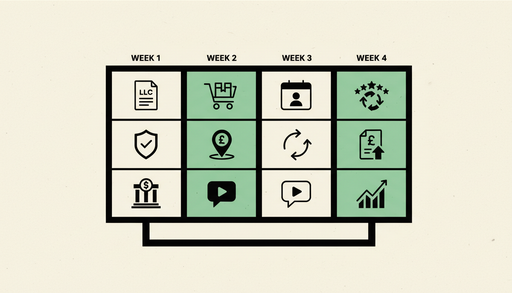
Caption: Figure 2. The 30-day launch sequence — each week unblocks the next.
You can be legally operating and delivering your first paid cleans in roughly 30 days. Below is the sequence that works, ordered so each week unblocks the next.
Week 1: Name, Legal Structure, Bank Account
- Pick a name. 2–4 words, include “clean / cleaning / maid / maids,” skip personal names (they hurt SEO and destroy resale value later). See our 500+ cleaning business names guide.
- Check domain and social availability. Register the
.comonly. Don’t waste money on.netor.bizvariants. - File your legal entity. LLC recommended in almost every case. Filing fees range from $40 in Kentucky (per the Kentucky SOS fee schedule) to $500+ in the priciest states, plus California’s separate $800 annual franchise tax.
- Get an EIN from the IRS. Free, 10 minutes online at IRS.gov/ein. The online application issues your EIN immediately.
- Open a dedicated business checking account.
Week 2: Insurance, Licensing, Tax Registration
- Buy general liability insurance. The policy most residential cleaners start on is $1M / $2M. Expect ~$40/month.
- Add bonding. It’s the most-misunderstood cleaning-specific coverage and the one residential clients specifically ask about by name.
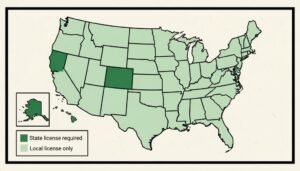
- Check your local licensing. No state requires a state-level cleaning license. But most cities require a general business license. The SBA licenses & permits guide is a solid map. In Texas cleaning services are taxable — both residential and commercial — per Texas Comptroller Publication 94-111. Tax is 6.25% state plus up to 2% local (max 8.25%).
- Understand your sales-tax posture in your state. Penalties compound silently until your first audit.
Week 3: Pricing, Services, Website, GBP
- Decide your service mix. Most solo operators run: recurring clean, deep clean, move-in/move-out. Avoid being a generalist on day one.
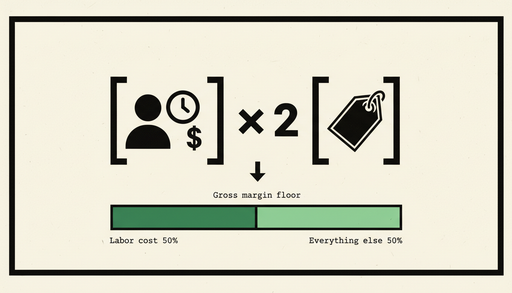
- Build your pricing formula — use Neil’s bottom-up labor × 2 as your floor (section below).
- Stand up a one-page website. WordPress or Squarespace. See CleanerHQ’s professional cleaning website guide.
- Claim your Google Business Profile. This will drive 40–60% of your inbound residential leads for the first 24 months.
- Create a Nextdoor, Yelp, Facebook, Thumbtack profile.
Week 4: First Five Customers
- Offer 3–5 discounted cleans to friends, family, and your immediate network in exchange for honest reviews on Google Business Profile. Do not skip it. An empty GBP kills LSA and Thumbtack conversion.
- Post in 3–5 local Facebook community groups introducing the business.
- Set up a referral incentive: $25 credit after a referred client’s third paid clean.
- Activate Google LSAs once your background check clears and you have your first 3 reviews.
By day 30 most solo operators have 1–3 paying clients, a Google Business Profile with ~5 reviews, and a functioning pricing/estimate system. That’s the goal.
Startup Budget: Bootstrap vs. Standard vs. Pro
Three realistic tiers. Most first-year operators land between $1,500 and $3,500.
| Category | Bootstrap (~$500) | Standard (~$2,500) | Pro (~$8,000) |
|---|---|---|---|
| LLC filing + EIN | $50 | $200 | $500 |
| General liability (3 mo) | $120 | $180 | $300 |
| Bonding (first year) | $100 | $150 | $250 |
| Sales-tax permit + licensing | $0–$50 | $50–$150 | $150–$300 |
| Equipment & supplies | $250 (retail) | $800 (prosumer) | $2,500 (commercial) |
| Website | $0 (DIY) | $200 (template) | $1,500 (agency) |
| Software | $0 (spreadsheet) | $90 (CleanerHQ 6 mo) | $180 (+ add-ons) |
| Marketing | $0 | $300 (LSAs) | $1,500 (paid + SEO) |
| Vehicle signage | $80 (magnets) | $400 (partial wrap) | $1,200 (full wrap) |
| Total | ~$500 | ~$2,500 | ~$8,000 |
LLC tier figures above include registered-agent and expedited options. The raw state filing fee can be as low as $35 (Montana) or $40 (Kentucky) and as high as $500+ in the priciest states. California adds an $800 annual franchise tax on top of any tier.
What to optimize: Insurance is non-negotiable at every tier. Equipment and website are the easiest places to save. Marketing extras only pay off once you have 5+ reviews and a tested sales script.
Legal Structure: LLC vs. Sole Proprietorship (Do Not Skip)
Sole proprietorship means there is no legal separation between you and the business. A client trips on the hose you left in the hallway and breaks a hip? Their lawyer comes for your personal savings, your car, and your house. For a business whose workers are physically inside strangers’ homes every day, this is an unacceptable risk posture.
LLC is the right answer for ~95% of cleaning startups. Filing fees range from $40 in Kentucky and $35 in Montana (the two cheapest) to $500+ in the priciest states. California’s LLC fee is “only” $70 — but the state tacks on an $800 minimum annual franchise tax, per the California Franchise Tax Board.
- Liability shield separating your personal assets from business claims (assuming you don’t pierce the veil by mixing funds).
- Tax flexibility. By default an LLC is “pass-through”; once net income clears ~$60K, you may elect S-Corp treatment.
- Credibility. Commercial clients frequently refuse to contract with sole proprietors.
S-Corp is a tax election on top of an LLC (filed on IRS Form 2553). Commonly cited threshold: $40K–$80K net profit, with $60K as the widely-used rule of thumb. Below that range, added payroll + S-corp prep costs ($2K–$4K/year) usually exceed the SE-tax savings. Talk to a licensed CPA before electing.
EIN is free from the IRS at IRS.gov/ein, takes 10 minutes online. Beware paid “EIN filing services” — the IRS application is free.
On worker classification: the IRS applies a three-factor Common Law Test — behavioral control, financial control, type of relationship. See Independent Contractor or Employee? and Worker Classification 101. If you control when, where, and how they clean, they are almost certainly W-2. CA, NJ, MA apply the stricter ABC test. When in doubt, file Form SS-8.
Insurance: The Five Types Every Cleaning Business Needs
1. General Liability
Covers third-party bodily injury and property damage. $1M per occurrence / $2M aggregate is the industry standard. Insureon data shows 53% of cleaning businesses pay under $50/month and 86% pay under $100/month; typical solo rates run $40–$60/month. In commercial, proof of GL is effectively table stakes.
2. Bonding Insurance (Janitorial Service Bond)
Covers fraudulent or dishonest acts by your employees while inside a client’s home — theft, vandalism, misappropriation. Residential clients ask “Are you bonded and insured?” by name. A $10K janitorial service bond typically runs $100–$200/year.
3. Workers’ Compensation
Required in 49 states (Texas is the sole exception — it’s technically optional there). Thresholds typically trigger at 1–5 employees depending on the state. See the NAIC overview. Penalties for running uninsured can include criminal charges, five- to six-figure fines, and direct employee lawsuits. Even solo Texas operators pursuing commercial accounts should plan on carrying it.
4. Property Damage (Commercial Property Insurance)
Covers your own business property — equipment, supplies, office contents — against theft, fire, vandalism. Less critical for a pure solo operator working from a car, more critical once you have a storage unit or office.
5. Commercial Auto
Personal auto insurance does not cover you when you’re driving for business. In Texas the minimum is 30/60/25 ($30K bodily injury per person / $60K per accident / $25K property damage), per the Texas Department of Insurance. Check your state’s DOI for your minimums.
Budget ~$100–$160/month as a solo residential operator across all five. This is not where you cut corners.
Pricing Your Services Without Killing Your Margin
Illustration slot — to be generated
Alt: 2× loaded labor cost as the pricing floor
Caption: Figure 3. Neil’s bottom-up pricing rule — your floor price is 2× loaded labor cost.
The Floor: Neil’s Bottom-Up Formula
“Figure out how much labor costs in your market. Then double that. That’s your minimum price.”
- Research what cleaners in your market expect to be paid (hourly, fully loaded with payroll taxes and workers’ comp).
- Calculate your per-job labor cost: cleaners × hours × loaded wage.
- Price at 2× labor cost as your floor.
- Target labor cost ≤ 50% of revenue → gross margin ≥ 50%.
Worked example: Your market pays loaded $25/hr. A 2-cleaner, 2-hour job = $100 labor. Minimum price = $200. If you cannot get $200 in your market, change markets or segments. Price below the floor and you subsidize clients with your own labor.
For deeper margin math, see CleanerHQ’s profit margins guide and raising cleaning prices guide.
The Ceiling: Specialize to Unlock Pricing Power
Generalists compete on commodity — the market sets the price. Specialists (“luxury home cleaning,” “5-star hotel trained,” “Airbnb turnover expert,” “post-construction cleanup”) have fewer direct competitors and can price to the specialty’s buying power. Bethany ran this playbook for 15 years with luxury residential. Specialization is the single highest-leverage strategic decision a startup cleaning business makes.
Always Charge More for These
- First-time (deep) cleans at 1.5–2× the recurring rate.
- Move-in / move-out at 50–75% premium to standard.
- Hoarding, post-construction, neglected deep cleans at complexity multipliers.
- 50% deposit upfront on one-time jobs.
Avoid Hourly Pricing Where You Can
Hourly pricing caps your earnings at your speed and penalizes getting better. Flat-rate pricing rewards skill improvement. Use hourly only for first-time deep cleans where scope is unknowable.
Day-One Equipment and Supplies (With Specific Brands)
Core Equipment (~$200–$400)
- Vacuum: For carpet, a ProTeam backpack vacuum (if budget permits) or an Oreck upright. ProTeam is the category leader on backpack vacs — lower fatigue, faster cleaning.
- Microfiber mop system with wet and dust pads + a pH-neutral floor cleaner.
- Broom and dustpan; long- and short-handle dusters + dust mitt.
- Cleaning bucket with dividers for organizing per room.
Essential Chemicals
- All-purpose disinfectant cleaner
- Glass cleaner
- Soap-scum remover
- Toilet bowl cleaner
- Bon-Ami powder for shower and tub bottoms
- pH-neutral floor cleaner (never use acidic cleaners on stone or unsealed hardwood)
Specialty Pads, Brushes, Scrubbers + PPE
- 3M light-duty scrub pads + holder
- Microfiber scrub pads for kitchen and bathroom sinks
- Mini grout brush for tile grout lines
- Pumice stone stick for toilet rings
- Color-coded microfiber system (bathroom/kitchen/glass/damp-dusting/waffle)
- Disposable nitrile gloves, cleaning apron, knee pads, shoe covers, laundry bags
What Not to Buy on Day One
- Walk-behind floor scrubbers ($3K–$6K) — unneeded until commercial at $15K+ MRR.
- Electrostatic sprayers — COVID-era demand didn’t persist; only buy if a specific contract requires it.
- Enterprise-tier anything. Buy what today’s work demands.
How to Get Your First 10 Customers
Illustration slot — to be generated
Alt: Channel ranking for Phase 1 residential cleaning operators
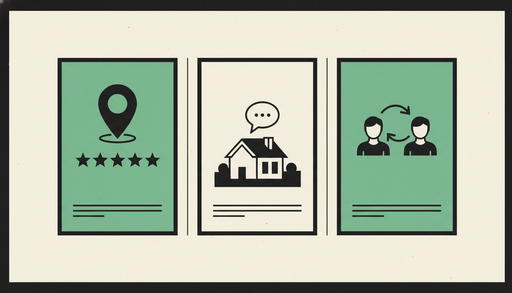
Caption: Figure 4. The channel stack for Phase 1 — ordered by trust and speed-to-first-lead.
The Channel Ranking for Phase 1 Residential
| Channel | Speed to Lead | CAC Profile | Trust |
|---|---|---|---|
| Personal network (first 3–5) | Immediate | $0 | Very high |
| Google Business Profile + reviews | Slow → fast | $0 (organic) | Very high |
| Google Local Services Ads | Fast (after setup) | $25–$75/lead | Highest (Google Guaranteed) |
| Thumbtack | Fastest | $200+ CAC without reviews | Low (transactional) |
| Nextdoor / Facebook groups | Moderate | $0–$50 | High (neighbor trust) |
| Referrals | Slow (compounds after 10 clients) | Lowest | Very high |
The First-10 Playbook
Clients 1–3: Personal network. Offer a discounted clean in exchange for an honest, detailed Google review. Without these three reviews, every paid channel below underperforms dramatically.
Clients 4–7: Google Local Services Ads + Thumbtack. Expect close rates around 15% on Thumbtack, ~50% on direct Google, 33–45% blended.
Clients 8–10: Nextdoor + Facebook community groups. Highest-LTV residential because neighborhood trust carries to referrals. See How to Get More Clients and Top 10 Marketing Strategies.
Clients 11+: Successful residential firms derive 30–50% of new clients from referrals after year two.
A Legal Note on Flyers
You may distribute flyers — but do not put them inside mailboxes or attach them to mailbox flags/posts. Depositing any unstamped “mailable matter” in a USPS-approved letterbox is a federal offense under 18 U.S.C. § 1725, carrying fines up to $5,000 per offense (each flyer can count separately). The U.S. Supreme Court upheld the statute in USPS v. Greenburgh Civic Assns. (1981).
Legal placements: wedged in the front door handle, tucked inside a storm door, a cubbyhole or newspaper tube mounted separately from the mailbox. Never inside, on, or attached to the mailbox itself.
The Google Business Profile Maximization
- Complete every field; add attributes (“Women-owned,” “LGBTQ+ friendly” if accurate).
- Upload 10+ photos on day one.
- Ask for a review after every clean. Same-day text with direct review link converts at 20–30%.
- Respond to every review within 24 hours.
- Post a weekly update (photo, tip, service area) — GBP favors active profiles.
The Five Most Expensive First-Year Mistakes
- Hourly pricing instead of flat-rate. Use hourly only for deep cleans where scope is unknowable.
- Skipping insurance (or bonding specifically). Total annual cost for both as a solo operator is under $2,000.
- Neglecting your GBP. 60%+ of residential inquiries route through Google-owned surfaces.
- Running on a spreadsheet past ~5 clients. Missed appointments are the single largest cause of first-year churn.
- Using high-markup payment processors (Jobber Payments, Housecall Pro Payments). At $10K/mo card revenue, 2.9% is $290/mo leakage. BYOS (Bring-Your-Own-Stripe) eliminates this.
Related: CleanerHQ’s cleaning business tax deductions guide.
When to Stop Doing It All Yourself (Software + Hiring Triggers)
Software Adoption Trigger: ~$5,000/month Revenue
Below $5K MRR, a spreadsheet + Google Calendar + Stripe Invoicing works. Above it, the math flips. CleanerHQ is built for this transition: $19 per seat per month flat, all core features included (quoting, scheduling, invoicing, BYOS Stripe payments, client portal, GPS clock-in, profitability analytics). See Choosing the Right Cleaning Business Software.
Hiring Trigger: ~$8,000–$10,000/month Revenue
Solo capacity caps at ~20–25 recurring residential clients. Beyond that, either the business stops growing or you hire.
- Gross margin compresses from ~55% solo to ~28% with W-2 employees.
- Your time reallocates. You stop cleaning and start selling, scheduling, QA-ing.
- Labor retention becomes your #1 problem. Industry turnover is 100%+ annually; every departure costs ~$4K. See Team Management Software.
The Realistic Year-One P&L
Illustration slot — to be generated
Alt: Year-one solo residential cleaning P&L waterfall
Caption: Figure 5. A realistic Year-1 solo residential P&L — where the money actually goes.
| Line Item | % of Revenue | Notes |
|---|---|---|
| Revenue | 100% | Assume $6K/month avg Year 1 (solo) = $72K |
| Labor | 40–50% | If solo, pay yourself on paper |
| Supplies | 5–7% mature | Higher if bootstrap-purchasing retail |
| Fuel / vehicle | <15% | Higher if routes aren’t dense |
| Software | 2–4% | $19/seat/mo = 2% of $6K |
| Insurance | 2–3% | $100–$160/mo solo |
| Marketing | 5–10% | Higher in Year 1 |
| Admin | 3–5% | Phone, accounting, registrations |
| EBITDA target | 15–20% mature; 5–10% Year 1 | Paying for education |
Realistic Year 1 for a solo residential operator in a mid-tier US market: Revenue $35,000–$75,000, gross margin 45–55%, owner take-home $18,000–$40,000. Not life-changing money — but the price of an operational education. Phase 2 is where the math starts working.
Growth Ceilings and How to Break Through
Ceiling 1 — Month 5–8: Solo Capacity Maxes Out
At 20–25 recurring residential clients / ~$8K MRR, you physically cannot clean more. Move: Hire the first cleaner. Accept margin compression from ~55% to ~28%.
Ceiling 2 — Month 9–12: Payment Processing Fees Compound
At $10K/month card revenue on a 2.9% processor, you lose $290/month ($3,480/year). Move: BYOS — Bring Your Own Stripe. CleanerHQ’s BYOS eliminates the platform markup entirely.
Ceiling 3 — Month 12–18: W-2 Transition Compresses Margin
Moving from solo + 1099 to 2–4 W-2 employees takes gross margin from ~55% to ~28%. Move: Tighten pricing (raise rates 5–8%/yr on legacy clients; most lose <5% of clients). Add specialty services at 1.5–2× premium.
FAQs
How much does it cost to start a cleaning business in 2026?
For a solo residential startup, $500–$3,500 is the realistic range. Most operators land in $1,500–$2,500. Commercial launches (walk-behind scrubber, cargo van, higher insurance) run $10,000–$75,000+.
How much can I realistically make in Year 1?
A solo residential operator in a mid-tier US market generates $35,000–$75,000 in revenue with 45–55% gross margin → $18,000–$40,000 owner take-home. Phase 2 ($10K–$30K MRR) is where the math improves.
Do I need a specific cleaning license?
No state requires a state-level cleaning license. Most cities require a general business license; many states require sales-tax registration if cleaning is taxable. In Texas, both residential and commercial cleaning are taxable (Texas Comptroller Pub. 94-111). See the cleaning business licenses guide.
Should I form an LLC or start as a sole proprietor?
LLC in almost every case. Personal liability exposure in a business where your workers are inside strangers’ homes is unacceptable. Filing costs $40–$500 depending on your state.
How long does it take to launch?
2–4 weeks is the standard. Franchises add 4–8 weeks for corporate onboarding.
What’s the fastest way to get my first 10 customers?
(1) 3–5 discounted cleans for friends/family in exchange for Google reviews; (2) Google Local Services Ads once background-check clears; (3) Thumbtack for volume; (4) Nextdoor + Facebook community groups; (5) referral incentive once you have 10 clients.
How should I price my services?
Floor: 2× loaded labor cost. Ceiling: whatever your specialty unlocks. Starter method: $25–$45/hr baseline, targeted at middle-to-top of your market, adjusted by ±15 min per ±500 sq ft. First-time cleans at 1.5–2× recurring rate. Move-in/move-out at 50–75% premium.
What software do I need on day one?
Day one: a spreadsheet, a calendar, and Stripe Invoicing work. Adopt proper FSM software at $5K/month revenue or 5+ recurring clients. CleanerHQ bundles quoting, scheduling, invoicing, BYOS Stripe payments, client portal, GPS clock-in, and profitability analytics at $19/seat/month flat.
Is residential or commercial cleaning better to start with?
Residential for almost every solo startup. Lower capital, faster to first revenue, no RFP cycles. Commercial adds 3–6 month sales cycles, higher insurance, workers’ comp, specialty equipment.
What’s the single biggest mistake new operators make?
Pricing at the market floor instead of 2× their own loaded labor cost. Everything else is recoverable; under-pricing is a structural wound that compounds every week you don’t fix it.
Your Next Step
If you haven’t launched yet: Do Week 1 of the 30-day plan today — pick a name, check the domain, file the LLC. Two hours total.
If you’re at 1–5 clients: Focus entirely on the Google Business Profile + review generation loop.
If you’re at $3K–$8K/month and drowning in manual scheduling: CleanerHQ pays for itself — $19/seat/month, full platform, no processing markup. One prevented missed appointment recovers the cost in a week.
◆ Launch-ready cleaning business software
Go live on CleanerHQ in an afternoon.
$19/seat. All core modules. No payment processing markup. 14-day free trial.
Start 14-day trial →Government & Official Resources
Every legal, tax, and insurance claim in this guide traces to one of the sources below. Bookmark the ones that apply to your state — they are the only authoritative sources on these topics.
Federal — Business Formation, Tax, Compliance
- SBA — 10 Steps to Start Your Business
- SBA — Apply for Licenses and Permits
- SBA — Choose a Business Structure
- USA.gov — Start a Business
- IRS — Apply for an EIN
- IRS — Independent Contractor or Employee?
- IRS — Worker Classification 101
- IRS — Form SS-8
- IRS — Form 2553 (S-Corp Election)
- IRS — S Corporations
- IRS — Self-Employed Tax Center
- DOL — Fair Labor Standards Act
- DOL — Misclassification of Employees
- OSHA — Small Business Handbook
- NAIC — Workers’ Compensation Overview
Federal — Legal & Postal
- 18 U.S.C. § 1725 — Postage Unpaid on Deposited Mail
- USPS v. Greenburgh Civic Assns., 453 U.S. 114 (1981)
- USPS — Mailbox Regulations (DMM 508)
Labor Market Data
- BLS — Janitors & Building Cleaners OOH (2.4M jobs, 351K annual openings, median wage $17.27/hr May 2024)
- BLS — Maids & Housekeeping Cleaners OOH
- BLS — OEWS Wage Statistics
State — LLC & Sales Tax Examples
- California FTB — LLC ($800 minimum annual franchise tax)
- Kentucky SOS — Fees ($40 LLC formation)
- Texas Comptroller — Cleaning Services Pub. 94-111
- Texas Comptroller — Taxable Services Pub. 96-259
- Texas DOI — Auto Insurance Guide
- Texas SOS — Business Filings
- SBA — State Business Agencies Directory
Further CleanerHQ Reading
- Cleaning Business Software — Quote-to-Cash Platform
- Cleaning Business Profit Margins
- When and How to Raise Your Cleaning Prices
- Top 10 Marketing Strategies
- Get More Cleaning Clients
- Email Marketing for Cleaning Businesses
- Competitive Analysis
- Cleaning Business Tax Deductions
- Professional Cleaning Service Website
- Choosing the Right Cleaning Software
- Team Management Software
- Recurring Cleaning Service Management
- Cleaning Business Licenses Guide
Disclaimer. Informational only, reflecting U.S. federal and example state rules as of April 2026. Not legal, tax, or insurance advice. Rules vary by state. Verify with a licensed attorney, CPA, and insurance broker before making formation, classification, pricing, or coverage decisions.
Stop estimating from gut feel. Start estimating from your last 90 days.
 CE
CE