Chimney Cleaning Prices 2026: What Homeowners Pay | CleanerHQ
Chimney cleaning prices in 2026 run $150 to $400 for a standard annual sweep and Level 1 visual inspection, with a national average around $250 to $275. Gas fireplaces clean for as little as $80, while heavy creosote, two-story roofs, and metro access premiums can push a single visit past $800.
 R Rashdi
·
April 20, 2026
·
16 MIN READ
R Rashdi
·
April 20, 2026
·
16 MIN READ
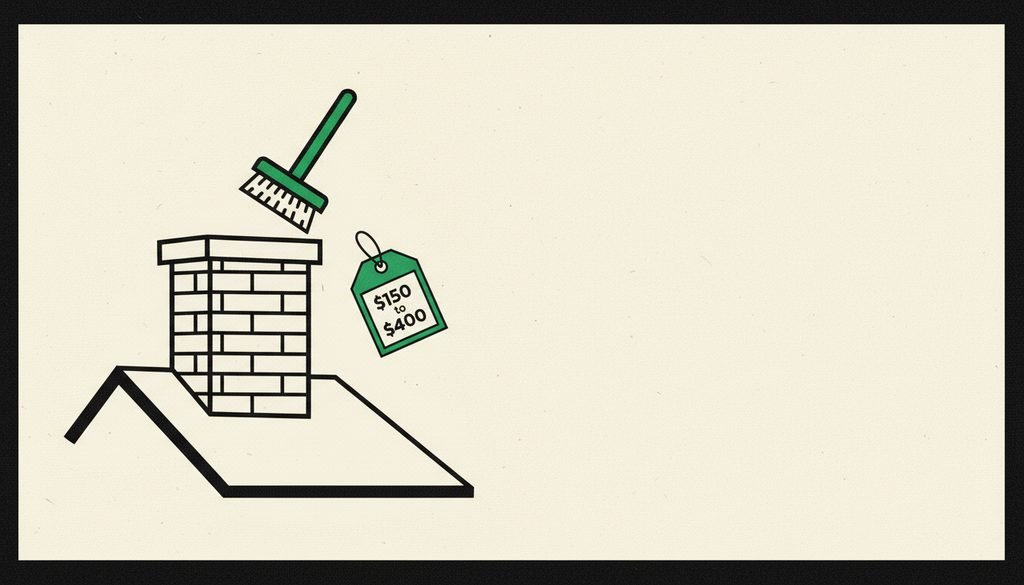
Quick answer. Chimney cleaning prices in 2026 run $150 to $400 for a standard annual sweep and Level 1 visual inspection, with a national average around $250 to $275. Gas fireplaces clean for as little as $80, while heavy creosote, two-story roofs, and metro access premiums can push a single visit past $800.
If you searched “chimney cleaning prices” this month, you are not alone: the term pulls roughly 6,600 U.S. searches per month on average and spikes above 12,100 in January as homeowners fire up the fireplace and notice the smell. The cluster of related queries, chimney sweep cost, chimney inspection cost, how much does chimney cleaning cost, adds up to more than 31,000 monthly searches, which tells you how much confusion there is about what a fair price actually looks like.
This guide reconciles 2025-2026 pricing data from Angi, HomeGuide, HomeAdvisor, Fixr, and Thumbtack against the safety standards set by NFPA 211 and the Chimney Safety Institute of America (CSIA). You will see exactly what you should pay by service type, by chimney type, by metro, and by season, plus the scam patterns the FTC has flagged and, if you run a chimney service yourself, the margin math behind a healthy shop.
2026 chimney cleaning prices at a glance
Here is the reconciled 2026 national picture. We leaned on Angi, HomeGuide, and Fixr as the authoritative pricing trio because each publishes post-service homeowner data. Thumbtack averages ($140-$159) run lower because they reflect initial pro quotes rather than final invoices with upsells.
| Service | Low | Typical | High |
|---|---|---|---|
| Gas fireplace, basic sweep | $80 | $125 | $250 |
| Prefab / zero-clearance | $90 | $130 | $175 |
| Wood-burning masonry (standard annual) | $150 | $275 | $375 |
| Wood or pellet stove + vent | $130 | $215 | $350 |
| Level 1 inspection (annual, visual) | $100 | $225 | $300 |
| Level 2 inspection (video scan) | $260 | $400 | $600 |
| Level 3 inspection (invasive) | $500 | $1,500 | $5,000+ |
| Glazed creosote removal add-on | $200 | $350 | $500+ |
| Animal / bird nest removal | $120 | $185 | $250 |
| Chimney cap replacement | $150 | $275 | $400 |
| Commercial boiler flue | $500 | $1,200 | $2,500+ |
Bundle discounts are common. Pairing a sweep with a dryer-vent cleaning (normally $80-$250 on its own) usually shaves 10-20% off the combined total, and adding a chimney cap replacement during an existing roof visit saves the second trip charge.
What is included in a standard chimney sweep
A legitimate sweep is not a vacuum in the firebox. For a wood-burning masonry chimney, expect the tech to protect the hearth with drop cloths, set up HEPA vacuums, brush the full flue from rooftop or interior access, inspect the smoke chamber and damper, and close with a Level 1 visual inspection. Door-to-door, the job takes 60-90 minutes for a single-story home and up to two hours for a two-story with heavy accumulation.
The trigger for a sweep is not the calendar, it is the 1/8-inch rule. Both CSIA and NFPA 211 state that a chimney should be swept whenever creosote or soot reaches one-eighth of an inch (0.125″) of thickness on the flue walls. That threshold matters: as little as 1/8 inch of Stage 3 glazed creosote can feed a chimney fire that burns above 2,000°F, hot enough to crack clay flue tiles and ignite framing.
For a heavy-use household burning two or more cords of wood per season, the Chimney Safety Institute of America often recommends two sweeps per season. Gas fireplaces still need annual service, but because they produce almost no creosote the visit is shorter (45-60 minutes) and the bill lower.
Chimney inspection levels (NFPA 211)
NFPA 211: the Standard for Chimneys, Fireplaces, Vents, and Solid Fuel-Burning Appliances, defines three inspection levels. If a sweep quotes you “an inspection” without naming a level, ask which one. The difference is hundreds of dollars.
Level 1: routine annual
Required when nothing about the appliance, fuel, or venting has changed. The tech examines readily accessible portions of the chimney, appliance connection, and structure for combustible deposits and obvious damage. Angi lists $160-$300; most reputable sweeps bundle Level 1 free with a cleaning.
Level 2: change or event
Required when the fuel changes, the flue is relined, the appliance is swapped for a different type, the property is sold or transferred, or the chimney has experienced a fire, earthquake, or severe weather. It includes everything in Level 1 plus accessible attic/crawl/basement sections and a video scan of the flue interior. Budget $260-$600 (Angi $260-$460; Fixr $300-$600). Most homebuyers and realtors miss the point-of-sale requirement, if you are closing on a home with a fireplace, ask for one.
Level 3: invasive
Triggered only when Level 1 or 2 surfaces evidence of a hidden hazard. The tech removes parts of the chimney or surrounding structure (a course of brick, a section of drywall) to access concealed areas. Pricing reflects the destruction and reconstruction involved: $500-$800 for a straightforward Level 3 per Angi, ranging up to $5,000+ when structural repair is bundled.
Price by chimney type
Not every chimney is priced the same. Angi puts it plainly: gas fireplaces run less than wood stoves, and pellet stoves fall in between. Here is how the 2026 cleaning cost breaks down by appliance:
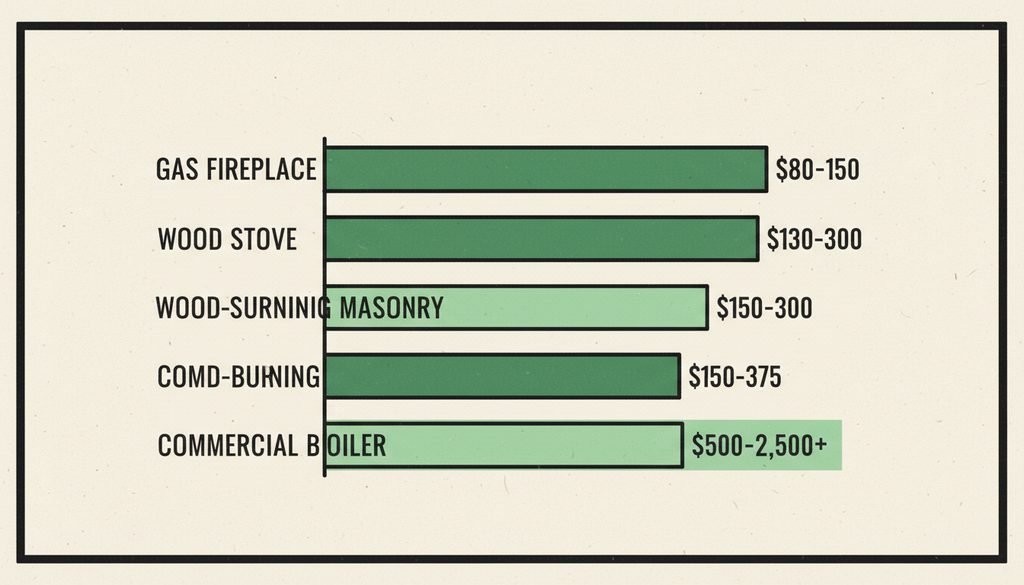
- Gas fireplace, $80-$150. Minimal creosote, short visit, mostly venting and pilot checks.
- Prefab / zero-clearance, $90-$175. Metal flue, standardized dimensions, easy rooftop access.
- Wood-burning masonry, $150-$375. The baseline most pricing tables quote. Longest job, most creosote.
- Wood stove, $130-$300. Requires partial stove disassembly plus flue and cap cleaning.
- Pellet stove, $175-$350. Ash packs into the auger and heat exchanger; takes specialty tools.
- Oil furnace flue, $150-$300. Soot, not creosote, but requires specific brushes.
- Coal flue, $200-$400. Acidic residue, specialty handling and PPE.
- Commercial boiler flue, $500-$2,500+. Height, OSHA confined-space rules, and per-foot or per-hour billing push these jobs well above residential pricing.
Regional chimney sweep prices
Three factors drive regional premiums: cost of living, rooftop access difficulty (high-rise, row house, HOA), and density of CSIA-certified providers. Cold-climate metros in the Northeast and Upper Midwest typically price 15-35% above the national average; Sun Belt metros tend to run 10-20% below for wood-burning and hold at baseline for gas.
| Metro | Typical Range | Notes |
|---|---|---|
| New York City | $344-$474 (full range $147-$1,036) | Elevator-only access and co-op rules drive premium |
| Boston | $225-$425 | Older housing stock + cold-climate demand |
| Chicago | $200-$450 | Heavy brick stock; basic service $200-$250 |
| Denver | $200-$375 | Altitude, high-pitch roofs |
| Minneapolis–St. Paul | $200-$400 | Extreme cold-climate usage = more creosote |
| Seattle | $225-$400 | Wet climate accelerates crown wear |
| Portland, OR | $225-$375 | Similar to Seattle; moderate usage |
| Washington, DC | $250-$450 | Row houses, shared-wall chimneys |
| Atlanta | $150-$300 | Sun Belt discount; fewer wood burns |
New York City is the extreme case: homeowner data from Homeyou shows a full range of $147 to $1,036 per visit, with most jobs landing between $344 and $474. Blame the walk-ups, scaffolding requirements, and cooperative-board access rules.
What drives chimney cleaning costs up
When two quotes diverge by $150 for what sounds like the same job, one of these variables is almost always the reason:
- Chimney height. A 30-foot two-story flue eats brush rods and time. Expect +$50-$150 per added story.
- Roof pitch and access. Anything steeper than 8/12 or a slick metal roof means harnesses and a second tech. +$75-$200.
- Creosote stage. Stage 1 (flaky) is standard. Stage 2 (hard, tar-like) adds $75-$150. Stage 3 (glazed) requires chemical treatment with products like PCR or Cre-Away and runs $200-$500 on top of the sweep.
- Years since last cleaning. A three-year gap typically adds one full stage of creosote.
- Animal and debris removal. Bird nests, squirrel debris, and leaf packs add $120-$250.
- Multiple flues. Older homes may have two or three (fireplace + furnace + water heater), price +$75-$150 per additional flue.
- Liner condition. A cracked clay tile liner found during Level 2 can turn into a $1,500-$7,000 reline.
- Cap or crown work. A rain cap replacement adds $150-$400; a crown wash or repoint adds $150-$250 on small cracks.
When chimney sweeps charge more
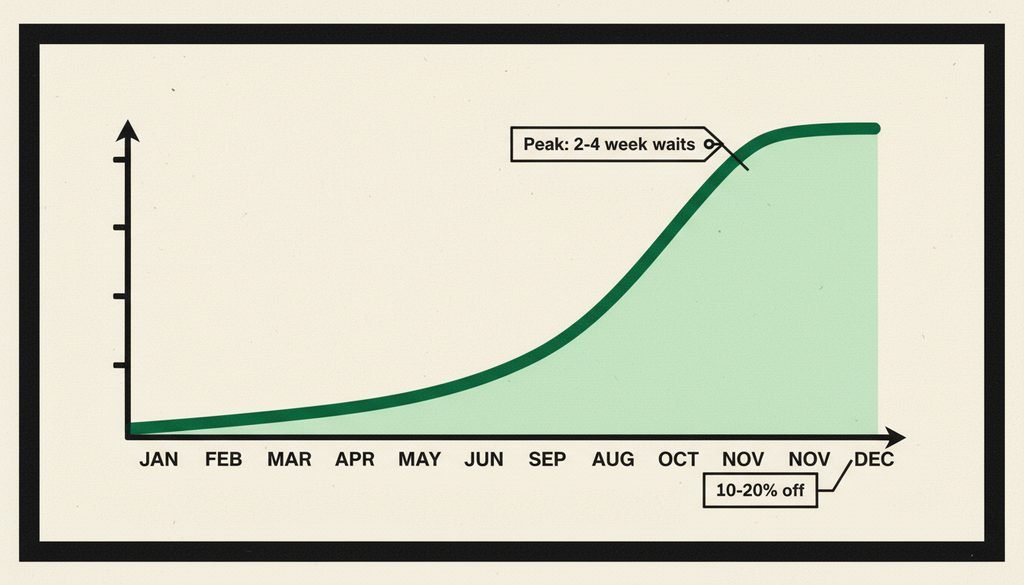
Chimney work is violently seasonal. Peak demand hits October through December, which is why “chimney cleaning prices” search volume balloons to 12,100 in January, people light the first fire of the year, smell the problem, and panic-search. During peak:
- Lead times in Northeast metros stretch to 2-4 weeks for non-emergency bookings.
- Same-week or rush bookings carry a $50-$150 surcharge, if a slot is available at all.
- Off-season bookings (April–August) run 10-20% cheaper than the same job in November.
- CSIA-certified shops routinely offer “beat-the-rush” discounts of $25-$75 off for spring and summer scheduling.
Practical rule: book between Mother’s Day and Labor Day. You will get the pick of certified techs, a quieter job site, and the lowest quote of the year. If you are weighing peak-season bids against off-season, the math is usually worth the wait.
How to avoid chimney sweep scams
The chimney trade has a persistent scam problem. Most states, Massachusetts included, do not require a chimney-sweep license, so anyone with a truck can print a flyer. The Federal Trade Commission has formally ruled bait-and-switch an unfair and deceptive practice under the FTC Act, but the scam keeps resurfacing because the margins are enormous.
The classic pattern: a “$49” or “$89 chimney sweep” ad brings a tech to your roof, who then “discovers” a cracked crown, damaged liner, or dangerous creosote requiring $3,000 to $8,000 of same-day repair. Real chimney defects almost never require same-day work, unless an active fire is burning, a reputable sweep documents findings with photos and leaves a written estimate.
Red flags to walk away from
- Ultra-low ads (“$49 sweep”) or “free inspections” that end with scary findings.
- A “sweep” that finishes in under 20 minutes with no drop cloths laid down and no brushing sounds from inside the flue.
- Pressure for same-day repairs with cash discounts.
- No written estimate, no photos, no CSIA sticker, unmarked vehicle.
- Cash-only or no-invoice payment terms.
Verification checklist before you book
- CSIA Certified Chimney Sweep credential, verify directly at csia.org.
- $1M+ general liability plus workers compensation.
- Written estimate before any repair work is authorized.
- Video or photo documentation of any defect they want to charge to fix.
- BBB rating A- or better and a local physical address (not a PO box).
For chimney-service business owners: pricing your work
If you run a chimney service, the pricing tables above are your market context, not your ceiling. The shops that thrive in this industry are repair-led, route-dense, and disciplined about off-season scheduling. Here is the math behind a healthy 2026 P&L.
Job economics, standard wood-burning sweep + L1
- Ticket price: $250-$350
- Time on site: 90-120 minutes (setup, drop cloths, brushing, vacuum, paperwork)
- Drive time: 30-45 minutes average
- Materials: $8-$15 per job (chemicals, brush wear, disposables)
- Fuel: $6-$12
- Loaded labor: $45-$65/hour (wages + taxes + workers comp)
- Variable cost per job: $125-$180
- Contribution margin: $95-$180 per job (35-55%)
Throughput and revenue per truck
Industry benchmarks put a solo tech at 3-4 jobs per day in peak season and 2-3 in the off-season. A two-person team runs 5-7 jobs in a single truck, or 8-10 when a commercial flue or multi-flue home sits on the board. Daily revenue per truck lands at $750-$1,400 solo and $1,500-$2,800 for a team.
Margins, owner comp, and the Year-5 target
Financial Models Lab’s 2025 benchmark puts Average Revenue Per Job around $180 for basic clean-and-inspect and ~$600 for repairs. A mature chimney shop targets a 15%+ EBITDA margin; best-in-class operators run 25-30%. Net profit of 30% is considered healthy and sustainable. Owner compensation starts around $70,000 in base salary plus distributions and scales past $150,000+ at multi-truck size. A disciplined shop targets roughly $292,000 in Year-5 EBITDA.
What separates profitable shops
- Repair mix of 30%+ of revenue. Cleanings are the loss leader. Liner relines, crown rebuilds, and caps carry 60%+ gross margins.
- Route density inside a 15-mile cluster. Windshield time is the silent margin killer.
- Off-season pre-booking with loyalty pricing ($25 off plus priority scheduling) to smooth May–August revenue.
- CSIA certification to charge a 15-25% premium and win realtor-driven Level 2 inspections.
- Point-of-sale capture, Level 2 inspections at property transfer run $400-$600 per ticket in 60 minutes.
- Operations software for quoting, scheduling, invoicing, and route optimization.
On that last point: the bottleneck for most growing chimney operators is not demand, it is the admin load from quoting, rescheduling, and chasing invoices. CleanerHQ is the field-service operating system many home-service owners use for scheduling, quoting, and invoicing, worth a look if your techs are doing paperwork in the truck after 6 pm. If you are earlier stage, our guide to starting a cleaning or chimney service and our licenses and insurance checklist will save you a month of trial and error.
On the capital side, Year-1 CAPEX for a new chimney shop runs roughly $124,000 (service van ~$80K, specialty equipment ~$15K, tooling and tech for the balance). Total initial investment to steady state is around $618,000 with a payback in about 22 months. A fully loaded tech costs about $50,000 per year.
Frequently asked questions
How much does a chimney sweep cost on average?
A chimney sweep costs $150-$400 for a standard annual service, with a national average of about $250-$275. Angi pegs the range at $129-$381; HomeGuide at $150-$375. Price varies with chimney type, height, accessibility, creosote level, and region, high-cost-of-living metros like NYC, Boston, and DC trend 20-35% above the national average.
Is a chimney inspection the same as a chimney sweep?
No. A sweep is the physical cleaning, brushing creosote and soot from the flue. An inspection is a safety assessment. A Level 1 visual inspection is often bundled free with a cleaning. A Level 2 inspection (required at property sale, after chimney fires, or when changing appliances) costs $260-$600 because it includes a video camera scan of the flue interior.
How often should I have my chimney cleaned?
CSIA and NFPA 211 recommend an annual inspection for every chimney regardless of use. The chimney should be swept whenever creosote buildup reaches 1/8 inch or more, or at least once per burning season for regular wood-burning users. Gas fireplaces still need annual inspections even though they produce little creosote.
What are the three levels of chimney inspection?
Per NFPA 211: Level 1 is the routine annual visual inspection ($100-$300). Level 2 adds a video scan of the flue interior and is required at property transfer or after a chimney event ($260-$600). Level 3 is invasive, it requires removing parts of the chimney or structure to access concealed areas, and runs $500-$5,000+.
Why are chimney sweeps more expensive in fall?
Demand. October through December is peak season as homeowners prep for burning season. Lead times stretch to 2-4 weeks and most companies charge standard or premium rates. Booking in spring or summer (April–August) typically saves 10-20% and gets you priority scheduling with the most certified techs.
Does a gas fireplace need to be swept?
Gas fireplaces produce minimal creosote but still need an annual inspection to check venting, pilot assembly, connections, and blockages (bird nests, debris). Gas chimney service averages $80-$150: cheaper than wood because there is less physical cleaning required, but skipping the annual visit is still a carbon-monoxide risk.
What is glazed creosote and why does it cost more to remove?
Glazed (Stage 3) creosote is hardened, tar-like residue that no standard brush will touch, so removal takes chemical treatment (products like PCR or Cre-Away) plus mechanical work, adding $200-$500 to a standard sweep. It is also the most dangerous stage. Just 1/8 inch can fuel a chimney fire above 2,000°F.
What is a fair price for a chimney cap replacement?
A stainless chimney cap replacement typically costs $150-$400 installed, depending on flue size and roof accessibility. Custom copper caps or multi-flue caps run $300-$800. If you are already paying for a sweep, bundle the cap install, most companies discount the combined job because the tech is already on the roof.
How do I spot a chimney sweep scam?
Red flags: “$49” or “$89” ads, “free inspections” with scary findings, pressure for same-day repairs, cash-only pricing, no written estimate, no CSIA certification, and unmarked vehicles. The FTC has ruled bait-and-switch an unfair and deceptive practice. Verify CSIA certification at csia.org, confirm $1M+ insurance, and get a written estimate with photos before authorizing any repair.
How much does a Level 2 inspection cost when selling my home?
NFPA 211 requires a Level 2 inspection at property transfer. Expect to pay $260-$600, with $400-$450 being typical in most metros. The inspection includes a video scan of the flue interior and a written report, request a copy for your real estate file, since buyers and their agents will almost always ask.
How long does a chimney sweep take?
A standard wood-burning masonry sweep plus Level 1 inspection takes 60-90 minutes on site, or up to two hours for two-story homes or heavy creosote. Gas fireplaces typically take 45-60 minutes. Add 20-30 minutes for a Level 2 camera scan or animal removal. Anything finishing in under 20 minutes is a red flag.
Is chimney sweeping tax-deductible?
For a primary residence, no, it is a standard maintenance expense. For a rental property or a home office with a dedicated fireplace, chimney maintenance can be deducted as an operating expense (see IRS Publication 527 for rentals). Consult your tax pro for your specific situation.
Booking your 2026 chimney sweep
The short version: budget $250-$300 for a standard annual wood-burning sweep, expect to pay less for gas and more in cold-climate metros, insist on CSIA certification, and book in spring if you can. If a sweep shows up flashing a $49 ad and leaves with a $4,000 “emergency” invoice, you just paid for somebody else’s scam training. Verify the credential, get photos, and sleep on any repair over $500.
If you operate in this trade, the playbook is clear: route density, repair mix, off-season pre-booking, and software that keeps quoting and invoicing out of your evenings. That is the difference between a solo sweep clearing $70K and a two-truck shop hitting a quarter-million in EBITDA by Year 5.

Written by
Rashdi has spent 15+ years building and managing enterprise software, and has worked with US cleaning businesses since 2006. He founded CleanerHQ.